Chapters
For centuries, people have tried to find out what the future holds. Hence, it was common to refer to all kinds of fortune-tellers or priests – augur or haruspices who they foretold from the entrails of animals. Special attention was also paid to all kinds of fortune-telling, which, as it was believed, were not a coincidence, but were interfering with the gods.
In the first century CE, Valerius Maximus divided the signs from which the opinion of the gods was read into:
- Auspicia – omens from the flight of birds
- Omina – oracles
- Prodigia – unusual fortune-telling phenomena
- Somnia – dreams
- Miracula – miracles
- Superstitiones superstition
Interesting Roman stories with fortune-telling and signs
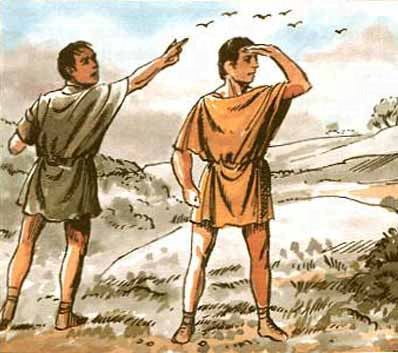
Already at the very beginning of the formation of Rome, priests who were telling about the flight of birds took part. Remus noticed the six vultures first, followed by Romulus spotting twelve vultures. The greater number of birds decided about the foundation of the city – later Rome. According to tradition, Romulus became the first king of Rome on April 21, 753 BCE, when the settlement was also established.
The famous Tiberius Gracchus, as he was preparing to take office people’s tribune, asked to be tested gods to pullarius, a man who judges the success of actions based on the behaviour of the sacred chickens during feeding. Interestingly, pullarius forbade him to leave the house at all, which Tiberius ignored and he hit his leg hard when he left the house. Then, as he was walking down the road, three ravens screeched loudly and began to fight each other and accidentally dropped tiles on him. Later, the tribune was killed by Scipio Nazyki, and his body was thrown into the Tiber.
Another Roman, Publius Claudius, also sought advice from Pullarius during the First Punic War on a warship. Unfortunately, the hens did not want to leave the cage. Claudius, known for his violent nature, ordered them to be thrown into the sea saying “(…) because they do not want to eat, let them drink”. In the end, the fleet he commanded suffered a crushing defeat, and Claudius himself was killed.
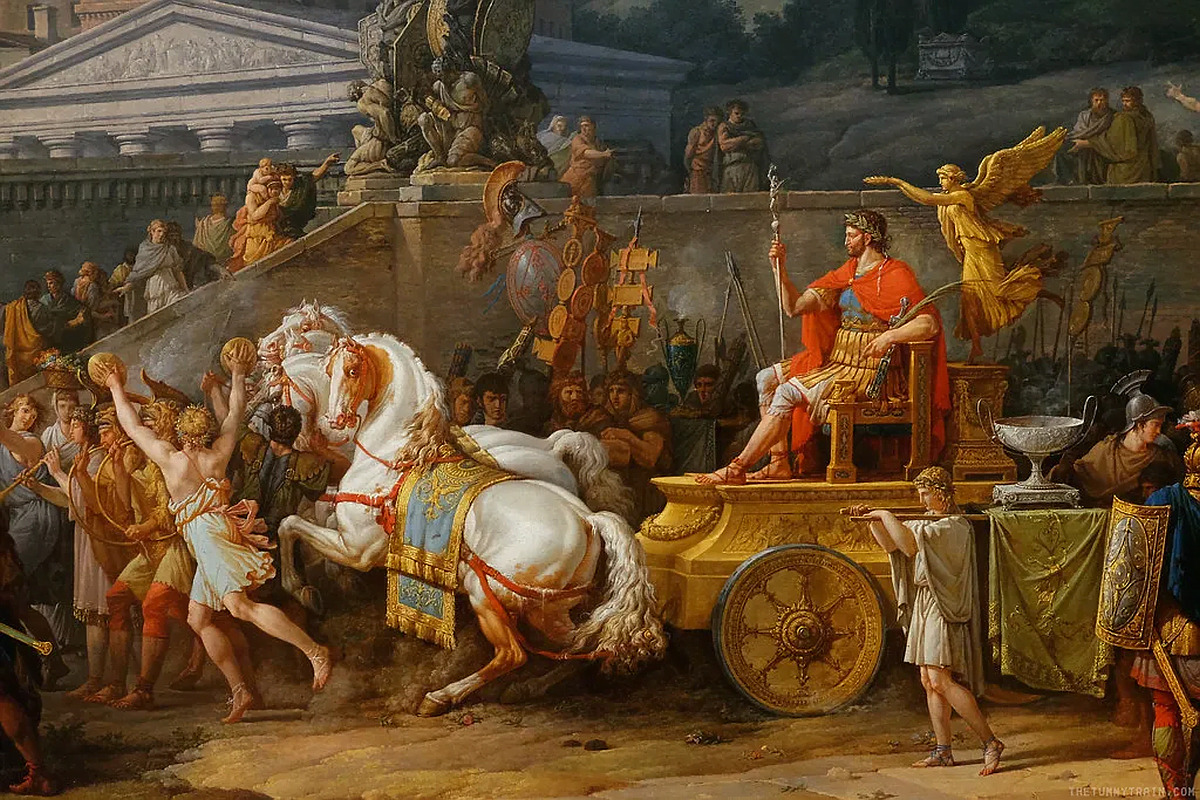
It is not necessary to go to the fortune-teller right away; sometimes it is enough to keep your eyes peeled for “omens”. Consul Lucius Aemilius Paulus went home before going to the war against the Macedonian King Perseus (172-168 BCE). There he saw the saddened daughter Tertia and asked what was the cause of the sadness. She replied that her dog Perses was dead. Paulus took this as a good sign for the coming battle and won the victory over Perseus. He won huge spoils for Rome from Macedonia and Epirus and then celebrated in November 167 BCE. a glorious triumph in which he was led as a captive defeated Perseus.
A certain Roman matron – Cecilia, wife of Metellus, was looking for some sign of the marriage of her niece. To this end, she went with her niece to the temple. Spending quite a long time there, the weary girl asked her aunt to let her sit in her place for a while. Aunt replied: “I will gladly give you my place”. Cecilia could not have known that she had foretold the future with her words, because she herself died soon after, and Metellus married her niece.
Consul Quintus Petilius Spurinus during his war in Liguria in northwest Italy (176 BCE), concluded his speech to the soldiers with the words: “In any case, today I will conquer the mountain Letum [the mountain of death]”. A word thrown by chance confirmed his fate, as Petilius did not conquer the mountain, but died.
Sometimes gods’ signs brought salvation. This was the case of Gaius Marius, who was declared an enemy of the motherland by the Senate and was kept under guard at the home of a woman named Fania in Minturnae (southern Italy). One day, he saw a donkey through the window, scornful of the feed given to him, and went to a waterhole. Marius considered it a divine sign. When the riots broke out in the area, he took advantage of the situation and made it to the sea, from where he fled on a ship to Africa. Thanks to this, he managed to escape from the army of Sulli and avoid death.
Supposedly Calpurnia (third wife of Julius Caesar) the night before the murder of Caesar (March 14-15 44 BCE) had a dream in which Caesar’s body was in the blood. This, as well as many other signs, were to herald his impending death.
Cicero, exiled in 58 BCE, also had a dream in which he walked sadly in desert areas. There he met Gaius Marius with the insignia of consular authority. He complained to him about his fate and they went together to the building, where it was announced to Cicero that his fate would improve. This was also the case because, in the temple of Jupiter funded by Marius, a resolution was announced that allowed Cicero to return from exile.
Not when the signs were inevitable. An example is a consul for 177 BCE Tiberius Gracchus. During the consultation with the fortune-tellers, two snakes crawled out. From the priests he learned that he should neither kill them both nor let them both escape; if he kills the male himself, he will die, if the female is killed his young wife will die. Tiberius decided to kill the male and therefore died soon.
The last story of the signs is the dream of Gaius Gracchus, in which he saw his deceased brother Tiberius. The latter foretold him that he would soon share his fate. Soon Gaius Gracchus, not wanting to fall into the hands of the opponents of his reforms, ordered his slave to kill him.