If you have found a spelling error, please, notify us by selecting that text and pressing Ctrl+Enter.

Articles (Monuments)

The monuments of ancient Rome are material testimony to the power and legacy of the Roman Empire. In this category, you’ll find articles devoted to preserved buildings, ruins, and archaeological sites, such as amphitheaters, forums, temples, aqueducts, roads, and thermal baths. The texts present the history of these monuments, their function in the ancient world, and their significance for contemporary knowledge about Rome. This guide explores the most important and valuable traces of Roman civilization.

Treasure of the Roman Gardens of Sallust – “The Dying Daughter of Niobe”

In this magnificent statue, which we can admire in the Roman museum in Palazzo Massimo Alle Terme, the sculptor masterfully captured both the drama of the moment and the movement of the dying woman. However, in order to fully appreciate this work, one must remember the context in which it was created. The myth of Nioba and her children was a very popular motif in ancient art.

Photo of Niobe's dying daughter from the Palazzo Massimo Alle Terme museum in Rome

Traces of presence of ancient Romans in Ukraine

In Ukraine, we can find remains of the presence of ancient Romans, as well as evidence of intimate trade contacts with peoples inhabiting the Ukrainian steppes – Sarmatians or Scythians. One of the most abundant Roman finds is the Crimean Peninsula.

Remains of the Roman camp at Charax

Ancient city of Kourion

The Kourion Archaeological Complex is located near the village of Episkopi, which is part of the British overseas territory of Akrotiri, on the peninsula of the same name. It houses a British military base of approximately 1,300 soldiers. We will pass the barracks of this base on our left, approaching Kourion.

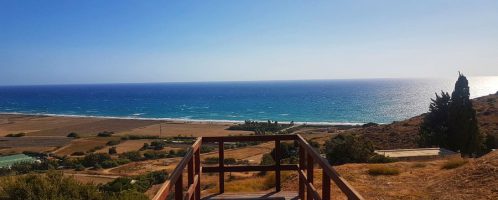
View in the ancient city of Kourion

Sunken city of Baiae

Probably each of us has heard about the mythical, sunken, ancient land that Plato described in his sections. Is it really just a legend? It turns out that there may have been a grain of truth in Plato’s writings. I invite you to a joint journey through the ancient, sunken city