
Chapters
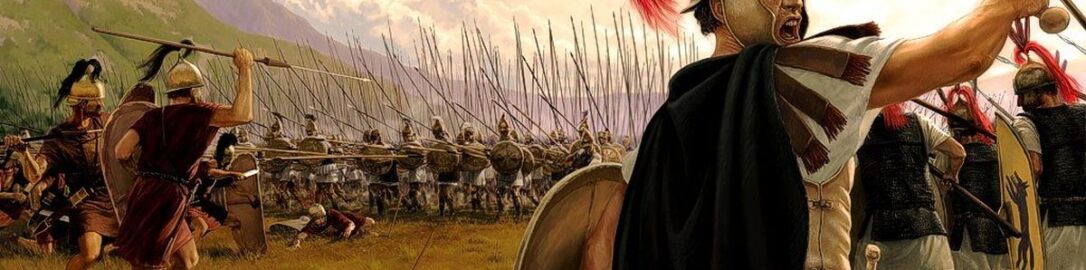
Battle of Aoi Stena gorge (198 BCE) is another clash characteristic of the wars in the Hellenistic East. After defeating Carthage, the Romans immediately turned their eyes to the Hellenistic East. The immediate cause of the intervention was an appeal from Rhodes and Pergamon, fearing Macedonian influence. Roman troops pushed Macedonian troops out of the gorge and forced them to withdraw.
Background of events
After defeating Carthage, the Romans immediately turned their eyes to the Hellenistic East. The immediate cause of intervention on the Adriatic was an appeal to the Senate from Rhodes and Pergamon, who were afraid of the actions of Philip V of Macedonia.
The deputies of these polis came in autumn 201 BCE to Tiber, asking for help. Patres could not help allies that included both countries. So they sent a commission to Hellas, three men, who were to orientate themselves and win allies against Macedonia among the Greeks. The legates held talks with Ethol, Athaman, Achaean, and representatives of Epirus and Athens. In 200 BCE the new consul Sulpicius Galba proposed to declare war on Philip. In the first ballot he was strongly rejected because Roman society was tired of constant wars. In addition, some senators were reluctant to take Galba’s initiative.
However, the consul did not lay down his arms. There was pressure for re-voting, which was finally carried out. Before him, Galba argued that Macedonians want to cross Italy and pose a greater threat than Pyrrus. The ruler of Epirus attacked thriving Italy and approached Rome itself with much less force than Philip, who can now invade the devastated war with Hannibal the Roman land. Moreover, he drew attention to the need to help allies in Greece. The committees, convinced by these arguments, voted for the war this time.
Preparations for war
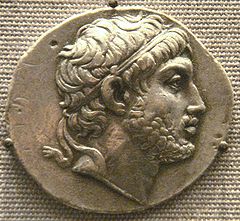

Roman legates came to Athens when hostilities were under the city walls. Philip attacked Attica, which was joined by the combined Rhodium-Pergamon fleet. In April or May 200 BCE, the Athenians, at the prompting of the Romans, officially declared war on Macedonia. Seeing Macedonian warriors ravaging their land, the citizens of Athens sent a message to Rome for help. His arrival in Italy coincides temporarily with Rome’s enactment of the war with Philip. The Senate ordered the recruitment of two legions and units of the Italian allies – a total of about 20,000 people. An ultimatum was also sent to Philip: Antigone was to stop reaching out for Ptolemy’s land, to make amends to Pergamon and Rhodes, and to stop wars with the Greeks. For Philip, this was unacceptable, because it equaled Rome’s subordination to Macedonia’s policy.
Roman MPs thwarted the alliance of Rhodes with Philip and captured the Seleucids and Ptolemy. The Macedonian king could have opposed the Republic of 40-45 thousand soldiers. From this a strong contingent was to perform garrison service in the cities subordinate to the ruler. Many warriors were sent to secure the northern borders of Macedonia. In total, Philip’s field army could have a maximum of 20,000 – 25,000 people, which was the equivalent of the Roman consular army. Macedonian basileus adopted the tactic of avoiding general battles. His people were to cut the supply lines of the Romans, surprise small enemy troops by surprise, and block his marches using mountainous terrain.
Campaign in the Balkans
The first months of the war were marked by the victories of the Romans. Consul Galba with an army of 2 legions, ally troops and 50 ships landed in Apollonia. His legate Apustius set off towards the northwest of Macedonia, conquering several towns in Dassaretta and Antipatreja, Kodrion and Knidos. At Knidos, Macedonian chief Athenagoras attacked the stretched column of Roman prey, but after the arrival of the heavy-armed legionary infantry he had to retreat. The successes of Apustius made the Illyrians, Dardans and Athamans ready for military support of the Roman army. In the meantime, after unsuccessful fighting under the walls of Athens, Philip went to the Peloponnese to drag the Achai to his side. However, those engaged in the war with Nabis were not interested in the conflict with Rome. So the king returned to Athens, but after unsuccessful attempts to capture the city he returned to his homeland. The leaders of both armies began preparations for the 199 BCE campaign. Philip secured the passes from Pelagonia to Lynkestis in the north, manning them with considerable strength for fear of invading his deadly Dardan enemies. Galba planned to attack Macedonia from several sides. Alone with the legions, the Balkans were to push from the west, the Illyrians and the Dardans were to attack from the north-west and the north, from the Thessaly they would be attacked by the Ethols. The combined Roman-Rhodian-Pergame fleet was to devastate the coast of Macedonia. However, the Etols remained in alliance with Philip and did not trust the Romans, not quite believing in their victory. Therefore, in the spring of 199 BCE at the congress in Naupaktos they did not make the final decision to join the alliance with the Romans. The disappointed consul, however, did not give up his plans for the invasion. He had 20,000 legionary infantry, about 2,000 rides supported by the Illyrians and several / a dozen elephants. His opponent gathered 20,000 infantrymen, mostly phalanxes, as well as Illyrians and Cretans, and 2,000 cavalry. Galba went through Gramsh, Kodrion and Dassaretyda. He intended to cross the mountains to the plains of