Chapters
| Name | Lucius Septimius Bassianus, from 195 CE: Marcus Aurelius Antoninus Bassianus |
|---|---|
| Ruled as | Imperator Caesar Marcus Aurelius Severus Antoninus Pius Augustus |
| Reign | 4 February 211 – 18 April 217 CE. |
| Born | 4 April 188 CE |
| Died | 8 April 217 CE |
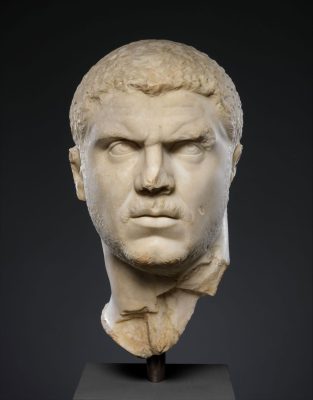
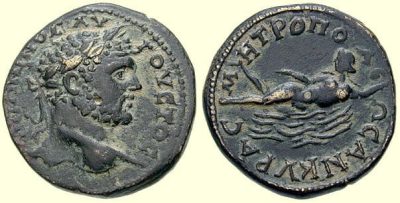
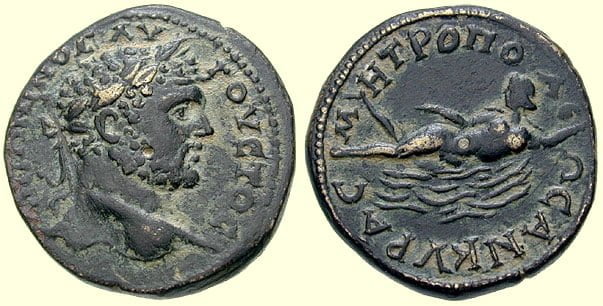
Caracalla was born on 4 April 188 CE in Lugdunum (today’s Lyon, France) as Lucius Septimius Bassianus. Then his name was changed to: Marcus Aurelius Antoninus Bassianus, Marcus Aurelius Severus Antoninus, due to the fact that his father wanted to connect his family with the Antonines. Caracalla was the Roman emperor ruling from 211-217 CE. He was supported by praetorians and part of the army; he became famous for his cruelty and bloody spectacles.
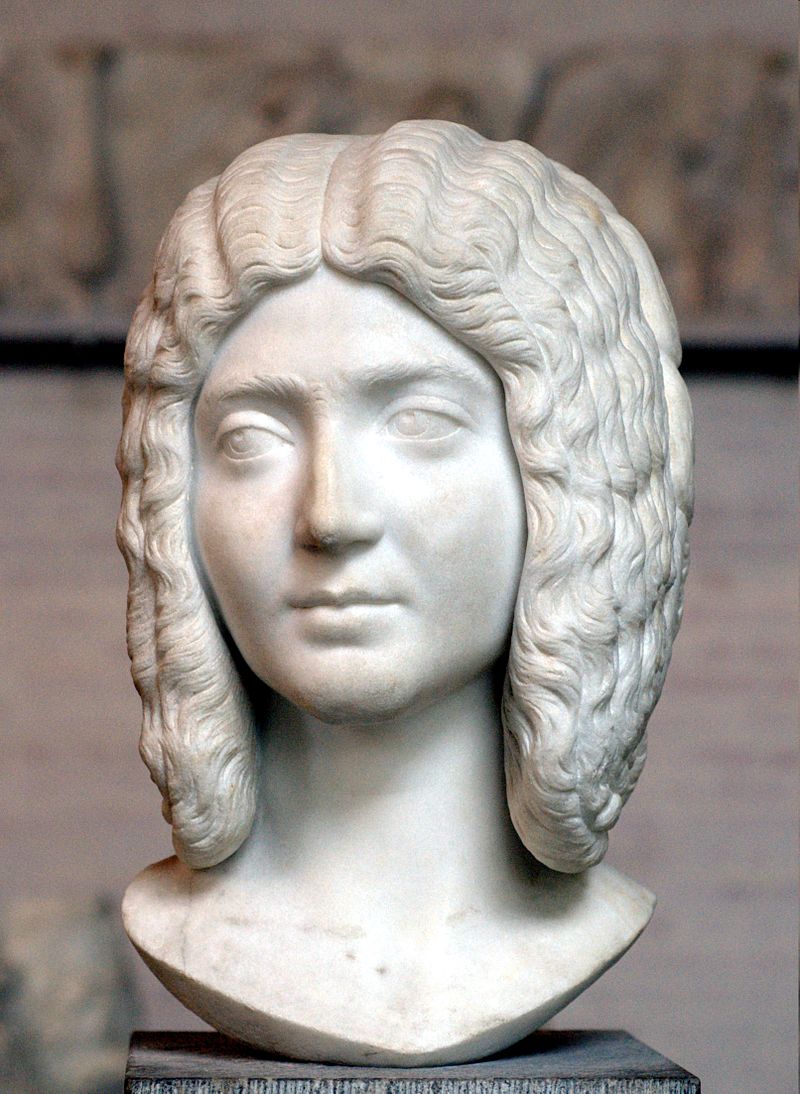
Caracalla was the son of Emperor Septimius Severus and Julia Domna. His wife from 202 to 205 CE was Publia Fulvia Plautilla, daughter of Plautian – Commander of the Praetorian Guard and Septimius Severus’s favourite. Interestingly, Caracalla honestly hated his wife – for unknown reasons. After discovering the Plautian’s plot, his daughter was exiled to Lipari and killed c. 212 CE at the order of Caracalla. The relationship was childless.
Nickname Caracalla came from the name of a Gallic coat with a hood (called caracalla), which he liked to wear during the expeditions on the Rhine and the Danube. Officially, however, this nickname was not used. In the sources, he was referred to as Antonius. Cassius Dio describes Caracalla as Tarautas, referring to the famous gladiator from that time.
Reign
Caracalla was a co-emperor along with his father, Septimius Sever since 198 CE. The same title was given to his brother c. 209 or 210 CE. After his father’s death on 4 February 211 CE, Caracalla co-ruled with his brother Geta for a year. The brothers ended their father’s campaign in Caledonia and made peace, keeping the Roman border on the line demarcated by Hadrian’s Wall.
While returning to Tome, together with the ashes of his father, both brothers constantly quarrelled. Their mutual hatred was described by Herodian:
His sons, who were now young men, quarreled continually on the return journey to Rome with their mother. They did not use the same lodgings or even dine together, since they were extremely suspicious of all they ate and drank; each feared that the other would secretly get prior access to the kitchens and bribe the servants to use poison.
This fear led the youths to complete the journey with even greater haste; for they believed that they would be safer in Rome where, by dividing the palace between them, each could manage his own affairs as he pleased in the most spacious dwelling in the entire city.– Herodian, History of the Roman Empire, IV.1
Soon the Senate divided into two groups: supporters of educated Geta and supporters of simple and fun-loving Caracalla. Palatine was also divided into two parts, each resembling a fortified fortress. It was even planned to divide the Empire into two parts (the border was to be the Bosphorus), but their mother Julia Domna kept them from doing that.
But the hatred and dissension between them continued to grow. If it became necessary to appoint a governor or a magistrate, each wished to select a friend for the post. If they sat as judges, they handed down dissenting opinions, often to the ruin of those on trial; for rivalry counted more than justice to these two. Even at the shows the brothers took opposite sides. They tried every sort of intrigue; each, for example, attempted to persuade the other’s cooks and cupbearers to administer some deadly poison. It was not easy for either one to succeed in these attempts, however: both were exceedingly careful and took many precautions.
– Herodian, History of the Roman Empire, IV.4
Eventually, in 212 CE, it was decided to reconcile both brothers. Julia Domna’s chambers were chosen as the meeting place. There, the older of them, Caracalla, ordered the Praetorian Guard to assassinate Geta, who was killed in his mother’s hands. From 212 CE it was possible to say that Rome already had one ruler.
Caracalla was considered to be a despotic and cruel ruler. He made numerous purges in the Senate. He persecuted those senators who condemned the murder of his brother. In 212 CE he ordered to the killing of the famous Roman lawyer Aemilius Papinianus as he did not want to write a legal argument justifying this assassination. According to the message in Historia Augusta (8, 6), Papinianus was supposed to say: “murder can not be as easily justified as easy it is to make, and murder is one thing, and another – accusation of innocent death.”
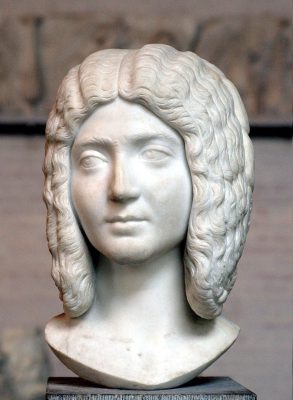
During Caracalla’s reign, the responsibility for administration was taken mostly by Julia Domna. The state administration was managed by her because Caracalla was not interested in petitions and letters. When Caracalla was dying, Julia Domna was in Antioch, sorting correspondence; she wanted to relieve her son from office work.
The emperor fully shared the interests of his father, who, as he did, put military issues to the fore. Caracalla was always the first to break up the camp, chopping trees or building roads, and thus he won the soldiers’ hearts with these activities. He also dressed like an ordinary soldier. To win the soldiers’ attachment, he raised the annual pay of an average legionary from 2000 sesterces to 3000. He was particularly generous to the soldiers of Macedonian origin. He said: “Nobody in the world should have money but me, and want it to bestow upon the soldiers”1.
Large expenses on the army caused the emperor to have to look for new sources of financing for the state. For this purpose, he increased the inheritance tax and decreased the value of money. For example, the denarius at the end of the reign of Septimius Severus had 55% pure silver, when at the end of the rule of Caracalla precious metal was already 51%. What’s more, in 215 CE the emperor introduced a new coin – antoninianus – which was to have the same value as the denarius. Ultimately, however, this ratio was 1 antoninianus to 1.5 denarii (later it reached the ratio of 1 to 2, and the coin was made of bronze). As a result, the inhabitants of the Empire collected denarii with more silver, and the state was affected by inflation, after the devaluation of the denarius.
In 212 CE Caracalla granted Roman citizenship to all free inhabitants of the Empire (so-called Edict of Caracalla or Constitutio Antoniniana) in addition to peregrini dedicti. However, it is attributed mainly to his predecessor and father of Caracalla, Septimius Severus. Nevertheless, the adoption of this edict significantly influenced the direction of the social development of the Empire. The catalogue of the citizens’ rights consisted of:
- the right to vote (ius suffragii);
- the right to serve in the Roman legions ( (ius militiae);
- the right to be elected to the state office(ius Honorum);
- the right to appeal from a judgment issued by the court if it seemed to be unjust(ius provocationis);
- right to own property (ius census).
The rights of Roman citizens were originally reserved for citizens of the city of Rome. From 89 BCE they were granted to all residents of Italy. At the moment of the edict’s promulgation, some of these laws, likeius suffragii, were only historical. The emperor justified his move with religious arguments (gaining favor of the gods). The historian, Cassius Dio, in turn, attributed to the edict only financial motivations (extending taxes on the majority of the population, without exemption from previous benefits).
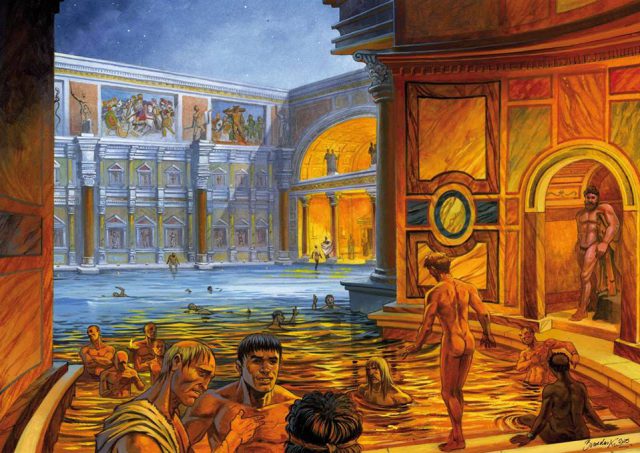
Another initiative of Caracalla was to build in Rome (preserved today in ruin) wonderful public baths. From his name, they are called the Baths of Caracalla. They were the largest Roman baths supplied with water by the aqueduct Aqua Marcia and the second largest ever built in ancient Rome. Baths covered the area of 5 acres and at the same time could host 1, 600 people. Works began in 211 CE and the partial inauguration took place 5 years later. The baths consisted of gardens, libraries, fountains, saunas, a stadium, a swimming pool and an exercise area.

In 213 CE Caracalla left Rome and never came back. He went north to the German frontier to deal with the Alamanni, a tribe which had broken through the limes in Raetia. The beginning of the campaign resulted in the victory of Caracalla in the battle with the Alamanni on the River Main. The ruler also commissioned strengthening the limes in Germania, commonly known as Agri Decumates.
However, the prolonged clashes soon began to take an unfavourable turnover for the Romans. In this situation, the emperor, wanting to guarantee peace in the region, negotiated with the Germans agreement by buying out a room. With this action, Caracalla managed to calm the situation at the borders for another twenty years. The next battles with the Alamanni will only come in 233 CE during the reign of Alexander Severus.
Stay of Caracalla in East
In the years 215-216, Emperor Caracalla travelled through the Balkans, Turkey, and Syria to Egypt and Alexandria. The very expedition of Caracalla to the east was primarily of propaganda and sentimental nature, due to the adoration of the figure of Alexander the Great. It is also possible that the ruler’s entourage was making preparations for the planned Party expedition in the coming years.
According to the analysis of the ancient sources left as well as contemporary works and research, the author concluded that Caracalla carried out the first executions before entering Alexandria when a delegation of inhabitants welcomed him and demanded certain obligations from him. Initially, the ruler had a positive attitude and finally sentenced the people to death. Caracalla’s subsequent stay in Alexandria was associated with numerous administrative and judicial tasks. Caracalla also expressed his dissatisfaction with the city authorities, which had previously sent him further envoys. There was also some unrest during Caracalla’s stay (for example, the expulsion of “true Egyptians” from the city or the linen weavers’ revolt).
In April 216, numerous festivals and ceremonies took place. For the time of the planned deification of Caracalla, young men from the city were summoned to appear in a given place – from among them he wanted to choose the most magnificent men and include them in his phalanx, created in honour of Alexander the Great, and which was probably supposed to take part in the planned expedition to the Parthia. At the appointed time, thousands of young men appeared at the appointed place. With time, Caracalla left the assembly point, and there were unrest and fights between the soldiers of Caracalla and the young Alexandrians. Caracalla, who came again, considered it a rebellion and sentenced the young men to death and the city to a pogrom (the so-called Magna caedes). Roman soldiers burst into the city and began raping and looting.
Interestingly, however, Caracalla’s popularity, despite these events, was still high in the provinces; this was probably due to the previously issued Caracalla edict recognizing all free inhabitants of the empire as Roman citizens.
War with Parthia
In 216 CE Caracalla began a series of attacks on areas under the Parthian influence to attach some new lands to the Empire (including Armenia). With time, the idea of connecting the Roman Empire with the Parthian Empire appeared in his head. To this end, he offered the king of Parthia, Artabanus V, a marriage proposal between himself and the king’s daughter. This is how Herodian describes these plans:
He wrote to the king that he wished to marry his daughter; that it was not fitting that he, emperor and son of an emperor, be the son-in-law of a lowly private citizen. His wish was to marry a princess, the daughter of a great king. He pointed out that the Roman and the Parthian empires were the largest in the world; if they were united by marriage, one empire without a rival would result when they were no longer divided by a river.
The rest of the barbarian nations now not subject to their authority could easily be reduced, as they were governed by tribes and confederacies. Furthermore, the Roman infantry were invincible in close-quarter combat with spears, and the Parthians had a large force of highly skilled horse-archers. The two forces, he said, complemented each other; by waging war together, they could easily unite the entire inhabited world under a single crown. Since the Parthians produced spices and excellent textiles and the Romans metals and manufactured articles, these products would no longer be scarce and smuggled by merchants; rather, when there was one world under one supreme authority, both peoples would enjoy these goods and share them in common.– Herodian, History of the Roman Empire, IV.10
However, the emperor received a refusal from Artabanus V, who perceived the proposal of the alliance as a union with Roman domination. Appalled Caracalla continued to tighten relations with the Parthians and planned further military campaigns in the spring of 217. Interestingly, Caracalla planned to use 16 000 phalangists – thus referring to his favourite commander, Alexander the Great.
Death
On 8 April 8 217 CE (4 days after his 29 birthday), while travelling from Edessa to the temple at Carrhae (now Harran, in southern Turkey), Caracalla was murdered. He was killed by the officer of his personal guard – Julius Martialis – during the stoppage and urination. Greek historian Herodian mentions that Martialis’ brother was killed on behalf of Caracalla’s command a few days earlier. Caracalla’s assassin was also killed.
Cassius Dio, in turn, remembers that a young legionary murdered the emperor, because of the resentment he had for him, for not appointing him a centurion. The legionary stabbed Caracalla with a knife. Interestingly, in the place where Caracalla was killed, in the year 53 BCE, took place the defeat of the Roman army at the hands of the Parthians.
The successor of the murdered emperor – three days later – became the Praetorian Guard Prefect Macrinus, who was most likely the initiator of the plot.
At the news of Caracalla’s death, Julia Domna decided to commit suicide. It is possible that her decision was dictated by breast cancer.
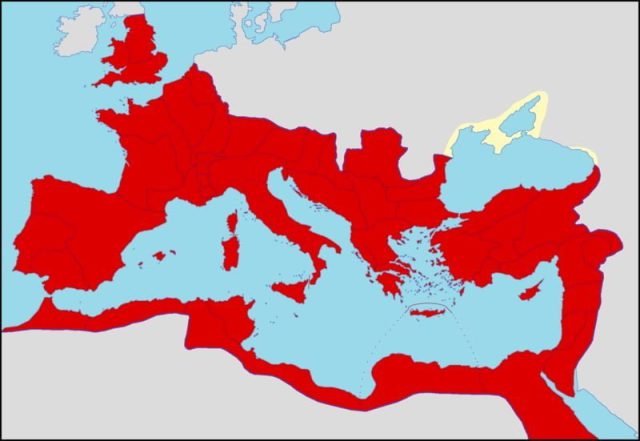
Caracalla as an emperor
Although the Roman Senate, to put it mildly, “did not like much” the young emperor, it was impossible to completely forget the ruler (damnatio memoriae) and to consider him an enemy (hostis). Caracalla was liked by the army and did not want to cause revolts. The new ruler, Macrinus, issued a silent order to remove all the images of his predecessor from the public space. In order to preserve the continuity of the Severan dynasty, receive legitimacy from the Senate and calm the army, Macrinus decided to deify Caracalla as Divus Antoninus. Caracalla’s ashes rested in Hadrian’s mausoleum in Rome.
The sources of ancient writers (Herodian, Cassius Dio) or the work Historia Augusta Caracalla is presented in a very negative way.
To a large extent, the perception of the emperor results from his decisions – including his order to brutally kill his own brother and then his supporters. On the other hand, the ruler clearly became attached to the army and exalted this layer over the senators. So Roman historians, who usually were members of the Senate, were rather reluctant towards the emperor – which, incidentally, is nothing new in the history of Rome. Caracalla was to take power with the support of the Praetorians and part of the army. He was famous for his cruelty, his liking for bloody shows and his promiscuity. He showed scorn to the scholar.
Cassius Dio usually portrayed Caracalla as a “soldier-ruler” who marches with the army and behaves like a legionary. The ruler’s brutality meant that a large part of the state budget was spent on military expeditions and paying for the army. Cassius Dio remains, however, still one of the “more sensible” direct sources of knowledge concerning Caracalla’s biography. Herodian’s “History of the Roman Empire” to “Historia Augusta” is, in the scholars’ opinion, unrealistic.