Chapters
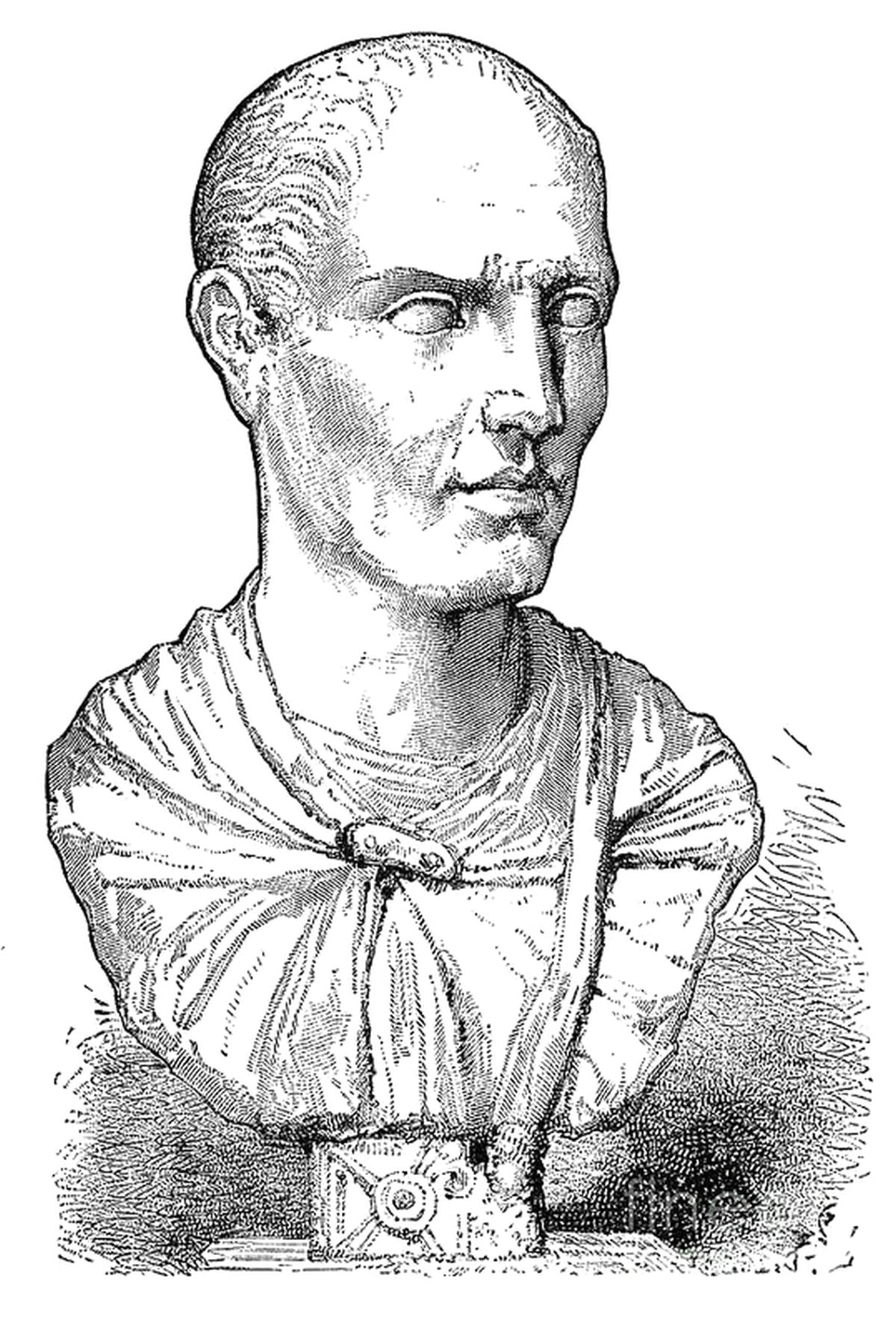
Marcus Tullius Cicero (Marcus Tullius Cicero) was born on January 3, 106 BCE in Arpinum, a mountain town located about 100 km southeast of Rome.
He was one of the largest, if not the greatest Roman speaker. Promoter of Greek philosophy and politician. Optimization supporter. He came from an old equestrian family – Tullius.
Origin and family
The inhabitants of Arpinum had Roman citizenship from 188 BCE, and the Tullius family participated in the management of their hometown for several generations. With his family home in Arpinum, Cicero was emotionally connected for the rest of his life and often mentioned it in his writings. Mark’s father belonged to the state of equites, while his mother came from a Roman senatorial family. Cicero had a brother of about five years younger Quintus.
At all costs, his father wanted Cicero and his brother to be eminent politicians who would be characterized by extraordinary abilities. Marcus’ father thought that the key to children’s careers would be to provide them with proper education. He was wealthy enough to buy a house in Rome and live there with his two sons when Marcus was about ten years old. In the capital, the family’s friends included prominent politicians and speakers at the time – Marcus Antonius Orator and Lucius Licinius Crassus. Youths from significant families, writers and Greek rhetors visited their homes. In such an environment, under the care of Mark Antony and Crassus, eleven-year-old Cicero began to study Greek, philosophy and rhetoric. His first philosophy teachers were the Epicureans Fajdros and Zenon.
Political career
After coming of age, at the age of 16, he began his practice as a lawyer with the well-known Roman lawyer Quintus Mucius Scaevola Augur, an expert in civil law, who did not step down. He attended court hearings where he listened to famous lawyers. In Augur’s house, Marcus’s friendship with Titus Pomponius, three years older, was born, who later received the nickname Attica. This friendship was to last until Cicero’s death. Cicero also watched and listened to the speeches at the Forum Romanum, which also had a positive effect on its development. Cicero also began learning public life (tirocinium fori), which, according to tradition, lasted a year. In time, however, he decided to join the army, knowing that this was the best way to continue his political career, which, however, stopped his studies for some time.
When the war of Rome with allies broke out, as a 17-year-old he enlisted in the army for a year. He was first assigned to an internship to the staff of the consul Gnaeus Pompey Strabon, then fought as an officer under the command of Lucius Cornelius Sulla. He completed military service before the outbreak of civil war between Marius and Sulla in 88 BCE, during which many of his teachers and friends were killed. The aversion to terror and bloody domestic struggles that he had lived all his life made him look with disgust at what was happening in Rome at the time. In this conflict, young Cicero took a neutral position, although after Sulla’s victory, he was suspected of favouring his countryman Marius. During his service, he met the later prominent commander Pompey the Great.
After completing military service in 88 BCE, Cicero was able to focus on science again. Eighteen-year-old Cicero was admitted by another distinguished lawyer – Quintus Mucjus Scewola Pontifeks. In addition, he began to attend lectures by the well-known head of the Platonic Academy, Philo of Larysa. He was taught pronunciation by Molon of Rhodes. During the political fighting, Cicero undertook to write poetry. His youthful achievements during this period include such items as “Halcyon”, “Pontius Glaukus”, “O Nile” and “Thalia masta”. However, these songs have not survived. Fragments of the poem “Marius” and translations from Greek “Phenomena” by Arata have survived to our times in short quotes. However, the translation of Xenophon’s “Household” has not survived. Another well-known work from his youthful life was the textbook of rhetoric – Libri rhetorici (“Rhetorical Books”). He managed to write only two of the planned five books.
During the Sulla dictatorship in 82 BCE, Cicero began his career as a court lawyer. He managed to defend Publius Quinquius (first recorded speech). His eloquence and ability to speak perfectly allowed him to gain relative publicity, and eventually became one of Rome’s best court defenders. The very issue of Quincius, rather complicated, did not give a special opportunity to shine with rhetorical talent. Cicero opposed the simplicity and modesty of his client with the wealth and power of influential people associated with the dictator.
Another winning case was the defence of Sextus Russian, where he was falsely accused of patricide. Sextus was accused of patricide by Sulla’s close associates who wanted to take over the property of the murdered. Cicero proved the innocence of the accused, which no other lawyer undertook, showing great courage towards the dictator. It was Cicero’s first criminal case.
Against Sulla once again, in 79 BCE during a trial of a woman who was deprived of Roman citizenship. Cicero bravely attacked the dictator and firmly stated that once granted citizenship could not be taken against anyone’s will. When at the end of 79 family and friends began to fear for Cicero’s life, he decided to realize his dreams of seeing Greece and went to Athens. There, he listened to the lectures of Antioch of Askalon, the founder of the Fifth Academy, who was inclined towards stoicism. He visited monuments and places famous for the deeds of great Greeks.
After six months, he crossed to the Roman province of Asia, which he wandered practising in pronunciation under the direction of the most outstanding local speakers. In Rhodes, he listened to Stoic Peseidonis and learned from the rhetor Molon known from Rome.
In 79 BCE he married Terentia, who for thirty years of their marriage was a real support for him. She survived Cicero, was married three times and died after living for a hundred and three years. Their first daughter, Tullia, was born to them, a few years later son Marcus
In 77 BCE, after Sulla’s death and the restoration of the rights of the republic, thirty-year-old Cicero returned to Rome. Known for his trials against Sulla’s power, he returned to work in the courts and defended himself in subsequent high-profile cases. Not one of the speeches he made during this period survived, but his popularity had to increase, because in 76 BCE he was elected by centurial committees one of the twenty quaestors. When drawing the province, he was quaestor in Lilybeum, Sicily. He served in Western Sicily for a year, and his tasks included enforcement with the help of tax tenants, the so-called publications, tithes from agricultural produce, additional tithes payable and taxes. There, he also dealt with defence in courts, he also sought and renewed the grave of Archimedes in Syracuse.
In 74 BCE, Cicero returned to Rome and, as a former quaestor, sat in the senate. He supported the restoration of power to the people’s tribunes, as he saw it as a return to the traditional rights of the republic. Of the many court cases in which he appeared during this period, only three of them were preserved – the defence of the freedman Skamander accused of attempting to poison the equite; the trial of a Tullius against a rich neighbour Fabius, who, with the help of slaves, attacked Tullius’s villa and beat many of his people; defending Stenius, who wrongly condemned to Sicily, fled to Rome.
In 69 BCE, Cicero was aedile. As an aedile, he had temples, public buildings, streets and market places under his care. He was dealing with provisioning of the population and organization of public games. He was not a poor man, but he was far from wealthy, so he edited to the best of his abilities – he received, among others, financial help from grateful Sicilians.
Cicero’s financial situation improved so much that in 68 BCE he bought a property in Tusculum, a seaside town near Rome. He brought there equipment and decorations from Greece. It will be, after his hometown of Arpinum, his favourite place of rest, to which he could come more often because it was close to the capital.
In 67 BCE he was elected unanimously (only a few citizens in Rome’s centuries-old history had such an honour) praetor. It is worth adding that during the aedile and prefecture he was a political ally of Gnaeus Pompey, his comrade-in-arms from the war with his allies.
In 63 BCE, he finally took the top position of consul. The highest career level was hard to come by. Cicero officially requested the consulate, began by Roman custom one year before the election, in July 65. He faced a very difficult task. He was not of Roman origin, none of his family ever held any office in the republic. In Rome, “new people” was allowed at most to the provost, but they were strongly opposed to their choice of consulate, reserved for old senatorial families. On January 1, 63 BCE, the consulate took up the agrarian bill brought by people’s tribunes on that day. During his consular term, he became famous for the pacification of the conspiracy of Catiline who wanted to take power in Rome.
In 62 BCE he gave up politics for a while, devoting himself entirely to writing. He created the work “De consulatu suo”, presenting the history of his consulate. In addition, he developed ten consular speeches. In 59 BCE, Cicero was sent into exile by a tribune of people, Publius Clodius. He issued a law providing for the penalty of exile for anyone who sentenced a Roman citizen to death without appeal to the people. Forced to leave, he returned in 57 BCE, greeted as a triumphant.
After returning, he focused mainly on restoring his own villa seized during his exodus. He also devoted this time mainly to literary work, reluctant to think about politics. In 54 BCE he came to terms with triumvirs: Caesar, Pompey and Crassus and began work on “De res publica”, which he finished 51 BCE. It presented an ideal country with a mixed system. According to his idea, a perfect state should have elements of monarchy, oligarchy and democracy. In the same year, Cicero took the office of governor of Cilicia.
Relationships and family
In about 48 BCE, Cicero’s relations with Terentia, with which he survived generally thirty-two years and which was always his support, began to break. This ambitious and independent woman, who often influenced her husband’s decisions, less and less liked his rather carefree attitude to money. During the civil war, the bonds connecting the marriage so far loosened up until they led to divorce.
After the divorce of Terentia, Cicero was troubled by financial difficulties. At the end of 46, he began to think about a marriage that would improve his financial status. He was sworn in with Pompeii, widow of Faustus Sulla, and another woman whose name in the letter does not mention, although he says: I have never seen anything uglier.
The choice fell on a young and rich orphan, Publilia, whose property he looked after. Finances, not the beauty of the chosen one – as his missing freedman Tyron stated in the lost biography of Cicero – decided about the second marriage. The relationship of a sixty-year-old man with a twenty-year-old girl caused outrageous comments in Rome. Cicero was accused of marrying a virgin at such a late age. According to Quintilian, he was supposed to reply: “She’ll be a grown-up woman tomorrow“. Terentia used her ex-spouse, who said that he had lost his head in old age.
However, in February 45 BCE Cicero suffered the toughest blow in his life – his beloved daughter Tullia died in the childbirth, which hit him hard.
Literary activities
In his free time he devoted himself to writing. He created a work on the history of Roman pronunciation, “Brutus”. Immediately after this “Paradoxa stoicorum” and “De Oratore” were created. Cicero completely forgot about public life issues. Absorbed in philosophical issues, he did not really deal with public affairs. He wrote many philosophical positions: “De finibus”, “Consolatio”, “Hortensius”, “Varro or Academica Posteriora”. The great work “De Finibus Bonorum et Malorum” was created. Then he began to write “Tusculanae Disputationes”. Mention should also be made of the “De Divinatione”, “De Natura Deorum” or “Cato Maior de Senectute”.
Speeches |
Pro Quinctio (81 BCE) – Pro Roscio Amerino (80 BCE) – Pro Roscio Comodeo – In Verrem (70 BCE) – Pro Fonteio (69 BCE) – De Imperio Cn. Pompeii (66 BCE) – Pro Caecina – Pro Cluentio – Pro Rabirio Perduellionis Reo – In Catilinam I-IV – Pro Murena – De Lege Agraria Contra Rullum (63 BCE) – Pro Archia Poeta (62 BCE) – Pro Sulla (62 BCE) – In toga candida – Pro Flacco (59 BCE) – Post Reditum in Senate (57 BCE) – Post Reditum in Quirites (57 BCE) – De Domo Sua (57 BCE) – De Haruspicum Responsis (57 BCE) – Pro Cn. Plancio (56 BCE) – Pro Sestio (56 BCE) – In Vatinium (56 BCE) – Pro Caelio (56 BCE) – De Provinciis Consularibus (56 BCE) – Pro Balbo (56 BCE) – In Pisonem (55 BCE) – Pro Scauro – Pro Rabirio Postumo (54 BCE) – Pro Milone (52 BCE) – Pro Marcello (46 BCE) – Pro Ligario (46 BCE) – Pro Deiotaro (45 BCE) – Philippicae (44-43 BCE) |
Philosophical and rhetorical works |
De Inventione – De Optimo Genere Oratorum – Topica – De Oratore – De Fato – Paradoxa Stoicorum – De Partitione Oratoria – Brutus – Orator – De Re Publica – De Legibus – De Finibus – Tusculanae Disputationes – De Natura Deorum – Academica – Cato Maior de Senectute – Laelius de Amicitia – De Divinatione – De Officiis |
Lists |
Epistulae ad Atticum (68-43 BCE) – Epistulae ad Familiares (62-43 BCE) – Epistulae ad Quintum fratrem (59-54 BCE) – Epistulae ad Brutum (43 BCE) – Epistulae ad Strybam |
Fragments of poetry |
De consulatu meo – Aratea |
Other |
De divinatione |
Caesar’s civil war with Pompey
The unexpected deterioration of the situation in Rome and the threat of civil war erupted Cicero to reflect on the support of one of the parties. He decided to support Pompey seeing Caesar as a supporter of one-sovereignty. Pompey’s defeat in the civil war forced Cicero to go with his brother to Patrai, and then to Brundisium.
In October 47 BCE he returned to Rome after more than five years. The city was dominated by Caesar’s supporters, and Cicero’s presence there was tolerated insofar as he did not oppose the dictator’s policy. Most friends and co-workers have died or were in exile. Lonely, divorced Cicero made contact with old friends – Warron and Marcus Junius Brutus.
Murder of Caesar
Cicero knew nothing about Caesar’s planned assassination attempt. Although one of the conspirators was his friend Brutus, Cicero’s disgust for conspiracies and assassinations was widely known. According to Plutarch, the conspirators suspected that Cicero would deter them from the assassination and wanted him to face a fait accompli.
In private letters he did not hide his satisfaction with the end of the dictatorship, but he was not optimistic. He did not like the moves of the conspirators, which he did not officially support. Marcus Antony and Caesarians strove for his neutrality, threatening with civil war. Cicero decided to retreat to Tuskulum and other suburban villas again.
Proscription List
After Caesar’s death in 44 BCE, Cicero’s situation became uncertain. Mutual dislike Mark Antony and Cicero forced him to deliver the famous 14 filipik directed against Antony. He referred in them to all laws passed through the former leader Caesar and appealed to the consuls to oppose Antony and defend the republic. Saturated with hatred of Cicero’s speech, which clearly weakened Antony’s authority, forced Mark to react. Cicero was on the proscriptive list, which was a list of residents who lost their citizenship rights and became the target of murder for every citizen of Rome. This list was compiled by the then Roman rulers of Mark Antony, Octavian Augustus, and Marcus Lepidus. Eventually, Antony decided to hire the wetboys he ordered to kill Cicero. The philosopher fled the capital slowly and not too strongly. He keyed and hesitated. Finally, the torturers caught him by the sea, just before fleeing Italy.
Death of Cicero
He died on December 7, 43 BCE, in his villa in Formianum. According to the historian Livy, Cicero, just before the soldier cut his head off, was to say solemn words: “Let me die in my homeland which I have often saved”.