Chapters
Flavius Stilicho was born around 360 CE His father was a vandal and served in the Roman army during the time of Emperor Valens, while his mother was a native Roman. Flavius went through officer ranks until at a young age he became a tribune in side troops.
In 384 CE he was sent by emperor Theodosius the Great to Persia, where he was to explain the case of Armenia, which was invaded by the Persian king that same year Shapur III. The contentious issue was Shapur’ banishment of the Armenian king, friendly to the Romans. Finally, Armenia was divided into Persian and Roman.
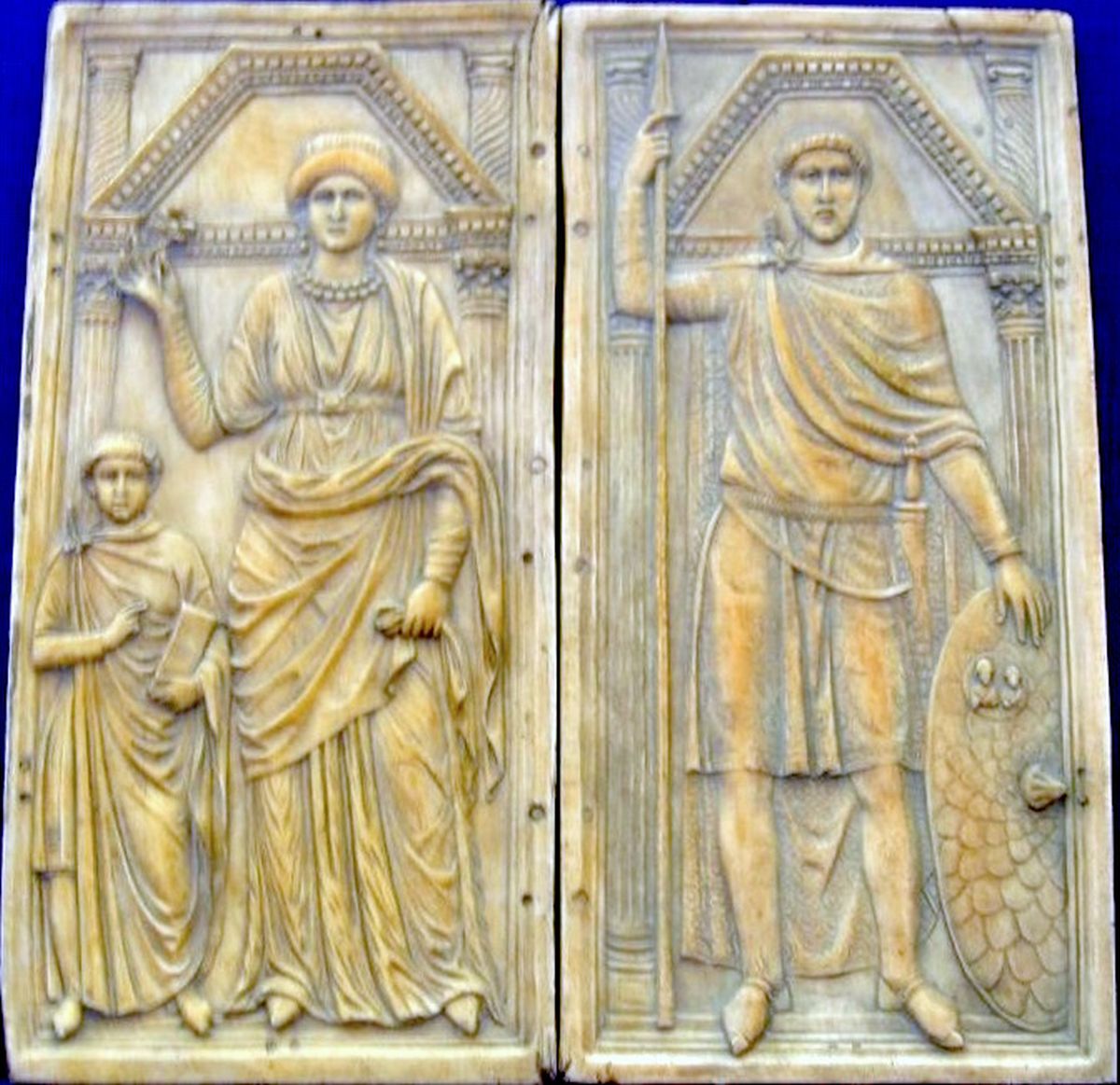
Theodosius, pleased with the whole course of the matter, appointed Stilicho as the imperial stable and gave him his niece’s hand to Serena. The following year 385 CE, Stilicho and Serena were married. Stilicho, therefore already associated with family ties with the emperor himself, was appointed to a high position a collision of side troops.
We know little about the history of Stilicho from 386-393 CE. Most likely, he fought in 388 CE alongside Theodosius against the self-proclaimed emperor Magnus Maximus. At that time, he was not a highly valued leader, and instead the laurels were collecting: Arbogast (the future great enemy of Theodosius), Rychomeres, Promotus and Timasius. They just defeated Maximus near Sawa and near Drawa. He died later on August 28, 388 CE in Aquileia at the hands of his own soldiers.
After the death of Rychomeres and after Arbogast’s departure to Gaul, Stilicho and Goth Gajnas played the greatest role in Theodosius’ army. An opportunity to prove himself appeared in 394 CE when the emperor declared war on Eugene – the emperor of the western part of the empire. Eugene had Arbogast at his side, i.e. a former competitor of Stilicho in the fight for supremacy in the army. The decisive battle took place September 6, 394 CE on the Fridigus River. The battle was fierce and for a long time neither side could gain an advantage, only a successful manoeuvre to set fire to the wooden fortifications of the camp in which a large part of Arbogast’s army stayed gave the advantage to Theodosius’ forces. The last, even frantic attack by Arbogast’s army ended in defeat, because the procession was significantly hindered by the wind blowing against them. Eugene himself was captured and killed, and Arbogast got lost while escaping and saw no other way out of the situation and committed suicide.
The victorious battle brought high prestige to Stilicho, who was raised to the rank of head of the armed forces of the Roman Empire. At the beginning of 395 CE, happiness was smiled at Stilicho. On January 17, 395, Theodosius divided the Empire between his two sons: Arcadius and Honorius. On his deathbed, he asked Stilicho to look after Honorius, eleven years old, who had inherited the Western Roman Empire. From that time, Flavius Stilicho was the proper ruler of the Western Empire. In the early days of Honorius’ reign, Stilicho tried to eliminate in turn the “guardians” of Emperor Arcadius, who was too young to rule the state. First he led the fall of Prefect Rufin, and then in 399 CE he got rid of his successor Eutropius. In 396 CE, at the head of considerable forces, he sailed down the Rhine to the mouth of the river into the sea. During the road he made arrangements with various Germanic tribes, but the main purpose of the expedition was to show the strength of the Western Empire, the last one anyway.
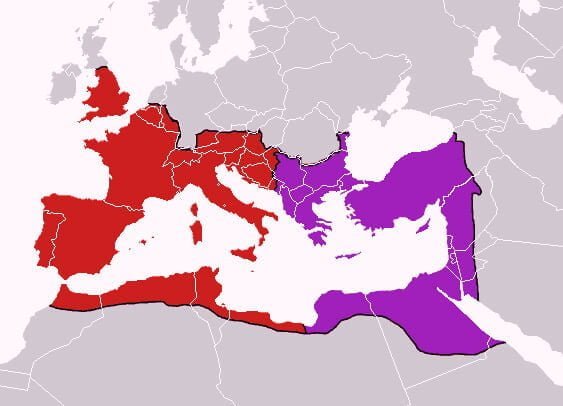
Then, with his army, Stilicho set off for Greece, where, at Arcadius’s request, he was to stop the plundering raids of the Visigoths under Alaric. Passing through the Balkan provinces, he saw many villages looted and completely destroyed, but he did not do much or did not want to do. In any case, at Arcadius’s request, he had to leave Greece. After returning to Milan, where Emperor Honorius was, he had to deal with the new problem. Namely, the Roman commander in Africa Gildon gave Africa, which until then belonged to the Western Roman Empire, to Arcadius. The next year, CE 398, the problem resolved itself, for Gildon was removed from office by his brother, who later succeeded Stilicho. Africa has returned to its rightful owner. In the same year, the chief strengthened his position outside, giving his daughter Maria for only fourteen years old Honorius.
The British tribes attacking the Romans were immediately repelled, the Germans were afraid to attack the undefeated leader, and for peace in the Western Empire, only lack of warming relations with the Eastern Empire. In recognition, he was appointed consul for 400 CE.
When writing about Stilicho, one cannot forget about the outstanding figure of those years, namely the famous poet Claudius Claudian. Although he was a huge lame, because he wrote songs of praise only in honor of Stilicho, he was also very respected by him – this is demonstrated by the statue of Claudian in the forum of Trajan which was erected by order of Stilicho.
Let’s return to political accidents. After a short period of peace, the Vandals attacked the Roman army over the upper Danube. When Stilicho fought against this tribe, the Visigoths of Alaric unexpectedly crossed the Alps in November 401 CE and entered Italy. Terrified, Honorius reportedly escaped from Milan in December this year and moved to Ravenna. Stilicho himself found himself in a very difficult situation, his troops depleted by constant fighting against the Vandals were not enough to stop the procession of the Visigoths. The chief was forced to bring troops from the Rhine and from Gaul. After gathering the whole army, Stilicho chased Alaric. Visigoths might have come to Ravenna, but unnecessarily engaged in the siege of Milan, city defenders managed to repel the invaders. The Visigoths set off on a further march, however, Stilicho hurrying to the rescue caught them near Turin and crushed them on April 6 in the battle of Poland, and the escaping survivors still crushed at Verona. So Visigoths were forced to flee to their homes on the Danube.
In 403 CE, Stilicho decided to expand the already depleted army. Most of the recruits were native Germans, which did not like the inhabitants of Italy. In 405 CE, the leader decided on a reckless manoeuvre and ordered on behalf of Honorius from the Eastern Empire most of the Balkan lands, citing the testament of Theodosius the Great. This demand worsened the already bad relations between the two empires. However, Stilicho had to defend Italy again, this time against the invasion of Ostrogoths under the leadership of Radagajs, who, passing through the Alps, ravaged the Po valley. Stilicho was forced to ask for help from the Hun king Uldina and the Gothic leader Sarus. In the summer of 406 The Goths besieged Florence, and when the crew of the fortress surrendered, he came to the rescue of Stilicho and surrounded the Goths at Fiesole. Radagajs himself wanted to escape, but was caught and killed on August 28. His soldiers, tired of hunger, gave up. Most of them were killed on the spot, the rest were reportedly captured.
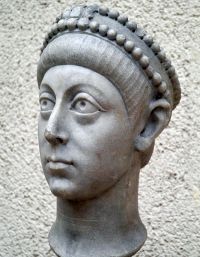
However, the glory of Stilicho did not last long. Fighting Radagajs, the chief pulled almost all units from the Rhine. Sweb and Vandal tribes took advantage of this and crossed the river and found themselves in northern Gaul. However, they were stopped by the Franks, allies of the Romans. But at the end of 406 CE the above-mentioned tribes merged with the Burgundians and Iranian Alans. Unable to stop such pressure, the Franks surrendered, and the Germanic tribes entered the territory of central Gaul capturing many important cities. During the fighting Trier, one of the main imperial residences fell. The Italian population, terrified by such easy victories of the barbarians, began to blame Stilicho for everything. There was not much of his fault in these events, because the empire was simply too weak. German army veterans from Theodosius were a small army. However, Stilicho made a great mistake, instead of fighting the Germans in Gaul he decided to take Arcadius from those Balkan lands that he had once demanded. When Stilicho was to cross the Adriatic with his army to Greece, where the offensive was about to begin, he received the news that the Constantine self-proclaimed left Britain and was in Gaul. Thus, Stilicho had enemies in the east in the form of the Eastern Roman Empire and in the north in the form of Germans and the army of the self-proclaimed. As if that wasn’t enough, the Alaric Visigoths fell on his head again, who crossed the Alps and threatened to attack Italy if they didn’t pay a lot of money. Stilicho was forced to pay, for Alaryk was his last resort in the fight against enemies.
In 408 CE, Emperor Arcadius died, Stilicho, seeing his chance in this, left for Constantinople and offered to take care of the little emperor Theodosius II. He met with a firm refusal. At that time, Honorius came to Ticinum, where Stilicho’s army camped to set out against Constantine. At that time, the imperial secretary Olympius (elevated to his position by Stilicho) caused anti-German riots. Many of the highest dignitaries and friends of Stilicho were killed. Honorius himself supported the uprising and turned against Stilicho. The chief staying in Bologna at that time wanted to wait for the development of further events, Sarus the Gothic chief wanted to set off just against Honorius. As a result of an argument, part of the army left Stilicho, but Sarus himself remained. On the night of the same day, he betrayed the chief and ordered to kill him and his bodyguard consisting mostly of the Huns. The leader himself managed to escape with his survivors to Ravenna. There Stilicho was sneakily killed.
Death
He died on August 22, 408 CE. Flavius Stilicho was the actual ruler of the Western Roman Empire in 395-408 CE. The reasons for his death can be found in his great ambition. It is believed that he could still live peacefully in the Western Empire and repel attacks from outside, but he wanted more, he wanted to dominate the Eastern Empire. Emperor Arcadius and then Theodosius II paid large sums of money to the tribes on the Danube (headed by Visigoths) to attack the Western Roman Empire.
Stilicho’s turbulent life ended with a shameful death only worsened relations between empires. However, he cannot be grasped for great military and diplomatic talent. As a commander of the end of the empire, he was only second to Aecius. Had it not been for his death, it could have been avoided by Alaric’s ravaging of Rome in 410 CE.