Chapters

Lucius Cornelius Sulla was born in Rome in 138 BCE as Lucius Cornelius Sulla, later earning the nickname Felix (“Happy”). He was a Roman commander and politician – an optimist. In 82 BCE Sulla was given dictatorial power and in the following years he carried out a series of political reforms.
Youth and appearance
He came from the impoverished branch of the patrician Cornelius family (Cornelii). Due to the lack of funds, Sulla spent his early youth among comedians, actors, dancers and musicians. Plutarch mentions that Sulla surrounded himself with debauchery, actors, music and wine until the end of his life (also during his marriage to Valeria). Sulla was blond with blue eyes and a white face covered with red marks.
It seems certain that Sulla received a good education. Salustius describes him as well-read and intelligent and proficient in Greek, which was a sign of a good education in Rome. It is not certain where Sulla got his fortune, which enabled him to pursue a political career and gain new levels of cursus honourum. Plutarch mentions two inheritances, one from his stepmother and the other from a low-born but wealthy woman.
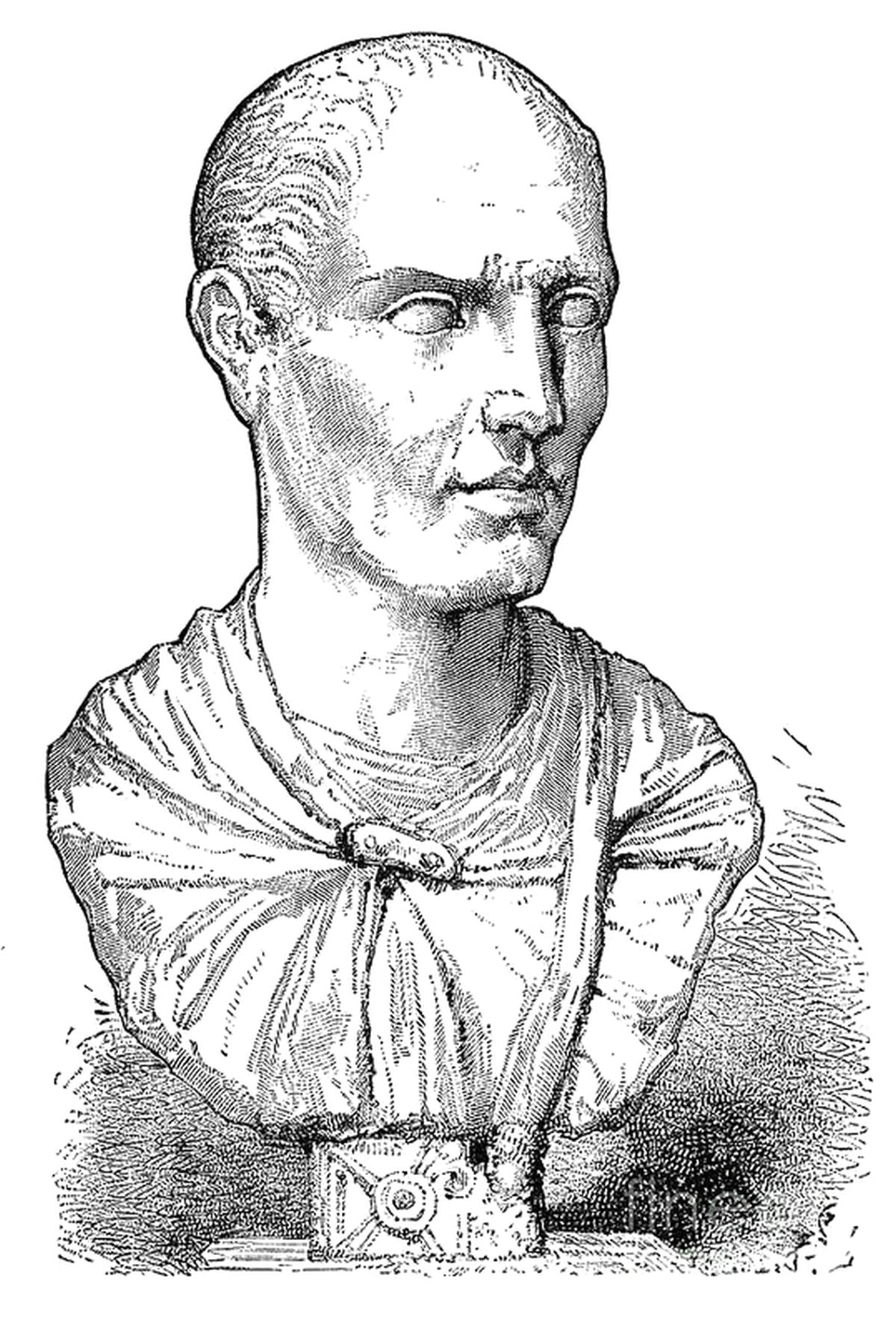
According to the accounts of Plutarch, Sulla had blonde red hair, blue eyes and an unusually white complexion with red spots. This is how the historian describes it:
His personal appearance, in general, is given by his statues; but the gleam of his gray eyes, which was terribly sharp and powerful, was rendered even more fearful by the complexion of his face. This was covered with coarse blotches of red, interspersed with white.
– Plutarch, Sulla, II
Political career
In 107 BCE Sulla was appointed quaestor by the consul Gaius Marius. He took part in the expedition of Marius against the Numidians, where distinguished himself by taking the Numidian king Jugurthacaptive, thus ending the war. This success sped up Sulla’s career.
Under the command of Marius, and later proconsul Quintus Catulus, he took part in battles against the Germanic tribes of the Cimbrii and Teutons in 105-101 BCE that migrated towards Italy. Marius took command of the Roman army as the best Roman general. Sulla served as tribunus militum in the legions in the first part of the campaign. Under the command of the proconsul Quintus Catulus, he was a legate (legatus). In 101 BCE there was the Battle of Vercellae, in which the enormous Germanic army was defeated and Marius and Catulus were granted the right to triumph. It is worth adding that Catulus was not good support for Gaius Marius, often showing a lack of faith in the victory.
Governorship of Cilicia

Sulla returned to Rome in 97 BCE to become praetor urbanus, and in 96 BCE he became pro consule and governor of Cilicia in Anatolia. Cilicia, the Romans recently joined the empire, because from there they controlled the marauding pirates in the area. Previously, the Rhodes had dealt with them, but the Romans significantly limited the rights of the latter due to the attitude they took during the Macedonian War. Sulla was the first magistratus to receive a Party ambassador – Orobazus. During the audience, Sulla sat down between the Party representative and Pontus’ ambassador, which was to seal the party’s fate. The place in the middle was honourable, which Sulla probably did not know. After his return to the country, the Parthian ambassador was sentenced to execution for allegedly allowing the outmanoeuvre. Later, the clairvoyant, in connection with this event, foretold Sulla’s death at the height of his power and fortune. This prophecy would then weigh on him throughout his life.
War with allies
In 91 BCE Sulla was recalled to Rome and appointed army commander in the war with the allies (bellum sociale) in 90-88 BCE This was the conflict between the Roman Republic and Italian allies (socii). These were one of the bloodiest fights in the history of Rome, the defeat of which could mean the annihilation of the empire. The ignition spark to the uprising was the murder of Marcus Livius Drusus, the people’s tribune of 91 BCE. The projects of his reforms envisaged, among other things, granting civil rights to all free Italian inhabitants, as well as the division of all public lands. They met with fierce opposition from Roman senators and equites and did not materialize, and their author was murdered. This infuriated most of the allies who forged an alliance against Rome.
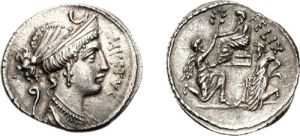
The war with the allies began in 90 BCE with the assassination of the proconsul Gaius Servilius, and then with the slaughter of the remaining Romans in the city of Asculum. The uprising quickly spread to all of southern and central Italy. It included Mars as the first, then Vestines, Picenes, Marrucinas, Peligns, Samnites, Lucans, Frentans. All Latin colonies except Venusia remained loyal to Rome, as did the Etruscans, Umbras and Greek cities to the south. The Italic coalition was headed by Q. Poppaedius Silo of the tribe of Mars and C. Papius Mutilus of the Samnite tribe. The allies created their own state organization, which they called Italy, combining Roman, Italian and Greek constitutional principles. Their capital was Corfinium (today’s Corfinio in Abruzzo). They established 2 consuls, 12 praetors and a 500-person Senate. To pay the soldiers, they minted their own coin, which was used in anti-Roman propaganda. It was pictured, among other things, of a bull, a symbol of Italics, trampling a Roman she-wolf. Allied soldiers gained experience in auxiliary service in the Roman army in previous years. The army of the insurgents numbered about 100,000 people, the Romans, together with their faithful allies, deployed a similar number of troops. They were forced to disperse their troops in various parts of Italy. The command was taken by two consuls at the time – Publius Rutylius Lupus (along with legates Gaius Marius and Gnaeus Pompey Strabo) in the north and Lucius Julius Caesar (with Lucius Cornelius Sulla and Titus Didius) in the south. The insurgents were also located in the north (under the command of Popedius Silon of the Mars tribe) and the south (under the command of Gaius Papius Mutilus of the Samnite tribe).
The war would certainly have been much longer and could have taken a much worse turn for the Romans if they had not made concessions to their allies. As late as 90 BCE, Lucius Julius Caesar established Lex Iulia, giving commanders of faithful allies the power to grant citizenship to their subordinates Italics.
Sulla during the war in 89 BCE captured Pompeii and the Samnite city of Aeclanum in southern Italy. In the war, he served as a general with exceptions. Under Nola he got corona obsidionalis, also called corona graminea. It was the highest Roman military decoration awarded for the bravery and rescue of a Roman legion or army on the battlefield. Army soldiers jointly awarded the prize, which was extremely rare in history. The crown, according to tradition, was woven from blades of grass and other plants from the battlefield.
Competition with Marius
After the successful and positive end of the war in Italy, Sulla was appointed consul in 88 BCE with Quintus Pompey Rufus (his daughter’s future father-in-law) for his successes. Already as a consul, Sulla was preparing for the war with the king of Pontus – Mithridates VI Eupator. However, still, a big problem for him was Gaius Marius, now an old man, who, however, had ambitions to embrace a new military campaign and was against Sulla’s policy. Before leaving for the East, Sulla and Quintus Pompey Rufus blocked the legislative initiative of the People’s Tribune, Publius Sulpicius Rufus, to ensure the speedy organization of Italian allies under Roman citizenship. When Sulpicius Rufus found an ally in the form of Gaius Marius, there were numerous riots of the supporters of the act. Sulla returned from the siege of Nola in order to meet Pompey Rufus. However, this meeting was interrupted by the supporters of Rufus and Marius, who forced Sulla to hide in Marius’s house. There, in turn, Sulla was persuaded and pressured to sign the act. Eventually, he agreed and left Rome for Nola. It is worth adding that his son-in-law died during the popular riots. After Sulla’s departure from Rome, Sulpicjus (after receiving a promise from Marius to cancel his debts) called a meeting in order to vote on the decision to assign command over the army in the East to Marius. In addition, Sulpicius, in order not to ensure a quorum (quorum), was kicking out and not admitting certain senators, which was met with great indignation. The aggression at the Forum was increasing, and some nobles even tried to lynch Sulpicius (as it was once done with the Gracchus). Ultimately, however, they failed due to the strong gladiators around the consul.
The news of the events in Rome reached Sulla in a camp in southern Italy among the victorious veterans of the war with their allies. Sulla decided to take the six most loyal legions with him and march towards Rome. It was a precedent in the history of Rome. No general had ever crossed the city limits – pomerium – with his army. Most of the commanders (with the exception of his affinity Lukullus) refused to accompany him. He argued his actions with the blandness of the Senate and violation of mos maiorum (“the way of the elders”, “traditional way” – the Roman unwritten constitution from which the Romans drew their social models), by negating the consul’s right to command an army in during the war. The gladiators themselves were unable to stop the seasoned and professional Roman army. Therefore, Marius offered the slaves freedom in exchange for fighting against Sulla (according to Plutarch, only three slaves agreed). Eventually, Marius and his followers fled the city.
Sulla entered Rome and began to strengthen his position. He proclaimed Marius and his allies hostes (public enemies) and ordered the Senate to legalize and justify his entry into the city at the head of the army. After settling political issues in the “eternal city” and strengthening the power of the Senate, he went to his camp in the south, preparing to attack Pontus.
At that time, Sulpicius was betrayed and murdered by his slave (he, in turn, was liberated, and then murdered – liberated for killing an enemy of the state, and murdered for treason). Gaius Marius, in turn, went to Africa. In his absence, however, he returned to Rome in 87 BCE and, with the support of Lucius Cornelius Cynna, seized power in the city. He banned Sulla’s rights and sentenced him to exile. There was great persecution and slaughter of political opponents from the party of the optimists. In 86 BCE Marius and Cynna were appointed consuls. However, as it turned out, this situation did not last long, because Marius died in less than two weeks from being elected to office. Only Cynna remained the sole and legal consul in the city. However, he was then murdered by stoning in 84 BCE by his rebellious soldiers while marching against the rebellious Illyrian tribes.
War with Mithridates VI
In the spring of 87 BCE, Sulla travelled to Greece (landed in Dyrrachium in Illyria), where he set about the siege of Athens ruled by Aristion (the “pet” of the ruler of Pontus). He stormed it in 86 BCE and entered Boeotia, where he defeated Mithridates’ army in the decisive battles of Chaeronea and in 86 BCE at Orchomenos. Knowing about the conquest of Rome by the popular peoples, he hastily made peace with Mithridates at Dardanos in 85 BCE, regaining the province of Asia for Rome. In the meantime, the populares sent their army to Asia under the command of Flaccus, but the latter was murdered by the commander of Fimbria, who in turn was abandoned and murdered by his legions, which went to the side of Pompey the Great.

Civil war
In 83 BCE, after an agreement with Pontus and establishing power in the new lands, Sulla prepared five legions and in the spring of that year, he sailed the Adriatic from Patrae to Brundizium and Tarentum, where he prepared his troops for the coming war. He was joined by troops from Africa headed by Marc Licinius Crassus, and three legions from the Piceń region under the command of Gnaeus Pompey. The newly-elected consuls – L. Cornelius Scipio Asiaticus (Asiagenus) and C. Norbanus – gathered their armies to stop Sulla and defend the government. Norbanus marched first with the intention of blocking Sulla’s legions at Canusium. The defeated Norbanus withdrew to Capua, where immediately the aggressor inflicted another defeat on him. Asiagenus, in turn, gathered his army and went south with it. Sulla and Asiagenus met in the city of Teanum Sidicinum, where the republican troops, and with them, Asiagenus, surrendered without a fight. Sulla decided to release his rival from the camp, deeply believing in his truthfulness and supporting his cause. It is also believed that Asiagenus went to the Senate to put forward the proposals and terms of the agreement. As it turned out, however, Asiagenus, right after leaving Sulla’s camp, gave up supporting the aggressor. In the future, Sulla was to publicly declare that any betrayal of and opposition to his rule would be severely punished.
After three victories, it seemed that Sulla would win the war. Many undecided high-minded citizens have gone over to his side; including Q. Caecilius Metellus Pius, governor of Africa. In 83 BCE Sulla defeated consul Carbo, and then made an agreement with the second consul, Scipio, all legions were included in Sulla’s army. In 82 BCE, Sulla’s forces defeated the popular troops under the command of Marius the Younger (26-year-old son of Gaius) at Praeneste, and then, after defeating the second consul – Carbo in upper Italy, a victorious battle of the Colline Gate with the Samnites (on November 1, 82 BCE). Eventually, Sulla’s troops took Rome and Sulla became the sole lord of Rome.
Dictatorship

In late 82 or early 81 BCE, the Senate appointed Sulla dictator legibus faciendis et reipublicae constituendae causa (“dictator for lawmaking and constitutional settlement”). The resolution was approved by the “People’s Assembly” and Sulla took office for an indefinite period. Sulla had full power over the city and republican Rome, with the exception of Spain (the power was exercised by General Marius – Quintus Sertorius).
At the same time, the persecution of political opponents began, claiming nearly 3,000 people, mainly among the equites. Their property was confiscated and handed over to Sulla’s supporters. Wishing to rebuild the power of the senate, he increased its number to 600 members (previously 300). He abolished censorship. He increased the number of quaestors to 20 and secured them a seat in the Senate. The consuls were deprived of military power in the provinces and their role was limited to leadership in the Senate. The number of praetors was increased to 8. Consuls and praetors only after a year, with the title of proconsul and pro-prime minister, received provinces and command over the army. It was only possible to become a consul after ten years, and two years had to pass between other offices. The legislative initiative of the people’s tribunes had to be approved by the Senate, moreover, the tribune lost the possibility of holding other offices. The role of equites was limited in favour of the senators. He dealt with popular allies, mainly Samnites and Etruscans.
After three years of dictatorship, in 79 BCE, Sulla resigned and settled on his estate in Campania to stay with his family. He remained outside politics, except in a few situations where his interests were at stake. During his “retirement” he focused on writing memoirs (completed in 78 BCE), most of which were lost or destroyed. The preserved fragments survived in the works of later writers.
Death
He died in 78 BCE in Puteoli, Campania, on his estate, at the age of 60. Ancient evidence suggests Sulla had liver problems. Rupture of stomach ulcers is also suspected. The likely cause of the disease was alcohol abuse, which Sulla drank in large amounts for the rest of his life. He was buried in the Field of Mars in Rome.
Marriages and children |
|