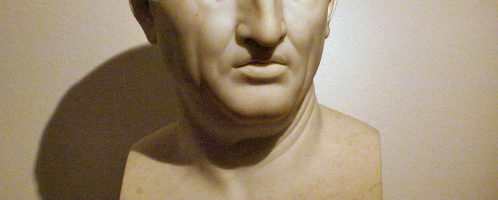
Cicero
(3 January 106 - 7 December 43 BCE)
Cicero was one of the greatest Roman and antiquity speakers. A popularizer of philosophy and a politician belonging to the optimism faction.
If you have found a spelling error, please, notify us by selecting that text and pressing Ctrl+Enter.
The history of ancient Rome saw the emergence of many outstanding figures who left a lasting mark on the history of the world. Some of them are remembered by posterity as cruel tyrants, such as Caligula, Nero, and Caracalla. Others became renowned as reformers and builders of the Roman state’s power, including Augustus, Claudius, Marcus Aurelius, Diocletian, and Constantine the Great. It is also impossible to ignore the Roman generals, who often saved the state from collapse.
History also includes outstanding figures of Roman culture – writers, philosophers, and artists whose work had a profound impact on the development of European civilization. In this section, I present profiles of individuals who achieved great deeds or whose actions left a lasting mark on the pages of history.
(108 - 62 BCE)
Lucius Sergius Catilina was born in 108 BCE. He was a Roman senator in the 1st century BCE who went down in history as the initiator of a conspiracy called the Conspiracy of Catilina. This plot was intended to overthrow the republic and the aristocratic Senate. However, he was prevented as a last resort by the famous speaker and politician Cicero.

(114 - 53 BCE)
Marcus Licinius Crassus was a Roman politician and commander, a member of the first triumvirate. Known for his proverbial wealth, considered the richest Roman in history.

(116 - 27 BCE)
Marcus Terentius Varro was a Roman scholar and writer. A true erudite, considered one of the best educated people in the history of ancient Rome.

(117 - 56 BCE)
Lucius Licinius Lucullus was a Roman commander and politician. Sulla's supporter, famous for his victories in the war with the ruler of Pontus, Mithridates VI Eupator.

(135 - 87 BCE)
Gnaeus Pompey Strabo was a Roman leader and politician; father of the famous Pompey the Great.
(138 - 78 BCE)
Lucius Cornelius Sulla was a Roman commander and politician - the optimist. In 82 BCE Sulla was given dictatorial power. In the following years, he carried out a number of political reforms.
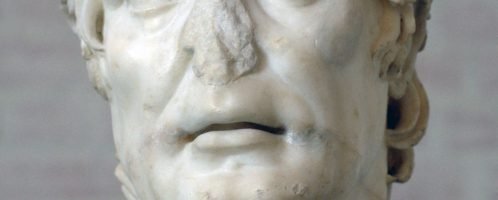
(157/6 - 13 January 86 BCE)
Gaius Marius was a great Roman general and seven times elected consul. He became famous for defeating the Teutons and Cimbri and carrying out the reform of the Roman army.

(162 - 133 BCE)
Tiberius Sempronius Gracchus was a Roman politician and people's tribune, who in 133 BCE undertook significant reforms for the benefit of the Roman Republic. After his death, Gaius continued his brother's ambitious plans.

(c. 185/4 – 159 BCE)
Publius Terence Afer was a Roman comedy writer whose work was popular not only in ancient Rome but also in the Middle Ages and later. Terence used elegant Latin, and in his works, he focused primarily on man, his personality and reactions to entanglement in everyday and unusual problems.