
Titus Flavius
(30 December 39 - 13 September 81 CE)
Titus Flavius was a Roman emperor in 79-81 CE. He ended the Jewish war. During his reign, there was also the eruption of Vesuvius.
If you have found a spelling error, please, notify us by selecting that text and pressing Ctrl+Enter.
The history of ancient Rome saw the emergence of many outstanding figures who left a lasting mark on the history of the world. Some of them are remembered by posterity as cruel tyrants, such as Caligula, Nero, and Caracalla. Others became renowned as reformers and builders of the Roman state’s power, including Augustus, Claudius, Marcus Aurelius, Diocletian, and Constantine the Great. It is also impossible to ignore the Roman generals, who often saved the state from collapse.
History also includes outstanding figures of Roman culture – writers, philosophers, and artists whose work had a profound impact on the development of European civilization. In this section, I present profiles of individuals who achieved great deeds or whose actions left a lasting mark on the pages of history.
(30 December 39 - 13 September 81 CE)
Titus Flavius was a Roman emperor in 79-81 CE. He ended the Jewish war. During his reign, there was also the eruption of Vesuvius.

(12 July 100 - 15 March 44 BCE)
Gaius Julius Caesar (100-44 BCE) was a Roman politician, one of the greatest leaders in history and a great figure in the ancient world.
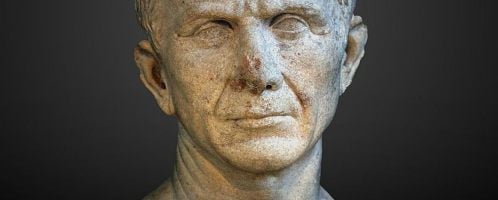
(463 - after 507 CE)
Romulus Augustulus was the last Roman emperor. Romulus was deprived of power by Odoacer, and the insignia of power was sent back to Constantinople.
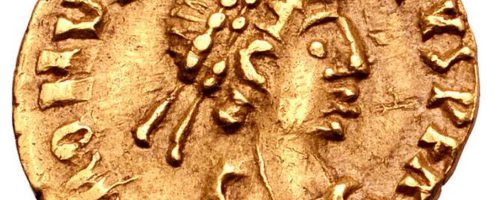
(29 September 106 - 28 September 48 BCE)
Gnaeus Pompeius Magnus ("the Great") was born on 29 September 106 BCE as Gnaeus Pompeius. He received his nickname Magnus from his contemporaries because of his great political and military successes and his services to Rome. Roman commander and politician; son of Gnaeus Pompeius Strabo.

(14 January 83 - 1 August 30 BCE)
Mark Antony was an excellent Roman commander, and at the same time a brilliant politician. He was an officer of Julius Caesar and his supporter. After his death, he took part in the civil war.
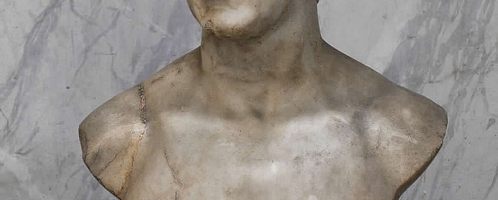
(331/332 - 26 June 363 CE)
Julian the Apostate was a Roman emperor in 361-363 CE. He strived to restore the pagan religion and became famous as a great reformer.
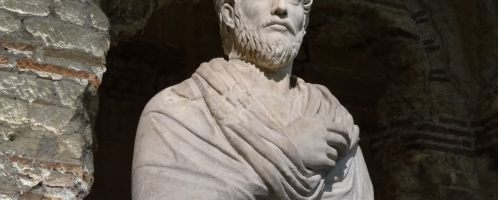
(11 April 145/6 – 4 February 211 CE)
Septimius Severus was Roman emperor ruling in 193-211 CE. He won the civil war and stabilized the situation in the state after the death of Commodus. He began a new dynasty - Syrian.

(114 - 53 BCE)
Marcus Licinius Crassus was a Roman politician and commander, a member of the first triumvirate. Known for his proverbial wealth, considered the richest Roman in history.

(63 - 12 BCE)
Marcus Vipsanius Agrippa was an extraordinary politician and military commander. He was a son-in-law, lieutenant and a close friend of Gaius Julius Caesar Octavianus.

