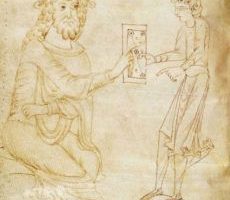
Appius Claudius Caecus
(c. 340 - 273 BCE)
Roman patrician and politician from the turn of the 4th and 3rd century BCE. He was the builder of the first aqueduct, the Aqua Appia (312 BCE) and the first beaten road, Via Appia.
If you have found a spelling error, please, notify us by selecting that text and pressing Ctrl+Enter.
The history of ancient Rome saw the emergence of many outstanding figures who left a lasting mark on the history of the world. Some of them are remembered by posterity as cruel tyrants, such as Caligula, Nero, and Caracalla. Others became renowned as reformers and builders of the Roman state’s power, including Augustus, Claudius, Marcus Aurelius, Diocletian, and Constantine the Great. It is also impossible to ignore the Roman generals, who often saved the state from collapse.
History also includes outstanding figures of Roman culture – writers, philosophers, and artists whose work had a profound impact on the development of European civilization. In this section, I present profiles of individuals who achieved great deeds or whose actions left a lasting mark on the pages of history.
(c. 340 - 273 BCE)
Roman patrician and politician from the turn of the 4th and 3rd century BCE. He was the builder of the first aqueduct, the Aqua Appia (312 BCE) and the first beaten road, Via Appia.
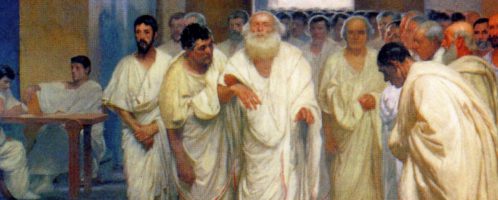
(? - 384 BCE)
Marcus Manlius Capitolinus was the hero of Rome's defense against the Gauls in 390 BCE. Moreover, ancient writers describe him as a protector of plebeians.
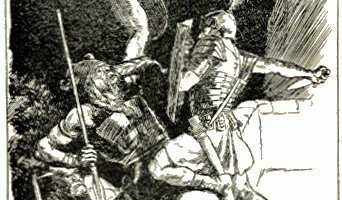
(c. 446 – 364 BCE)
Marcus Furius Camillus was a Roman commander and reformer. His successes on the battlefield resulted in giving him the nickname - "the second founder of Rome".

(5th century BCE)
Aulus Postumius Tubertus was a Roman commander in the war with Aequi and Volsci in the 5th century BCE.