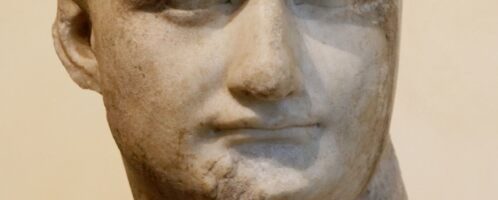
Polemon of Laodicea
(c. 88-144 CE)
Polemon is considered one of the greatest orators of the imperial period. He came from Laodicea (Asia Minor), from a famous senatorial family.
If you have found a spelling error, please, notify us by selecting that text and pressing Ctrl+Enter.
The history of ancient Rome saw the emergence of many outstanding figures who left a lasting mark on the history of the world. Some of them are remembered by posterity as cruel tyrants, such as Caligula, Nero, and Caracalla. Others became renowned as reformers and builders of the Roman state’s power, including Augustus, Claudius, Marcus Aurelius, Diocletian, and Constantine the Great. It is also impossible to ignore the Roman generals, who often saved the state from collapse.
History also includes outstanding figures of Roman culture – writers, philosophers, and artists whose work had a profound impact on the development of European civilization. In this section, I present profiles of individuals who achieved great deeds or whose actions left a lasting mark on the pages of history.
(c. 88-144 CE)
Polemon is considered one of the greatest orators of the imperial period. He came from Laodicea (Asia Minor), from a famous senatorial family.

(19 September 86 - 7 March 161 CE)
Antoninus Pius was a Roman emperor in the years 138 - 161 CE. The period of his reign is a time of prosperity and peace, often called Pax Romana.

(c. 80 - 160 CE)
Favorinus of Arelate (today Arles in the south of France) lived in the years around 80-160 CE and was a famous sophist and philosopher. Although he was Gaul, he mastered Greek to perfection, which made him an acknowledged and admired orator.

(23 - 25 August 79 CE)
Pliny the Elder was a Roman historian and writer. His work is "Natural History", an encyclopedia that is a mine of knowledge of Roman times.
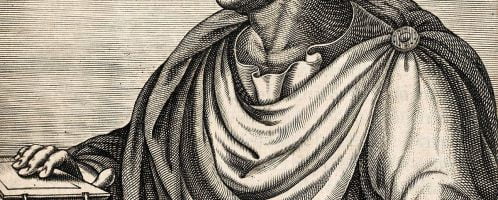
(61 - c. 113 CE)
Pliny the Younger was a lawyer, writer and Roman official. He witnessed the eruption of Mount Vesuvius in 79 CE, in which his uncle Pliny the Elder was killed.

(55 - 120 CE)
Publius Cornelius Tacitus was a Roman historian; he is called the king of Roman historians. He wrote, among others "Annals", “Histories”, “The Life of Agricola”, and “Germania".