Chapters
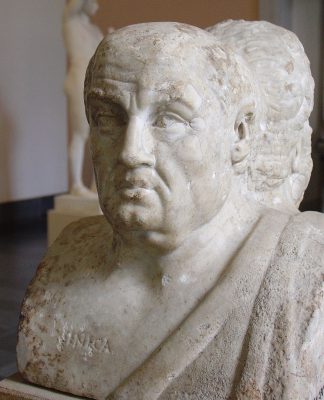
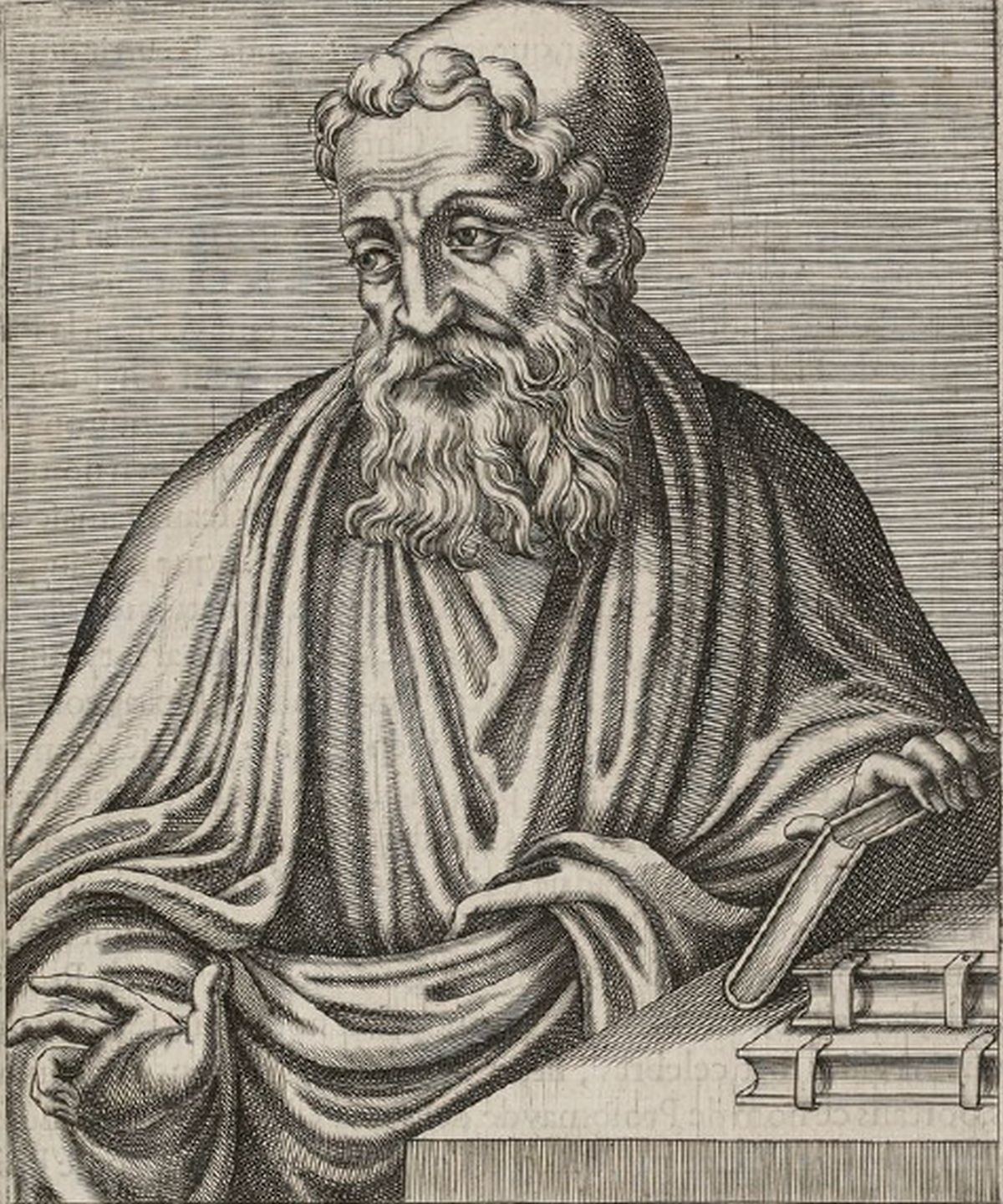
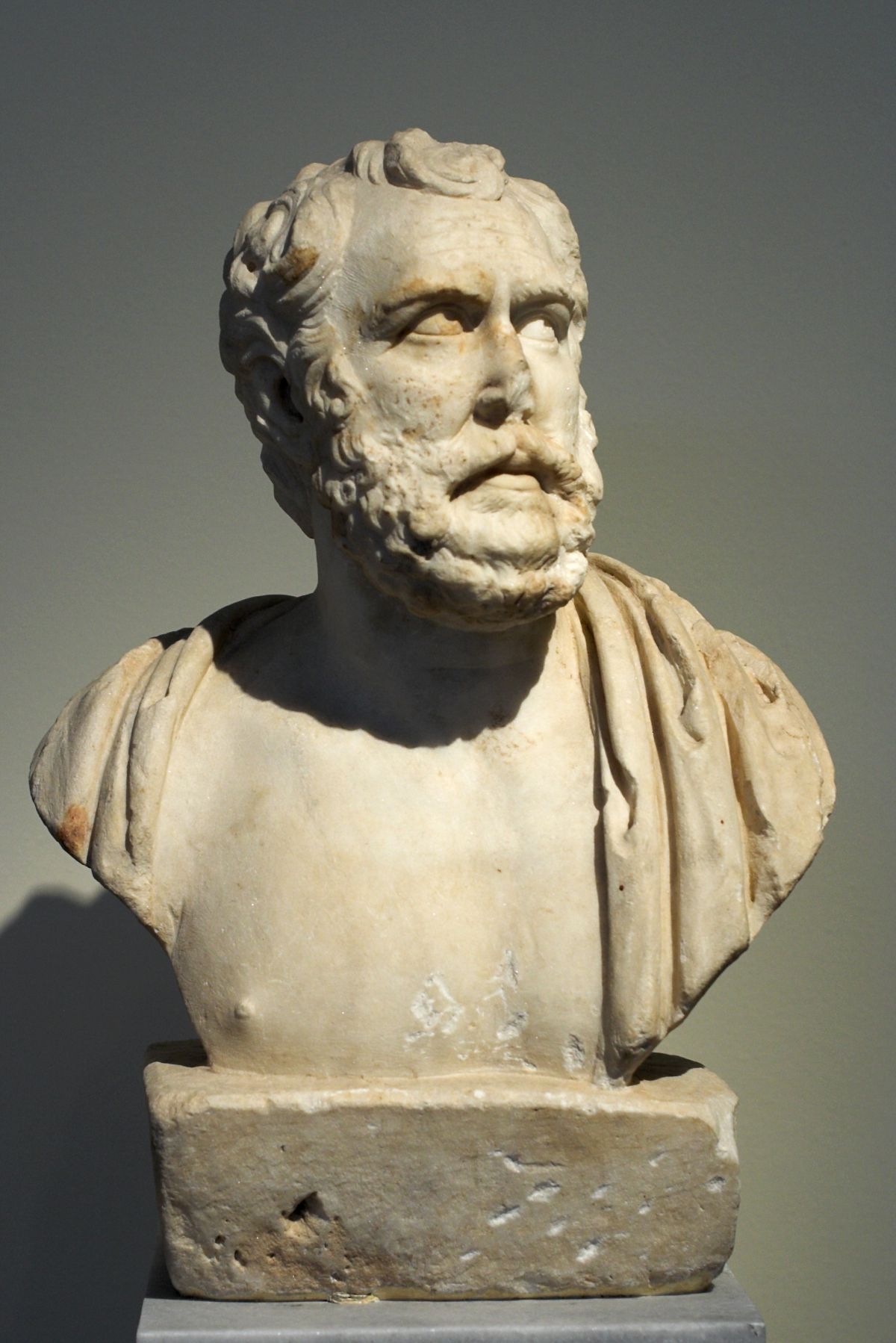
Seneca the Younger (Lucius Annaeus Seneca Minor) was born around 4 BCE in Cordoba in southern Spain. He was a rhetorician, writer, poet and Roman philosopher. Nicknamed “The Philosopher”; he was the son of Seneca the Elder (Seneca Maior), called “Rhetor” (Seneca Rhetor), who went down in history as an outstanding teacher of rhetoric and the author of the work entitled Controversiae et suasoriae. He was a tutor to Emperor Nero; at the beginning of his rule, he had considerable influence in court.
Origin and early life
He was the second son of Helvia and Lucius Anneus Seneca; he was not of Roman origin. His elder brother Junnius Annaus Gallion was proconsul of Achaia in 52 CE. The younger brother’s name was Lucius Anneus Mela, he was a knight and financier; his son Lucan went down in history as an outstanding Roman poet.
There are doubts about the date of his birth. Very little information about Seneca’s early life has survived to this day. According to historian Miriam T. Griffin, he may have been born in 8, 4, or 1 BCE According to Griffin, it is most likely that he was born between 4 and 1 BCE and moved to Rome in 5 CE. Seneca himself stated that he came to Rome in the arms of his mother’s half-sister.
In his youth, Seneca studied rhetoric and philosophy in Rome. His first teacher Attalus instilled in him an interest in Stoic philosophy. In Rome, he was under the care of his aunt (mother’s sister), whose husband Gaius Galerius was the prefect of Egypt. Due to poor health and thanks to the support of his mother and aunt Seneca in 16 CE left for Egypt, where around 32 CE he began his public activity as a court defender. He returned to Rome perhaps around 33 CE and assumed the office of quaestor. With his committed work and beautiful speeches in Egypt and Rome, he gained recognition and popularity among the people. When in 37 CE Caligula took the Roman throne, jealous of Seneca’s popularity, and sentenced him to death. Apparently, he was distracted from the execution of the sentence by voices that Seneca was in poor health anyway and would die naturally soon.
When emperor Claudius took power after the murder of Caligula in 41 CE, Seneca once again had to worry about his future. Under the influence of Claudius’ wife – Messalina – Seneca was exiled to Corsica; allegedly because of a sex scandal in which he was allegedly involved; he was supposed to be the lover of Caligula’s sister. Seneca never forgave the emperor for his decision to exile, and after his death wrote a malicious panegyric in his honour, “The Pumpkinification of (the Divine) Claudius” (Apocolocyntosis divi Claudii). Seneca stayed on the island until 48 CE, when, thanks to another wife of Claudius – Agrippina the Younger – the philosopher was recalled from exile to Rome to care for and raise her son – the future emperor Nero. Seneca’s career and position were strengthened thanks to Agrippina’s clear favouritism. In 50 CE he also became a praetor.
Guardian of Nero
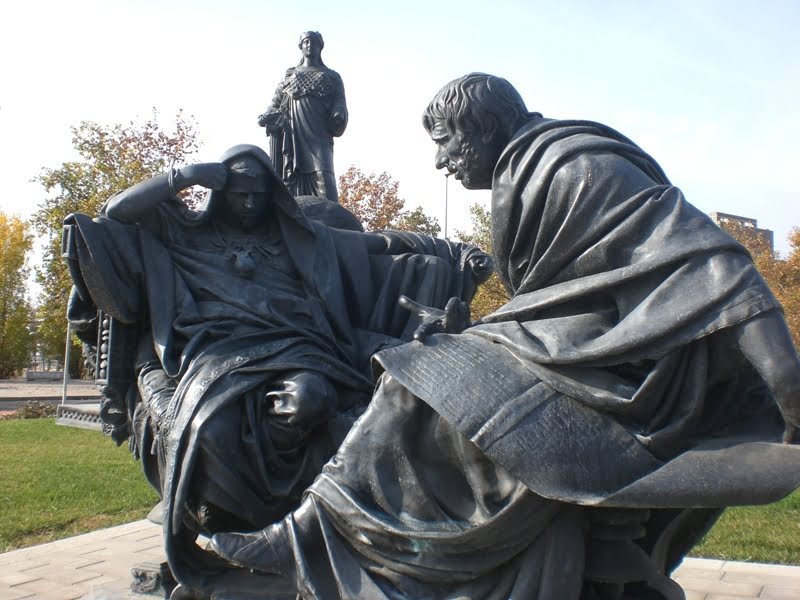
From the beginning, Seneca focused on educating Nero in the spirit of Stoic philosophy. After the death of Claudius in 54 CE Seneca became, together with the praetorian prefect Sextus Afranius Burrus, one of the main advisers of the young, then-only 17-year-old Nero. In the first years of his reign, Nero was not interested in politics and listened to the advice of his tutors. Efforts were made, on the one hand, to instil in him a model of just rule, and on the other, to limit the influence of Agrippina, who often sought bloody solutions to problems in the state.
Tacitus writes about it:
The tendency, in fact, was towards murder, had not Afranius Burrus and Seneca intervened. Both guardians of the imperial youth, and — a rare occurrence where power is held in partnership — both in agreement, they exercised equal influence by contrasted methods; and Burrus, with his soldierly interests and austerity, and Seneca, with his lessons in eloquence and his self-respecting courtliness, aided each other to ensure that the sovereign’s years of temptation should, if he were scornful of virtue, be restrained within the bounds of permissible indulgence.
– Tacitus, Annals, XIII.2

The beneficial influence of Burrus and Seneca on Nero is also confirmed by another Roman historian, Cassius Dio.
Philosopher and writer
Moving on to the question of philosophy. Seneca was a Stoic, he philosophized within the tradition of Stoic thought, although he refers to the thought of many earlier non-Stoic philosophers, hence Seneca’s philosophy can be described as syncretizing. Seneca, however, created his own original concept of philosophy. The language of Seneca’s philosophy was Latin. He distinguished three main branches of philosophy: ethics, logic and physics, with the former, like the earlier Stoics, considered the most important. His philosophy is therapeutic and wise. Seneca appears in his works as a doctor of the soul, and a life therapist.
In anthropology, he was a dualist. He considered the body to be the prison of the soul. In ethics, he ordered combating and eliminating feelings, especially the most dangerous of them – anger. Virtuous action, in turn, in his opinion, consists of voluntariness and reason, and the subject acting according to their commands will achieve happiness. Only virtue brings happiness.
Seneca’s views were widely known in Roman society. The philosopher was an opponent of gladiator fights, and his aversion to this type of game was widely known even among the gladiators themselves. In one of the dining rooms of the barracks in Pompeii, an inscription was discovered: “The philosopher Annaeus Senecas is the only Roman writer who condemns these bloody games”.
Early Christianity was very positive about Seneca and his views. Tertullian, a Christian thinker of the 2nd/3rd century CE, described him as “our Seneca”.
Works
Philosophical works
- Dialogues:
- About consolation to Mary (De consolatione ad Marciam)
- About consolation to Helvia’s mother (De consolatione ad Helviam matrem)
- About consolation to Polibius (De consolatione ad Polybium)
- For gentleness (De clementia)
- On shortness of life (De brevitate vitae)
- About a happy life (De vita beata)
- About anger (De ira)
- About inaction (De otio)
- On Providence (De Providentia)
- About peace of spirit (De tranquillitate animi)
- On the steadfastness of the sage (De constantia sapientis)
- 124 moral letters to Lucius (Epistulae morales ad Lucilium)
Dissertations
- For gentleness (De clementia)
- About the benefits (De beneficiis)
Natural works
- Natural issues (Quaestiones naturales)
Satire
- Worship of the divine Claudius (Apocolocyntosis divi Claudii)
Tragedies
- Hercules rampaging (Hercules Furens)
- Hercules on Mount Oeta (Hercules Oetaeus)
- Trojans (Troades)
- Phoenician women (Phoenissae)
- Medea (Medea)
- Fedra (Phaedra)
- Oedipus (Oedipus)
- Agamemnon (Agamemno)
- Tyestes (Thyestes)
- Octavia (Octavia)
Seneca’s hypocrisy
Cassius Dion mentions a less glorious chapter in the life of Seneca. Seneca was allegedly involved in offering high-interest loans (40 million sesterces) to the local aristocracy after the conquest of Britain by Claudius in 43 CE. He then demanded an urgent repayment of the debt, which, according to Cassius Dio, led directly to the outbreak of Boudica’s rebellion1.
Tacitus mentions that in 58 CE. Senator Publius Sulius Rufus accused Seneca of enriching himself at the expense of the population of Italy and the province. According to Cassius Dio, his fortune was then estimated at 300 million sesterces. The Roman poet Martial, who was annoyed by the sulks and stinginess of the Roman aristocracy, referred to him as Seneca praedives, meaning “Seneca the rich man”. Seneca had estates, among others. in Baiae, Nomentum, and in Egypt itself.
Seneca at that time wrote a treatise De vita beata (“On the happy life”), in which he defended himself by claiming that a life of wealth is in accordance with the Stoic philosophy. Wealth in his opinion is neither good nor bad, but it is useful in ensuring the comfort of life. In addition, he states that wealth serves the wise more than poverty (paupertas), and that money can be used as an instrument for achieving virtue. Interestingly, Stoicism made it clear that the most important value in life is a virtue, which gives happiness; wealth, health, freedom or social status have no bearing on it. Thus, Seneca clearly tried to save face, they also prove their hypocrisy. It is worth quoting the words of Seneca himself in Letters: “It is not the man who has too little, but the man who craves more, that is poor”.
Seneca proved that the beautiful ideas of stoicism, which he preached so willingly, had nothing to do with the realities of his life. Moreover, the philosopher wrote flattery for Claudius during his reign, only to ridicule and confuse him after his death.
Removal from power
Over time, the influence of Seneca and Burrus on the emperor decreased. In 59 CE, with the tacit acceptance of Seneca and Burrus, Nero had his influential mother murdered. Tacitus mentions that Seneca then had to translate Nero before the Senate.
After Burrus’ death in 62 CE, the position of Seneca in the eyes of Nero decreased to such an extent that he preferred to move away from the imperial palace. He asked Nero for an audience and, with his consent, retired from public office. He explained the need for rest, age and generally poor health. Being accused of excessive wealth, he went to the provinces, where he devoted himself to meditation and writing. He sometimes visited Rome.
Death
Leaving Rome, however, did not save him from the suspicion of Nero. Seneca became in 65 CE accused of participating in Piso’s plot against Nero’s life. Seneca’s involvement in the plot seems unlikely. The former pupil of the philosopher at that time was already afraid of the influence and seriousness of Seneca and was looking for an opportunity to get rid of the inconvenient witness of his crimes. Finally, he sent a squad of soldiers to him to deliver the death sentence issued by Nero to Seneca.
This is how Seneca’s last moments are described by Tacitus:
[…] nothing daunted, asked for the tablets containing his will. The centurion refusing, he turned to his friends, and called them to witness that “as he was prevented from showing his gratitude for their services, he left them his sole but fairest possession — the image of his life. If they bore it in mind, they would reap the reward of their loyal friendship in the credit accorded to virtuous accomplishments.” At the same time, he recalled them from tears to fortitude, sometimes conversationally, sometimes in sterner, almost coercive tones. “Where,” he asked, “were the maxims of your philosophy? Where that reasoned attitude towards impending evils which they had studied through so many years? For to whom had Nero’s cruelty been unknown? Nor was anything left him, after the killing of his mother and his brother, but to add the murder of his guardian and preceptor.”
After these and some similar remarks, which might have been meant for a wider audience, he embraced his wife, and, softening momentarily in view of the terrors at present threatening her, begged her, conjured her, to moderate her grief — not to take it upon her for ever, but in contemplating the life he had spent in virtue to find legitimate solace for the loss of her husband. Paulina replied by assuring him that she too had made death her choice, and she demanded her part in the executioner’s stroke. Seneca, not wishing to stand in the way of her glory, and influenced also by his affection, that he might not leave the woman who enjoyed his whole-hearted love exposed to outrage, now said: “I had shown you the mitigations of life, you prefer the distinction of death: I shall not grudge your setting that example. May the courage of this brave ending be divided equally between us both, but may more of fame attend your own departure!” Aforesaid, they made the incision in their arms with a single cut. Seneca, since his aged body, emaciated further by frugal living, gave slow escape to the blood, severed as well the arteries in the leg and behind the knee.20 Exhausted by the racking pains, and anxious lest his sufferings might break down the spirit of his wife, and he himself lapse into weakness at the sight of her agony, he persuaded her to withdraw into another bedroom. And since, even at the last moment his eloquence remained at command, he called his secretaries, and dictated a long discourse, which has been given to the public in his own words, and which I therefore refrain from modifying.
– Tacitus, Annals, XV.62-63

The sentence was clear, Seneca was to commit honourable suicide. Seneca cut his own veins to bleed out. Due to poor diet and age, blood flowed very slowly from Seneca’s cut veins. It was causing him pain, with no intended effect. In addition, “Philosopher” took poison, which also did not bring the expected results.
After dictating the last words to the scribe, he ordered him to immerse himself in the hot waters of the bathhouse, so that the warm temperature would open the vessels, accelerate the flow of blood and end his life. His body was then burned.
Together with her husband, his young wife Pompeja Paulina finally decided to give her life. Tacitus claims that Nero, full of admiration for Pauline’s marital fidelity, ordered her to be saved.