If you have found a spelling error, please, notify us by selecting that text and pressing Ctrl+Enter.

Curiosities of ancient Rome (Monuments)

Monuments are curiosities dedicated to the preserved buildings, ruins, and material remains of the ancient Roman world. This category includes lesser-known facts, interesting details, and unusual information about Roman monuments, their history, function, and significance for understanding the history of the Roman Empire.

Theatre in Verulamium

Verulamium was the third-largest city in Rome in Britain. For some time it was even the provincial capital. Burned during the Boudica revolts, it regained its splendour in the following years, traces of which are still being discovered today. Many public buildings have been erected in the city, including Britain’s largest theatre.
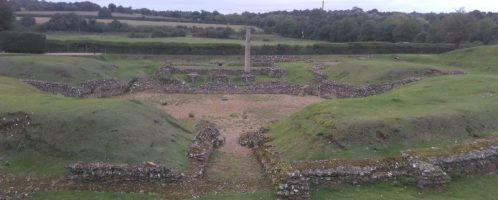
Ruins of the theatre in Verulamium in 2016 (the visible column is a modern replica)

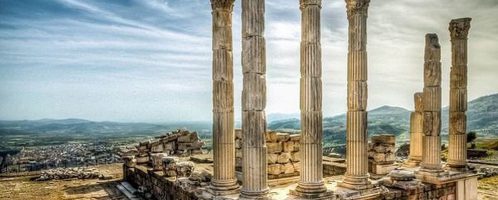
Temple of Trajan in Pergamon

The remains of the temple of Trajan (the so-called Trajaneum) in Pergamon (western Turkey) are the only surviving Roman ruins in the city. The property is located on the Upper Acropolis. The discovery of the temple was made at the end of the 19th century.

Temple of Trajan in Pergamon

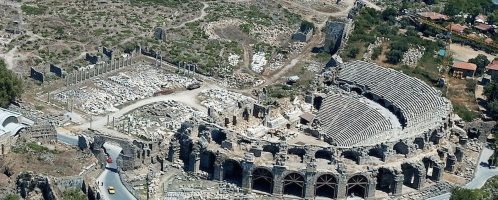
Roman theater in Side

Roman theater in Side (southern Turkey), which was built in the 2nd century CE and was able to seat 15,000 spectators.

Roman theater in Side

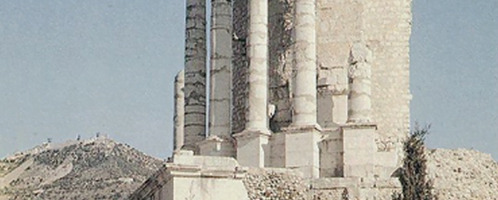
Trophy of Augustus

A few kilometres from the Principality of Monaco, at the top of a 486-meter-high hill, are the imposing remains of the monument. The monument called Trophy of Augustus (Tropaem Augusti or Tropaeum Alpium) was built around 6 BCE, in honour of the victories made in campaigns between 16 and 7 BCE by Emperor Augustus over the Alpine tribes.

Trophy of Augustus

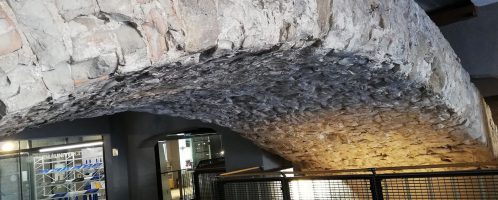
Roman bridge in Parma

During the construction of an underground garage, a Roman bridge was discovered in Parma over the former Parma river bed (the city took its name from the river that flowed nearby). A ford in this place already existed in the third century BCE, as evidenced by numerous coins, from the times of the Republic, found during excavations.

Roman bridge in Parma

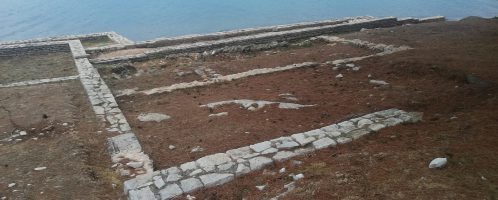
Roman villa in Croatia

In the north of Croatia, on the Vizula peninsula, there are remains of an exclusive Roman villa that was built in the 1st century CE and was inhabited until the 6th century CE. The building has been rebuilt many times over the centuries.

Roman villa in Croatia

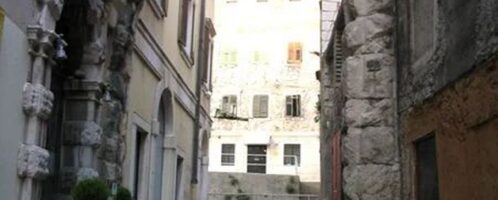
Roman arch in Rijeka

Roman arch in Rijeka (Croatia) is by no means a triumphal arch. It was the main entrance to the very centre of the late Roman city of Tarsatica (today’s Rijeka). Over time, the arch was surrounded by tenement houses in the Middle Ages.

Roman arch in Rijeka

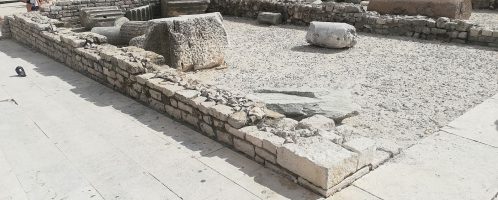
Roman forum in Zadar

The Croatian city of Zadar (Iadera) was founded in the middle of the 1st century BCE as a colony in which Roman veterans settled. The city underwent gradual development, and its centre of social, economic and political life was in the forum in the centre of the city. It was established during the reign of the first emperor Octavian Augustus (27 BCE – 14 CE).

Forum Romanum in Zadar

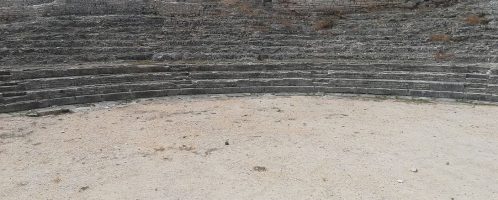
Roman theater in Pula

The remains of a Roman small theatre are in Pula (Croatia). The object is dated to the 1st century CE and is located on the slope under the Castle. The theatre could accommodate from 4 to 5 thousand viewers, that is the city’s population at that time.

Roman theater in Pula

Spelling error report

The following text will be sent to our editors: