If you have found a spelling error, please, notify us by selecting that text and pressing Ctrl+Enter.

Curiosities of ancient Rome (Other)

Other Facts is a category of curiosities that encompasses diverse and unusual facts from the world of ancient Rome that don’t fit into other thematic sections. Here, you’ll find interesting facts, anecdotes, and less obvious details that complement the life, culture, and history of the Roman Empire.

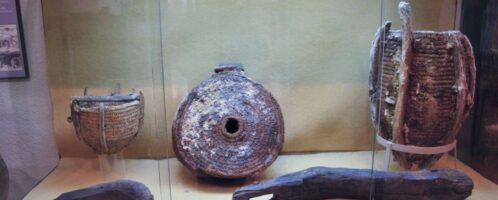
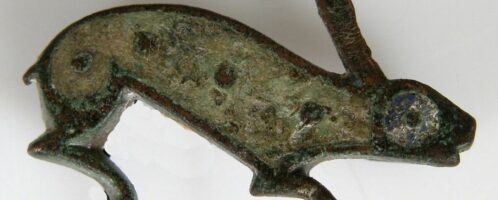
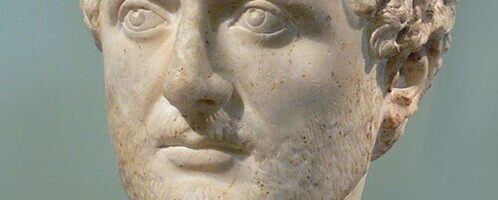
Treasure from mud: extraordinary bronzes of San Casciano dei Bagni

In the Tuscan town of San Casciano dei Bagni, one of the most important archaeological sites of recent decades was discovered between 2021 and 2022. Right next to the modern thermal baths, an ancient sanctuary associated with healing waters, functioning from Etruscan times to the late Roman Empire, was uncovered. The complex, dubbed “Bagno Grande,” contained extraordinary finds in the mud and hot water – hundreds of coins, numerous votive offerings, and perfectly preserved bronze statues.

Treasure from mud: extraordinary bronzes of San Casciano dei Bagni

Rabies – terror of history

Rabies is a zoonosis, or zoonotic disease, transmitted from animals to humans. It is caused by viruses of the Lyssavirus genus. After entering the body through a wound, they travel along nerve fibers to the brain, causing significant neurological changes. Affected individuals (both humans and animals) appear to have lost control of their bodies and minds (symptoms include difficulty moving, seizures, salivation, hypersensitivity to stimuli, increased aggression, and hydrophobia).

Rabid dog

From Popina to McDonald’s: Roman fast food before the neon sign

In Rome, “eating out” was not a luxury but a daily necessity in a big city. Street bars selling ready-made food, described by archaeologists as thermopolia, operated from stone counters with large jars (dolia) set into holes in the surface. Food and drink were served to be eaten on the spot or taken away. The popularity of such places grew out of life in the insulae; in crowded rental blocks, having a private kitchen was often not an option, so a quick meal bought on the street was simply how many people got by. The best evidence comes from Pompeii, where not only the counters and vessels survived, but also frescoes, graffiti, and food remains that let us glimpse a menu from almost two thousand years ago.

Street bar in Pompeii (AI generated)

Feast with lampreys

Lampreys (Petromyzontiformes) are jawless, predatory aquatic animals that can grow to over a meter in length. They are mostly parasites – they bite into the victim’s body using sharp teeth set in their round mouths.

Lampreys

Curule chair

Curule chair (sella curulis) is a folding stool with crossed straight or curved legs, originally backless. It was known to many ancient cultures of the Mediterranean basin, including the Greeks and Egyptians (it reached China via the Silk Road). The ancient Romans most likely adopted it from the Etruscans.

Wooden curule chair

Donkeys – inconspicuous co-creators of empires

When we think of the animals that have most influenced the fate of humanity, we likely first place horses – after all, it was on their backs that armies, rulers, and ultimately, multitudes of ordinary people traveled. Perhaps we would think of the dog – the first domesticated animal in history. But in these reflections, we often forget another, inconspicuous creature whose role was no less significant, or perhaps even more significant, than those mentioned above. Since its domestication in North Africa around 6000 BCE, the donkey has become the most important beast of burden in ancient history.

Greco-Cypriot figurine of a laden donkey, 600–480 BCE

Spelling error report

The following text will be sent to our editors: