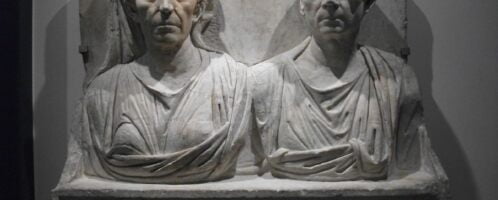
Artisans and technologies in ancient Rome
Preserved objects show that the ancient Romans were excellent craftsmen, working with a variety of materials: from leather, fabrics, wood to metal and glass.
If you have found a spelling error, please, notify us by selecting that text and pressing Ctrl+Enter.
Society is a collection of curiosities dedicated to the daily life, customs, and social structure of ancient Rome. This category includes lesser-known facts and interesting information about interpersonal relationships, family, social status, work, and the functioning of various social strata of the Roman Empire.
Preserved objects show that the ancient Romans were excellent craftsmen, working with a variety of materials: from leather, fabrics, wood to metal and glass.

Ius trium liberorum (“law of three children”) was a privilege introduced by Emperor Augustus (ruled 27 BCE – 14 CE) as part of his social and demographic reforms. Its aim was to increase the number of births in the Roman state, which was struggling with population decline after years of civil wars. It was established in 18 BCE as part of the reforms contained in the Lex Iulia de Maritandis Ordinibus and Lex Papia Poppaea laws.
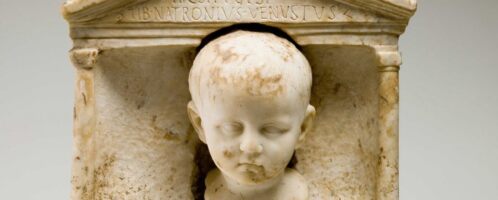
In ancient Rome, bird’s nest hairstyles were especially popular during the reign of the Flavian dynasty (69-96 CE) and the late empire. Roman women, especially those from the aristocracy, experimented with their hair, creating impressive structures with numerous weaves and curls.
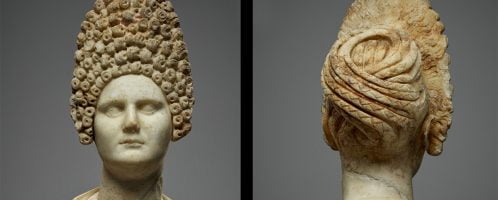
Medicamina Faciei Femineae, or “Cosmetics for the Female Face”, is a fascinating treatise written by Ovid, one of the most famous poets of ancient Rome. This is a work that reflects the ancient approach to female beauty. It is a poetic facial care instruction. Interestingly, this text can be considered one of the first cosmetology magazines in literature.

Nowadays, street names and house numbers are used to identify a place of residence. It is a simple and effective system, but the ancient Romans did not use it. In small towns, finding a given house by a stranger might not have been a big challenge. Such a person was certainly helped by local residents and guided him accordingly.
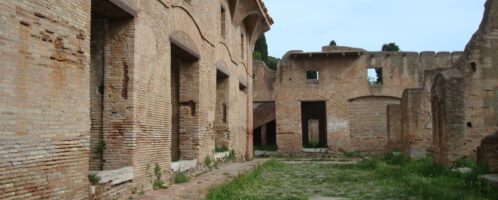
In ancient Rome, the concepts of otium (rest) and negotium (work) formed the foundation of social and personal life, especially among the elite. It was otium post negotium – “rest after work” – that symbolized the balance that a person should maintain to live harmoniously. Otium was crucial in shaping the Romans’ culture, philosophy and everyday life.

Frumentatio was one of the most important food distribution programs in ancient Rome, which played a key role in ensuring the social and political stability of the empire. It consisted of distributing free or subsidized grain (mainly unmilled wheat) to the Roman population, especially in Rome itself, where the problem of hunger could lead to riots and destabilization of the political scene.
Calceus is a typical Roman shoe that played a key role not only as foot protection but also as a marker of social position. It was a shoe that covered the entire foot, tied at the ankle and at the front, made of durable leather, often dyed in characteristic colours reflecting the status of its owner.

In ancient Rome, the term “negotium” meant professional activity, both in the economic and political sense. It was the opposite of “otium” – free time devoted to rest, reflection or cultural life. Negotium played a key role in shaping the social and economic structure of the Roman Empire, as the Romans viewed work not only as a means of earning a living but also as a way to pursue ambition and gain prestige.
The phrase “As you are Gaius, I am Gaia” (Ubi tu Gaius, ibi ego Gaia) is one of the most symbolic sayings related to marriage in ancient Rome.