
Feel like gladiator
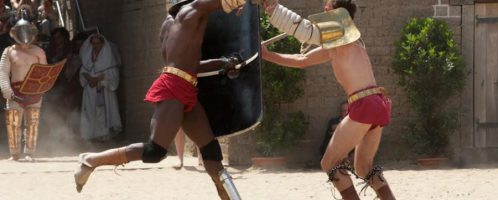
In Xanten, Germany, there is an Archaeological Park and a Museum, thanks to which we can feel like ancient Romans.
If you have found a spelling error, please, notify us by selecting that text and pressing Ctrl+Enter.
In Xanten, Germany, there is an Archaeological Park and a Museum, thanks to which we can feel like ancient Romans.
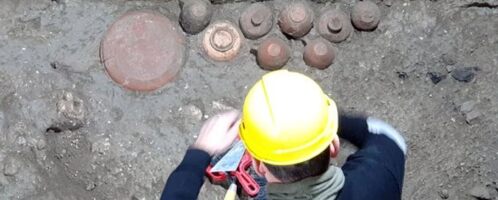
Excavations at Civita Giuliana, a site about 700 meters north-west of Pompeii, yielded further discoveries, including ceramics. Civita Giuliana was a large Roman villa that had an agricultural character.
Remains found in the Roman cemetery in York, England, prove that the city – once an essential bulwark of the Roman frontier in the far north – was home to both local residents and thousands of immigrants.

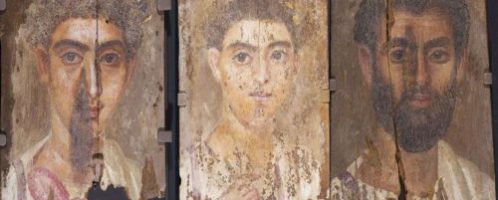
Scientists are using the latest technology to discover the “origin” of Roman mummy portraits over 2,000 years old, dating back to when Rome ruled Egypt.
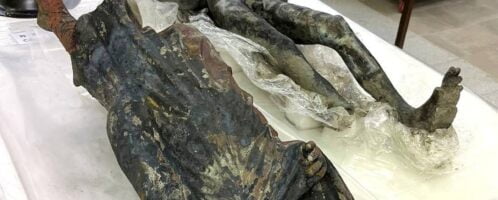
Italian authorities have announced the discovery of more than 2,000-year-old bronze statues in an ancient Tuscan thermal spring and said the find would “rewrite the history” of the transition from Etruscan civilization to the Roman state.
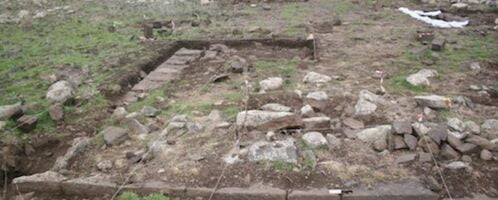
Archaeologists conducting excavations in 2014 in the central part of the Golan Heights in Israel discovered a large public building from the Roman era. They believe that it could have been a synagogue made of hewn stones. There were two parallel rows of benches inside. Remains of columns and fragments of pottery were found.
An amateur archaeologist found in 2015 near Jerzwałd (Poland) and donated to the museum an antique sword, probably from the 4th century CE. According to archaeologists, it may be a spatha sword from the late Roman period, unique in the lands of the former Balts.
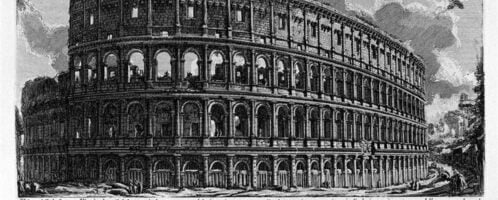
Six ancient buildings in Pompeii, which had undergone renovation work since 2012, could finally be put on public display. The official inauguration took place on Christmas Day in the presence of Italian Prime Minister Matteo Renzi.
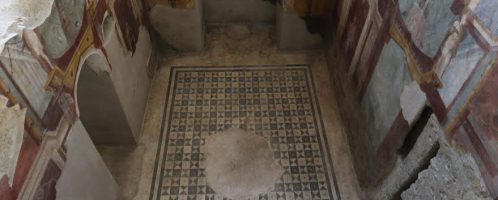
More than 12 graves have been discovered in Ostia, a Roman port city at the mouth of the Tiber River. Dated to the 3rd-4th century CE the graves probably belong to Christians. They surround a central grave that belonged to someone of religious and social importance.
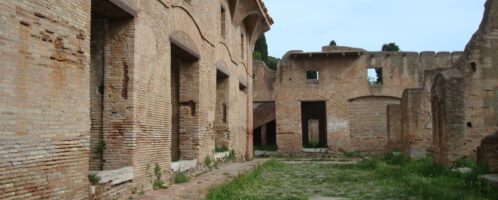
The Greek Ministry of Culture said a large fragment of a mosaic showing a chariot in motion has been discovered in a funerary complex at Amphipolis in northern Greece. It is made of white, black, blue, red and yellow pebbles. Scientists estimate that the work dates back to the last quarter of the 4th century CE.
