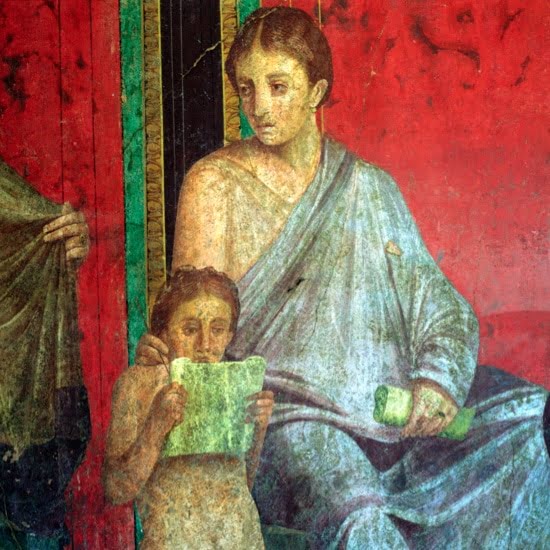
The tunic (tunica) was a woollen garment with short sleeves, girdled around the waist, typical of the Romans, which was the equivalent of the Greek chiton.
It was worn under armour during combat but was also used on a daily basis among ordinary Romans.
Roman regulations clearly defined some elements of the outfit that only a privileged citizen could wear. On the street, it was easy to recognize a man of high society, and even his function in the state. It was similar in the Roman army, where, for example:
- military tribune (tribunus militum angusticlavius ) wore a tunic with a narrow purple hem. This is what angusticlavius means.
- the victorious leader wore a special purple robe during his triumphal entry into Rome
The citizen’s tunic was the colour of white natural wool, while senators and equites wore tunics decorated with stripes (clavus). There were distinctions between the states, such as the equites having two purple stripes (tunica angusticlavia), while the senators had one wide (tunica laticlavia). A separate tunic with embroidered palm leaves (tunica palmata) was reserved for the winner. A richer form of a tunic, created during the late empire, was dalmatica, woollen, linen or linen. Next to her, the Romans also wore a sleeveless tunic (colobium). In the 3rd century CE, the Romans began using tunics with long sleeves. Putting on such a robe before this period was considered a sign of effeminacy.
A similar effect was caused by wearing a very long tunic falling down to the feet (tunica talaris). One tunic was usually worn, but from the 3rd century BCE onwards. the second (tunica interior or subucula) was established. During winter, in the cold season, several tunics were worn. For the poorest, slaves and children, the tunic was the only garment. The tunic was worn primarily at home, while each exit to the streets required an additional garment, called a toga.