Chapters

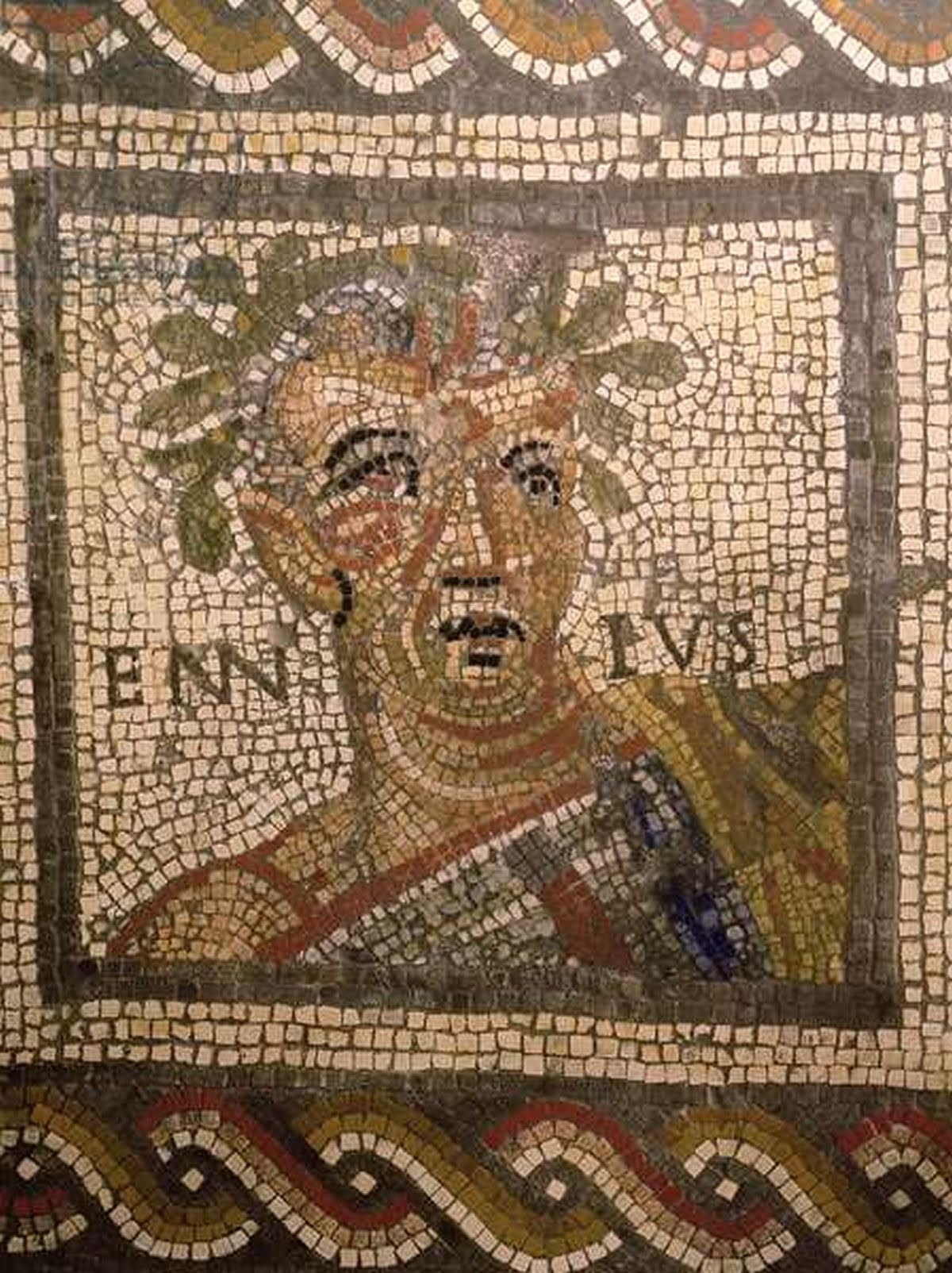
Ennius (Quintus Ennius) lived from 239-169 BCE. He was a Roman poet, considered the father of Roman poetry. Only fragments of his works have survived to our times.
- “Good deeds misplaced, methinks, are evil deeds”
- latin: [Bene facta male locata male facta arbitror]
- description: quoting Ennius.
- source: Cicero, De Officiis
- “The victor is not victorious if the vanquished does not consider himself so”
- latin: [Qui vincit non est victor nisi victus fatetur]
- source: Ennius, Annales, XXXI, 493
- “For to fight out a quarrel by force – it is a thing of boorish boars beloved”
- source: Ennius, Annales
- “A man who, to one astray, graciously points out the way does it as one lights a torch from his own torch. No less light does it shed for him when he has lit the other’s”
- “All mortals desire themselves to be praised”
- latin: [Omnes mortales sese laudarier optant]
- source: Augustine of Hippo, De Trinitate, XIII, III
- “No one regards what is before his feet; we all gaze at the stars”
- latin: [Quod est ante pedes nemo spectat, caeli scrutantur plagas]
- source: Cicero, De Divinatione, II, XIII
- “The idle mind knows not what it wants”
- latin: [Otioso in otio animus nescit quid velit]
- source: Aulus Gellius, Noctes Atticae, XIX, X
- “The mind wanders unsure, except in that life is lived”
- latin: [Incerte errat animus; praeterpropter vitam vivitur]
- source: Aulus Gellius, Noctes Atticae, XIX, X
- “Fortune is given to brave men”
- latin: [Fortibus est fortuna viris data]
- source: Macrobius, Saturnalia VI, I
- “Not chaffering war but waging war, not with gold but with iron—thus let us of both sides make trial for our lives”
- latin: [Nec cauponantes bellum sed belligerantes; ferro non auro vitam cernamus utrique]
- source: Cicero, De Officiis, I, XII
- “Where the Gauls stealthily, at the time of night when sleep falls on men, attacked the high citadel and of a sudden stained with blood walls and watchers”
- latin: [Qua Galli furtim noctu summa arcis adorti, moenia concubia vigilesque repente cruentant]
- source: Macrobius, Saturnalia I, IV
- “Whom none could overcome with iron or gold”
- latin: [Quem nemo ferro potuit superare nec auro]
- source: Cicero, De Re Publica, III, IV
- “Neither you nor any man alive shall do this unpunished: no, you shall give recompense to me with your life-blood”
- latin: [Nec pol homo quisquam faciet inpune animatus,hoc nec tu; nam mi calido dabis sanguine poenas]
- source: Macrobius, Saturnalia VI, I
- “And earth who herself bestowed the body takes it back and wastes not a whit”
- latin: [Terram corpus quae dederit, ipsam, capere neque dispendi facere hilum]
- source: Varro, De Lingua Latina V
- “Open your eyelids, will you all, and let your brains leave sleep behind”
- latin: [Pandite sultis genas et corde relinquite somnum]
- source: Festus, De verborum significatione
- “No sooner said than done—so acts your man of worth”
- latin: [Dictum factumque facit frux]
- source: Priscianus, Ars Prisciani, VI
- “The Roman state survives by its ancient customs and its manhood”
- latin: [Moribus antiquis res stat Romana virisque]
- source: Ennius, Annals, V
- “One man, by delaying, restored the state to us. He valued safety more than mob’s applause; Hence now his glory more resplendent grows”
- latin: [Unus homo nobis cunctando restituit rem. Noenum rumores ponebat ante salutem; Ergo plusque magisque viri nunc gloria claret]
- source: Cicero, De Senectute, IV
- “The ape, vilest of beasts, how like to us!”
- latin: [Simia quam similis turpissima bestia nobis!]
- source: Cicero, Natura Deorum, I, XXXV
- “As a strong horse that has often won on the last lap at Olympia is now resting, tired out by old age”
- latin: [Sicut fortis equus, spatio qui saepe supremo; Vicit Olympia, nunc senio confectus quiescit]
- description: Ennius refers here to himself and his work Annals, sensing its ending.
- source: Cicero, De Senectute, V
- “Whom they fear, they hate. And whom one hates, one hopes to see him dead”
- latin: [Quem metuunt oderunt; quem quisque odit, perisse expetit]
- source: Cicero, De Officiis, II, 23
- “Let no one pay me honor with tears, nor celebrate my funeral rites with weeping. Why? I fly, living, through the mouths of men”
- latin: [Nemo me lacrumis decoret neque funera fletu faxit. Cur? volito vivos per ora virum]
- source: Cicero, Tusculanae Disputationes, I, XV
Scipio Africanus the Elder
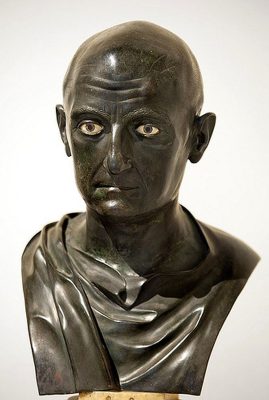
(Publius Cornelius Scipio Africanus Maior, 236 – 184 BCE) – commander during the Second Punic War:
- “[…] prepare for war, since you have been unable to endure a peace”
- latin: [bellum parate, quoniam pacem pati non potuistis]
- description: words addressed to Hannibal before the battle of Zama in 202 BCE.
- source: Livy, Ab Urbe Condita XXX, 31
- “Thankless country, thou shalt not possess even my bones!”
- latin: [Ingrata patria, ne ossa quidem habebis]
- source: Valerius Maximus, Factorvm et dictorvm memorabilivm libri Novem, V, III
- “The end of the war and hardship was at hand, the spoils of Carthage within reach, and the return home to their native city, to parents, children, wives and household gods”
- latin: [Adesse finem belli ac laboris; in manibus esse praedam Carthaginis, reditum domum in patriam ad parentes liberos coniuges penatesque deos]
- description: Scipio’s words to soldiers before the battle of Zama.
- source: Livy, Ab Urbe Condita, XXX, 32
- “I would rather save the life of one citizen than kill a thousand enemies”
- latin: [malle se unum civem servare quam mille hostes occidere]
- source: Historia Augusta, Antoninus Pius, 9.10
- “[…] never less at leisure than when at leisure, nor less lonely than when alone”
- latin: [numquam se minus otiosum esse, quam cum otiosus; nec minus solum, quam cum solus esset]
- description: according to Cato the Elder
- source: Cicero, De Officiis, III, I
- “I am mindful of human weakness, and I reflect upon the might of Fortune and know that everything that we do is exposed to a thousand chances”
- latin: [Quod ad me attinet, et humanae infirmitatis memini et uim fortunae reputo et omnia quaecumque agimus subiecta esse mille casibus scio]
- description: words addressed to Hannibal before the battle of Zama in 202 BCE.
- source: Livy, Ab Urbe Condita, XXX, 31