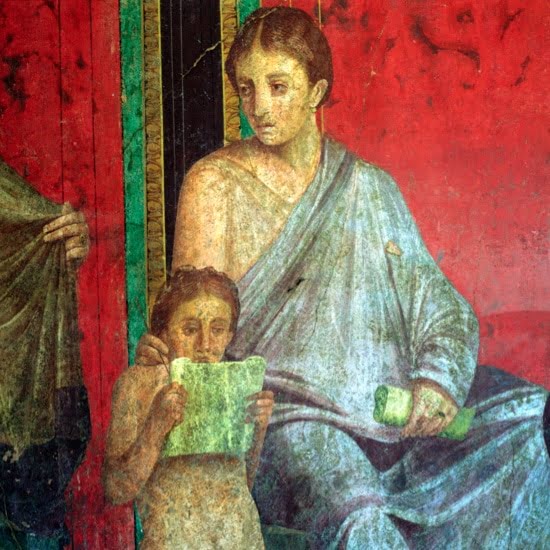
Vesta was the Roman equivalent of the Greek goddess Hestia, who was the goddess of the bonfire. However, Vesta was worshiped not only as a guardian of the home, but also as a personification of the iconic fire. Vestal Virgins cultivated the sacred fire that was not allowed to go out. The Vestals were mostly recruited from young girls from patrician families who made vows of chastity for thirty years of service. The main festival of Vesta, Vestalia, took place on June 7th.
Tradition attributes the introduction of the cult of Vesta to king Numa Pompilius. However, he probably only introduced the cult of Vesta as the goddess of the state fire and built a proper temple. The cult of the home itself is presumably prehistoric and before the Numa it was cultivated privately by individual families (familiae) and tribes (gentes) of Italy.
- Kempiński Andrzej, Encyklopedia mitologii ludów indoeuropejskich, Warszawa 2001
- Schmidt Joël, Słownik mitologii greckiej i rzymskiej, Katowice 1996