Chapters
Piracy was a serious nuisance in ancient times. The pirates from Cilicia, whom Rome declared war on, were particularly infamous. According to Pliny the Elder, the most pirate attacks were in the period from May to September, therefore the safest place for merchant ships, contrary to appearances, was to sail in the winter when the sea was restless.
Background of events
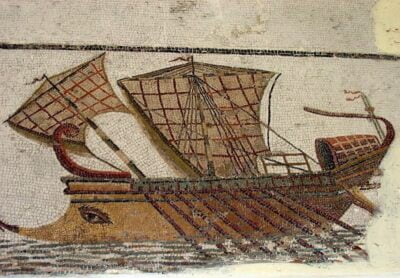
In the initial period of its existence, the Roman Republic based its development especially on the expansion of land, in the immediate vicinity. It has relied on nations associated with the sea for centuries for additional food supplies. As a result of this state of affairs, she was not directly concerned with piracy.
This situation began to change at the turn of the 4th and 3rd century BCE. The growing population of the country showed an increased demand for grain imports. Illyrian and “Tyrrhenians ” (the collective name for Etruscan, Sardinian and Italian pirates as well as inhabitants of Greek colonies from Sicily and southern Italy) are just two of the many examples of nations’ robber crafts in the Mediterranean. The fight against this phenomenon was made much more difficult due to the specific attitude to the problem of piracy by some of the rulers of the Mediterranean countries. Demetrias and Philip V were openly hiring pirates for offensive operations against the Rhodes fleet, and the Queen of Illyria ignored her subjects’ plunder.
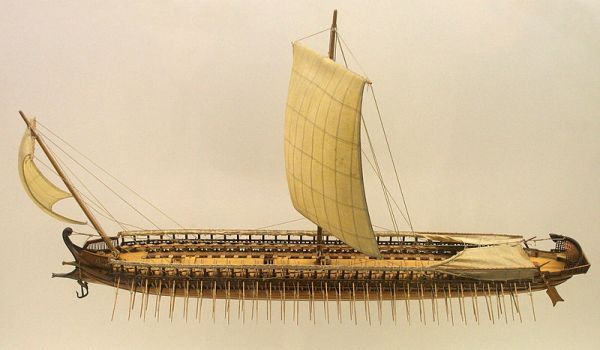
A little later, Rome was also disturbed by other robber groups, such as the Cretans and, perhaps the most powerful organization of this type of the world at that time, the pirates of Cilicia. Cilicia, as a mountainous land with no developed road network with an irregular coastline, provided pirates with a safe base for a long time and allowed them to focus on maritime expansion. In that city, however, the Cilicians were very successful, which provided them with a mass influx of people from among the inhabitants of the poor neighbourhood. A large group of more affluent supporters provided pirate services with their own fleet of ships with crews or co-financed new units. As a result of such support, the pirate fleet grew into the undisputed power of the then-Mediterranean world. In the 1st century BCE, it also included standard war units donated by Mithridates VI.
The Cilicians were also favoured by the balance of power at sea. The once invincible Seleucid Monarchy lost its fleet as a result of a lost war in the early 2nd century BCE, and Rome neglected its naval forces built at the cost of many sacrifices for the war with Carthage. As a result of the latter’s final defeat in the Punic Wars, some of the best sailors of the time took up piracy – Phoenicians. Rhodes, the traditional Mediterranean “policeman”, was forced to reduce its fleet due to reduced trade volumes (the market for one of the most important transport items, grain, was dominated by Roman freighter). Combined with the strong support given to pirates by the ruler of Pontus, cooperation with other robber groups and extensive own intelligence service, this allowed the Cilicians to play an important role in the history of the Mediterranean.
The power of pirates was so great that they also had some influence on political and territorial events, they contributed, inter alia, until Rome lost the Balearic Islands. They harmed the Republic in other ways as well – as a group that based its income mainly on the slave trade, they posed a constant threat to the inhabitants of coastal towns throughout the Mediterranean. The pirate plague did not avoid even Italian cities, including Rome – there were cases of kidnappings at the very gates of the capital. An example is the abduction of two praetors with lictors or the family of an admiral fighting piracy.
Roman attempts to eliminate problem
Several prepared expeditions against highwaymen did not bring the expected results. In 102 BCE a fleet composed mainly of units of the Greek allies, under the command of Mark Antony the Orator, carried out a series of raids on pirate strongholds in Cilicia; as it turned out, however, this campaign did not significantly weaken the pirates’ position in the region. In 100 BCE the law of the lex de provinciis praetoriis was adopted, which required the Roman praetor to carry out naval operations every year against Cilician pirates. In 75 BCE Publius Servilius Vatia Isauricus led a land campaign in Cilicia, attacking pirate bases and their Isaur ally. However, without any definite success. The Romans were well aware of the problem of piracy and took over the role of “policeman” in the Mediterranean.
It is worth noting that in 75 BCE while travelling to Rhodes to study with Apolloninos Molon, 25-year-old Gaius Julius Caesar was kidnapped by Cilician pirates; this proves that it was not only merchants and the lower classes who were threatened.
It was not until the pirate naval blockade of Rome organized at the beginning of the 1st century BCE that the growing threat of starvation in the capital of the empire prompted the Senate to take more decisive steps. For the post of commander of anti-piracy activities, the people’s tribune Aulus Gabinius put forward the candidacy of his dear friend Pompey. It was approved by the Senate, which granted the commander exceptionally extensive powers, under the Lex Gabinia de piratis of 67 BCE, including full freedom in administering the state treasury and very wide possibilities throughout the Mediterranean. This is how Cassius Dio tells us:
In the end, however, one Aulus Gabinius, a tribune, set forth his plan. He had either been prompted by Pompey or wished in any case to do him a favour; certainly he was not prompted by any love of the common welfare, for he was a most base fellow. His plan, then, was that they should choose from among the ex-consuls one general with full power against all the pirates, who should command for three years and have the use of a huge force, with many lieutenants.
– Cassius Dio, Roman history, 36.23.4

Pompey received imperium maius, i.e. power vested in consuls and at the same time greater than other Roman officials. Such large powers gathered in one hand were not a precedent. In 74 BCE, Mark Antony Creticus was given command of the fleet and the coast of the Mediterranean Sea to clear the waters of pirates. The praetor initially fought in the western Mediterranean. However, the excess of power meant that the Romans often plundered the provinces, including Sicily. Some senators, especially in the conservative circles, were against giving another Roman politician such extensive powers. Cassius Dio mentions that Gabinius’ law was supported by everyone except the senate. Apparently, the senators feared Pompey’s too much power more than the pirates.
Pompey campaign
Pompey, with his inherent military genius, eradicated the scourge of piracy(67-65 BCE) in the Mediterranean within three years. The sea was divided into zones, which were gradually explored by squadrons commanded by Pompey’s subordinates. This is how he describes the tactics and implementation of Pompey’s Plutarch plan:
However, he divided the waters and the adjacent coasts of the Mediterranean Sea into thirteen districts, and assigned to each a certain number of ships with a commander, and with his forces thus scattered in all quarters he encompassed whole fleets of piratical ships that fell in his way, and straightway hunted them down and brought them into port; others succeeded in dispersing and escaping, and sought their hive, as it were, hurrying from all quarters into Cilicia. Against these Pompey intended to proceed in person with his sixty best ships. He did not, however, sail against them until he had entirely cleared of their pirates the Tyrrhenian Sea, the Libyan Sea, and the sea about Sardinia, Corsica, and Sicily, in forty days all told. This was owing to his own tireless energy and the zeal of his lieutenants.
– Plutarch, Pompey, 26
Plutarch mentions that he had 500 ships, 120,000 infantry, and 5,000 cavalry; under his authority were in turn, 24 commanders. Appian of Alexandria agrees with the size of the army; reports, however, that Pompey had 270 ships under his command and 25 deputies who patrolled selected areas. Major Fleet Admirals:
- Tiberius Nero and Manlius Torquatus: Spain and the Straits of Hercules (Strait of Gibraltar);
- Marcus Pomponius: Gaul and Liguria;
- Gnaeus Cornelius Lentulus Marcellinus and Publius Atilius: Africa, Sardinia, Corsica;
- Lucius Gellius Publicola and Gnaeus Cornelius Lentulus Clodianus: Italia;
- Plotius Varus and Terentius Varro: Sicily and the Adriatic Sea up to Akarnani;
- Lucius Sisenna: Peloponnese, Attica, Euboea, Thessaly, Macedonia and Boeotia;
- Lucius Lollius: Greek Islands, Aegean Sea and Hellespont;
- Publius Piso: Bithynia, Thrace, Sea of Marmara, mouth into the Black Sea;
- Quintus Caecilius Metellus Nepos Iunior: Licia, Cyprus and present Lebanon.
In addition, Pompey received a total of 140 million sesterces from the state treasury for war purposes. The western Mediterranean was “cleaned” over the course of 40 days, and then the pirates in the eastern half were exterminated over a similar period of time.
Pompey ordered his admirals to try to intercept an enemy pirate vessel and escort them to a nearby port first; only in the event of opposition, were ships captured or drowned. Moreover, the fighting was not only fought on the seas. There were also attempts to eliminate pirate bases. Among other things, in Cilicia, near Korakezja, the pirates gathered and gave Pompey a great sea battle. Pompey with the help of 60 great ships defeated pirates and cleared the Tyrrhenian Sea, Corsica, Sardinia, Sicily and Libya. The elimination of pirate outposts became inevitable. In this situation, many pirates surrendered to the Romans (including the Cretans) and thus gained favour from Pompey, who settled them in depopulated areas with good land, among others Soli (Cyprus) or Dyme (Greece). In total, he saved about 20,000 highwaymen, hoping that the pirates would abandon their former lives in favour of farming. Plutarch left us a message about how Pompey dealt with pirates:
Some of the pirate bands that were still rowing at large begged for mercy, and since he treated them humanely, and after seizing their ships and persons did them no further harm, the rest became hopeful of mercy too, and made their escape from the other commanders, betook themselves to Pompey with their wives and children, and surrendered to him. All these he spared, and it was chiefly by their aid that he tracked down, seized, and punished those who were still lurking in concealment because conscious of unpardonable crimes.
– Plutarch, Pompey, 27
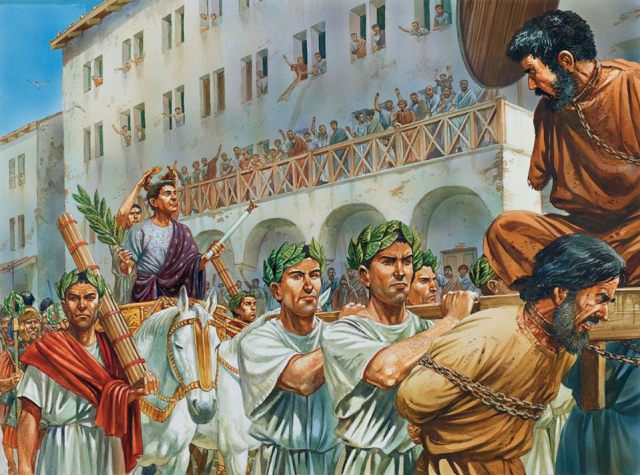
According to Appian’s records of Alexandria, Pompey captured 71 ships during the war with pirates and destroyed 306; captured 120 cities/forts and killed about 10,000 pirates. The whole war, according to his information, was supposed to last only a few days!
End of real threat
No matter how much the anti-piracy campaign actually lasted and how many ships were captured, it is certain that Rome’s victory was complete. The Mediterranean Sea had largely been cleared of privateering, and trade could proceed normally. Naturally, the naval robbery continued after Pompey’s campaign, but it was only dealt with by a few groups who lacked the strength and organization to be able to really harm Rome.
The alleged words of Octavian Augustus have also survived to our times, who, after one of his generals in 5 BCE, dealt with the Cilian pirates again, is said to have said: “The sea I pacified from pirates” 1. During the campaign, a total of 4,000 Cillicians were taken prisoner.