

Chapters
After defeating Andriscus, Rome left troops in the Balkans with the intention of dealing with the Achaean League, where anti-Roman attitudes intensified. Over the past decades, the Union has been the strongest federal organization in Greece.
His attempts to subordinate policies that opposed his domination, such as Sparta, came to the opposition of the Romans, who were satisfied with the world of individual policies, traditionally divided and ongoing disputes. In addition, in the cities of the federation, there was a vivid memory of the internment of the Union’s elites and purges carried out by Rome in Greece after the Third Macedonian War. In the cities of the Union, as well as throughout Helladia, demands for independence from the Republic resounded ever more strongly. The Achaean, like other Greek policies, supported the Romans during the war with Andriscus, but after the first successes of the Macedonian usurper, the Achaean politicians decided to take advantage of Rome’s weakening.
At that time, the Achaean strategist Kalikrates died, called by historians “ancient Quisling” because of his extremely pro-Roman attitude. This event paved the way for independent Achaean leaders such as Diajos and Kritolaos. Also in other Greek policies, representatives of the independence camp took power, and spokesmen of Rome, installed thereafter the battle of Pydna, was removed from the helm of government.
Beginning of conflict
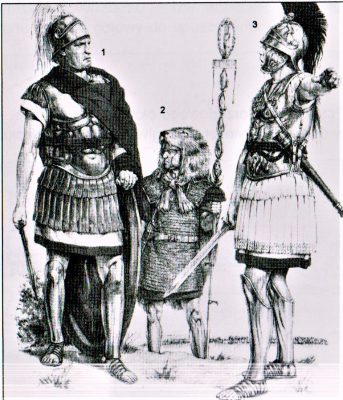
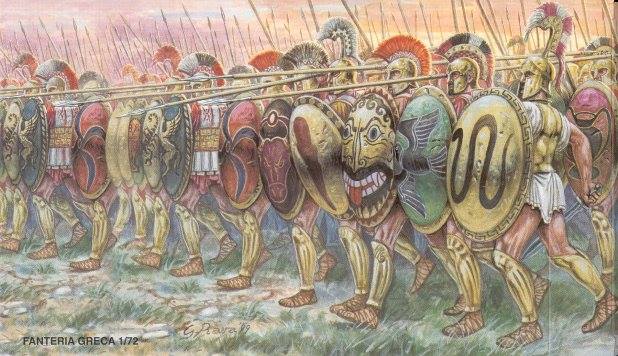

The tension between the Greeks and Rome escalated in 148 BCE when the authorities of the Achaean League issued the Sparta war against the will of the senate. Despite the orders of Roman MPs to stop the fighting and to submit to arbitration in Rome, the Achaeans fought a victorious battle with the Spartans, putting dead bodies of 1000 enemy soldiers. However, for fear of the power of the Tiber, they did not decide to get Sparta alone.
Annoyed senators sent a commission to Corinth, headed by Lucius Aurelius Orestes. The legates made unbelievable demands to the Achaeans: recognition of the independence of the cities that were part of the Achaean League – Sparta, Corinth, Herakia Trachinska, Argos and Orchomenos. They argued that these policies had previously belonged to Philip V, and their residents were not Achaia. Fulfilling these demands in practice meant the end of the Union. Senators knew well that this ultimatum would cause indignation among the Achaeans. It also happened – the Spartans who were in Corinth at that time became the object of attacks, and the Roman deputies themselves, insulted by the people, barely escaped with their lives.
For now, however, the Romans did not want to start hostilities in the Balkans, because they needed troops on other fronts – in Spain, and above all within the walls of Carthage. At the time, however, a conflict could still have been avoided, since moderate politicians exercised power in the Achaean League. They sent a message to the Tiber to apologize for the brawls in Corinth and to insult the Roman legates. Envoys headed by Thearidas met Roman legates along the way, headed by Sextus Julius Caesar. He called on the deputy of Thearidas to go with him to the Peloponnese. Negotiations took place in Ajgion, but Kritolaos was already the strategist of the Achaean League, pursuing a policy of confrontation with the Republic. The talks were at a standstill – neither the Achai nor the Romans reached an agreement. It was agreed that the Achaia would send a message to Rome, and the Sparta case would be discussed in Tegei. However, the delegates of Sparta and Rome waited in vain for the arrival of the Achaean representatives in this city, and when Kritolaos himself arrived, they heard from him that it was necessary to wait for the resolution of the union’s assembly, which is to take place in … half a year. The meeting of the Achaean League was convened in the spring of 146 BCE, the Prime Minister of Macedonia, through his emissaries, through his emissaries, warned the Achaia against secession with Rome, the however anti-Roman sentiment was very common in Corinth. If you believe Polibiusz, representatives of the lower classes of society were hostile towards the Republic, who, unlike the rich Achaia, did not have much to lose. Roman MPs were again insulted and banished from the city. The attitude of the council of elders trying to stop Kritolaos no longer helped. He accused his opponents of espionage of Rome. Sparta was issued to the war, which meant an armed confrontation with the Romans. Kritolaos, who was in fact equipped with monarchical power, headed the entire movement.
Achaean-Roman war
Kritolaos headed by small forces headed for Herakleja Trachińska. He received the support of Thebes, the Union of Beocki, Fockeyians, East Lokres and Eubean Chalkis policies. The Romans sent a consular army of Lucius Mummius against the rebels (2 legions supported by Italian reinforcements – 20,000 soldiers in total). Meanwhile, Praetor Metellus headed south and, after crossing the Sperchejos River, surprised Kritolaos’ troops. Frightened by the emergence of a new Roman army, he ordered a retreat to Elatea. The clash took place near Skarfaefa, where Kritolaos’ army was cut down and its commander-in-chief fell. A 1,000-strong detachment of Arkadians led by Diajos, going to the aid of Kritolaos, received news of the pogrom of his army under Elataa. The Arkadians began their retreat, but they suffered a devastating defeat at Cheronea. Another squad of Achaea from Patraj was defeated in Lokrid by the legionaries of Metellus. The Roman commander seized the unprotected Thebes, but generously spared his inhabitants.
Despite a series of devastating defeats, the Achaeans did not lose their spirit. Their commander Diajos sent 4,000 armed men under the c