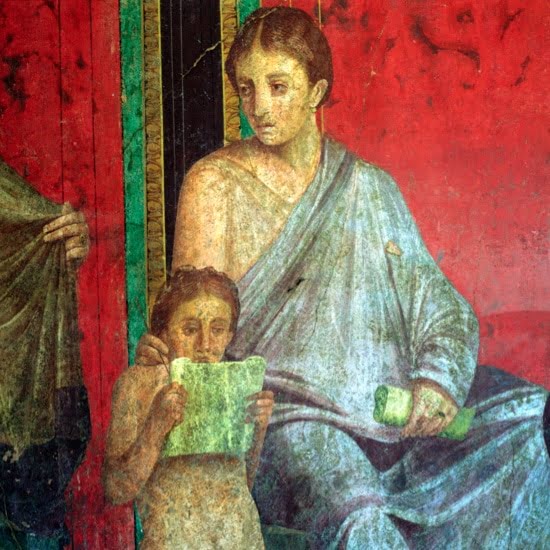
Hair coloring was popular among Roman women
Hair dyeing was extremely popular among Roman women. The most famous colours were red, black and blonde. The latter was popular thanks to the Germans and Gauls with whom the Romans began to come into contact. Prostitutes were even legally obliged to have a blonde colour to distinguish themselves from ordinary Romans. However, this did not prevent the residents from dying their hair.
Individual dyes were obtained from various ingredients, incl. goat fat, beechwood ash, henna, saffron and bleach. Some Romans decorated their hair with golden sprinkles. In this way, he embellished his hair Emperor Commodus (reign in 180-192 CE).
Ancient Romans also used pastes made of powder (talcum powder) and various soaps made of nature in order to dye their hair. Boiled and crushed walnuts, burnt and charred ant eggs, the rotting game remains or various types of berries – these are some of the many ways to obtain the right dye. These eggs were most often used as a paste for dyeing eyebrows.
Pliny the Elder, in turn, suggested that black is best achieved using soaked and rotten leeches that were kept in red wine for 40 days . To achieve the red colour, he recommended the use of a mixture of animal fat and beech ash . Supposedly, the saffron was perfect for the zloty . Ovid also mentioned that herbs and saffron are ideal for dyeing .
- Pliny the Elder, Natural history, 32:23
- Pliny the Elder, Natural history, 28:51
- Tertullian, De Culti Feminarum, 2:6:1
- Ovid, Ars Amatoria, 3:158-64