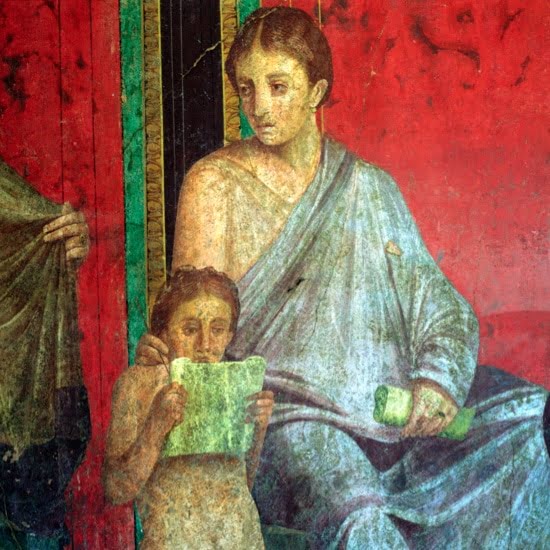
Mosaic showing a lady with slaves
In 1726, a great tomb (columbarium) was discovered at via Appia, in which, as it turned out, the ashes of almost a thousand slaves and freedmen belonging to the first empress Livia were buried. In the tomb, there were also badges with names and professions written on them.
We know from the preserved plaques that there were, for example, doctors, a painter, midwives, seamstresses and a feast organizer. Researchers speculate that the dead were in fact the first imperial administration of Octavian Augustus.
Interestingly, already during the reign of Claudius (41-54 CE), the imperial administration was very extensive and consisted of many divisions, from accounting to correspondence and judicial aspects. The staff of officials consisted of numerous slaves who were controlled by freedmen and then by equites.
- Beard Mary, SPQR. Historia starożytnego Rzymu, Poznań 2016