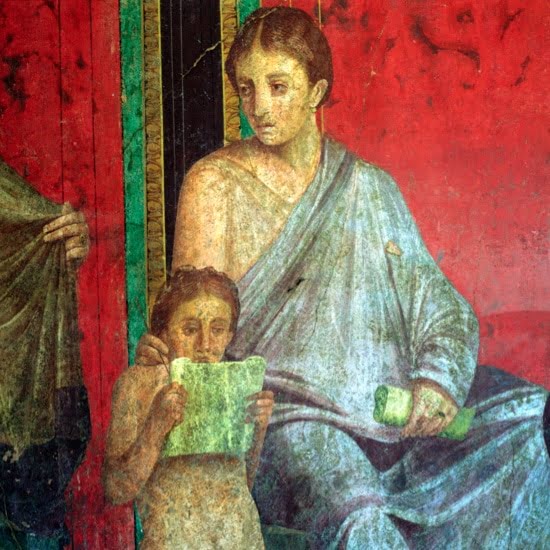
Mosaic depicting Bacchus
Mosaic depicting Bacchus; dated to the 3rd century CE. Object was found around via Flaminia in Rome. Currently in the Palazzo Massimo alle Terme museum.
Third-century mosaics are not necessarily of the highest quality. The third century is already a period of unrest in the empire, as well as the moment when the first signals of a change in the prevailing aesthetics appear. A general change in tastes (although it is sometimes difficult to resist the impression that lowering artists’ skills) was also associated with less attachment to detail and realism in art. This is particularly evident in this mosaic – as if it continues the previous pagan motifs, but the face of Bacchus no longer expresses this joy of life, carefree, carelessness and alcoholic intoxication. On the contrary, the god seems strangely concerned and sad. How different is the image from those that dominated art in the second century CE! Until one would say that this Bacchus promises to later serious images of Christian saints who were to dominate the Eternal City in the following centuries.
However, I am most fascinated by the motif of wavy fabric that surrounds the face of Bacchus. I may be wrong, but it seems to me that this is a rather rare pattern.