Curiosities of ancient Rome

This page is also available in: Polish (polski)

The world of the ancient Romans was rich in extraordinary, and sometimes even surprising, facts. We draw our knowledge of Roman daily life, customs, and mentality primarily from works left by ancient writers and historians. It is thanks to them that we discover information that is astonishing today – sometimes even hard to believe. Below are some interesting facts that reveal a lesser-known and less obvious side of the Roman world.

I encourage you to submit your own suggestions and to report any corrections or inaccuracies.

Octopus on Roman mosaic

Octopus on a Roman mosaic; the object dates to the 4th century CE and was discovered in Aquileia, Italy. Octopus was part of the diet of ancient Romans, particularly in coastal regions.Więcej

Roman mosaic depicting leopard

Roman mosaic depicting a leopard and Dionysian symbols. Dated to the 1st century CE, the object was found in Pompeii.Więcej

Frog on Roman mosaic

Roman mosaic depicting a frog on a leaf. Ancient Greeks and Romans associated frogs with harmony, fertility, and debauchery, as well as the goddess Aphrodite (Venus).Więcej

Raven on Roman ring

Roman gold signet ring depicting a raven perched on a ram’s head. A crescent moon and branch motif are also visible. The piece dates to the 2nd-1st century BCE. The artifact is located at the…Więcej

Roman mosaic depicting rabbit driving chariot pulled by geese

Roman mosaic depicting rabbit driving chariot pulled by geese. The object is located in the Louvre Museum.Więcej

Statue of naked Venus

Statue of a nude Venus in the peristyle of the Torre Annunziata in Oplontis. The object was likely a decorative element in one of the rooms in the house.Więcej

Crustaceans and slaughtered animals in Roman fresco

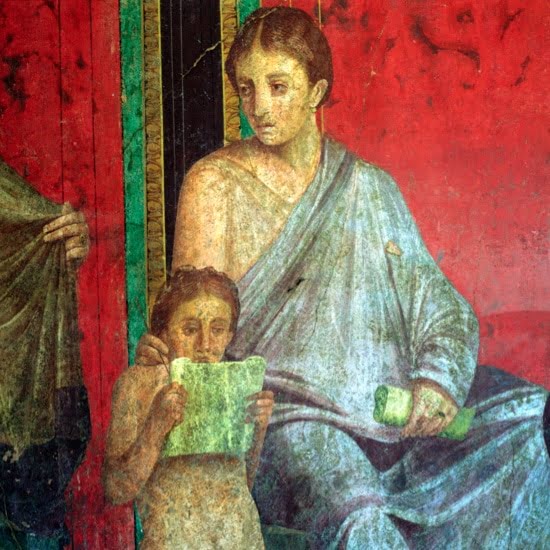
Fragment of a Roman fresco discovered in Pompeii, depicting an initiation ritual into the mysteries of Dionysus. The scene depicts shellfish and slaughtered animals.Więcej

Roman sculpture in honor of Jupiter

Roman sculpture honoring Jupiter. The object was discovered in 2024 in Stuttgart, southwest Germany, on the site of a former Roman fort. The permanent camp (castra stativa) was built in 90 CE and was intended…Więcej

Preserved Punic amphora

Preserved Punic amphora that was excavated from the bottom of the Mediterranean Sea near the island of Gozo. The object is dated to the 4th-3rd century BCE.Więcej

Roman floor mosaic depicting birds

Roman floor mosaic depicting birds. The object is located in the so-called House of the Faun (VI. 12. 2) in Pompeii.Więcej
Support IMPERIUM ROMANUM!

IMPERIUM ROMANUM needs your support!

If you like the content I collect on the website and share it on social media channels, I will be grateful for your support. Even the smallest amounts will allow me to pay for further corrections and improvements on the site and pay for the server.

Support IMPERIUM ROMANUM!
Subscribe to newsletter

Discover secrets of ancient Rome!

If you want to be up to date with the newest articles on the website and discoveries from ancient Rome, subscribe to the newsletter, which is sent each Saturday.

Subscribe to newsletter!