Curiosities of ancient Rome (Unknown facts)

This page is also available in: Polish (polski)

Unknown Facts are curiosities revealing little-known, surprising, or rarely discussed information from the world of ancient Rome and antiquity. This category includes unusual details, curiosities, and facts that offer a less obvious perspective on the Roman Empire.

Did Ancient Romans sprinkle with salt Carthage’s ground?

There is a popular belief that ancient Romans after defeating Carthage in 146 BCE not only razed the city to the ground but also sprinkled it with salt, in order to make sure that nothing…Więcej

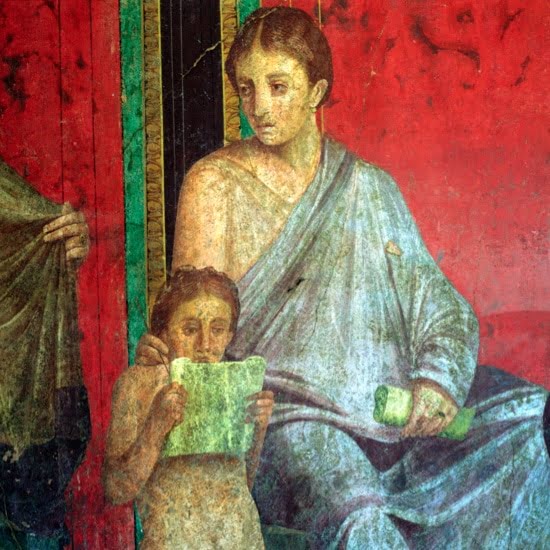
Roman women were educated

In ancient Rome, it was appropriate for a woman in upper and middle social classes to be able to read and write. Sometimes the family invested in girls even more and provided private Greek or…Więcej

Fullones in ancient Rome

Roman fullones were supposed to both clean and smooth the material after receiving it from the weaving workshop, as well as clean the clothes from dirt and bleach or enhance the colour. Fuller workshops were…Więcej

Commodus fought as gladiator

Emperor Commodus – reigning in 180-192 CE – often fought as a gladiator in the arena, armed with an iron sword. His rivals wielded a heavier lead weapon to make it harder for them to…Więcej

Rhapta – ancient market in south-east Africa

In the famous “Periplus of the Erythraean Sea” 1 Diodorus Siculus, Bibliotheca historica, XXXII – a manuscript from the turn of the 1st century CE, which served merchants navigating the waters between East Africa and…Więcej

Middle finger in ancient Rome

Middle finger is known around the world as an offensive gesture and is considered indecent. As it turns out, this gesture was also known in ancient Rome. The middle finger was referred to in Latin…Więcej

Did Roman legionaries sing songs during march?

Life in the army has always been hard and required soldiers to have strong will, perseverance and physical strength. Long and demanding marches caused the soldiers to try to diversify time in various ways, including…Więcej

Medieval monks saved many works

If there were no medieval monks and copyists, many important ancient works would not have survived to our times. Copyist’s work efficiency was 3-6 cards in quarto per day – in Quarto in letterpress it…Więcej

Comparison of Caesar to Alexander the Great

Appian of Alexandria (c. 95 – c. 180 CE), a Greek historian, devoted a large fragment of his “Roman history” work comparing Julius Caesar and Alexander the Great. In the ancient world, many generals wanted…Więcej

Structure of Roman family

A typical Roman familia consisted of all family members and their slaves slaves. To put it in legal matters, everyone who was subject to the legal control of the head of the house belonged to…Więcej
Support IMPERIUM ROMANUM!

IMPERIUM ROMANUM needs your support!

If you like the content I collect on the website and share it on social media channels, I will be grateful for your support. Even the smallest amounts will allow me to pay for further corrections and improvements on the site and pay for the server.

Support IMPERIUM ROMANUM!
Subscribe to newsletter

Discover secrets of ancient Rome!

If you want to be up to date with the newest articles on the website and discoveries from ancient Rome, subscribe to the newsletter, which is sent each Saturday.

Subscribe to newsletter!