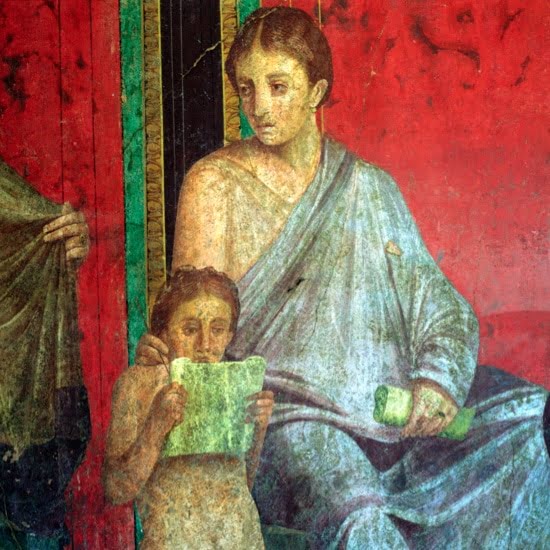
Bas-relief on the sarcophagus from the 4th century CE
Marriages in ancient Rome are a complicated matter, to say the least. For many reasons – suffice it to say that Roman law recognized two forms of marriage, with one of them (in manum, i.e. the woman passed directly under the authority of her husband) divided into three more subcategories. But what in this matter was the merit of the plebeians pushed almost to the end of the fifth century BCE to the background, and who made them finally come out from under the social lampshade after years of disappearing into the shadows?
We all know about the hierarchy, which is bound by socio-political snares almost all public life in Rome. We know about extremely privileged patricians, and thus enriching themselves mainly thanks to extensive latifundia nobiles, or equities pampered by Octavian Augustus, we also have a lot of information about slaves, against whom the owner had the right of life and death, being able to deprive them at any time of the former, and about plebeians – a layer whose location in Roman society changed dramatically in the fifth century BCE, for first, in 494 BCE, the office of the People’s Tribune was established, taking care of their interests from that moment and having the right to veto over other officials, and around 449 BCE the so-called Law of the XII Tablets came into force, which only confirmed everyone’s belief that the role and privileges of patricians would now only grow.
This is what happened 5 years later, around 445 BCE, when the tribune Canulae submitted a motion to allow marriages between the children of patrician families and plebeians, which possibility previously belonged only to the baggage of civil rights of descendants from the first families. Thanks to the appropriate energy and the politician’s conviction of the rightness of his initiative, it did not take long for the lex Canuleia law to be put into practice. Many years and four centuries later, by virtue of a law of 89 BCE, the lex Canuleia was extended to the whole of Italy, and thanks to the edict of Emperor Caracalla issued in 212 CE, it covered the entire Roman Empire.
- Lidia Winniczuk, Ludzie, zwyczaje i obyczaje starożytnej Grecji i Rzymu, Warszawa 1983