Curiosities of ancient Rome (Unknown facts)

This page is also available in: Polish (polski)

Unknown Facts are curiosities revealing little-known, surprising, or rarely discussed information from the world of ancient Rome and antiquity. This category includes unusual details, curiosities, and facts that offer a less obvious perspective on the Roman Empire.

Rome in 14 CE had over 750,000 inhabitants

The capital of the Roman Empire in 14 CE had over 750,000 inhabitants, which constituted a tenth of the entire population of Italy. The population of Rome grew to over a million by the end…Więcej

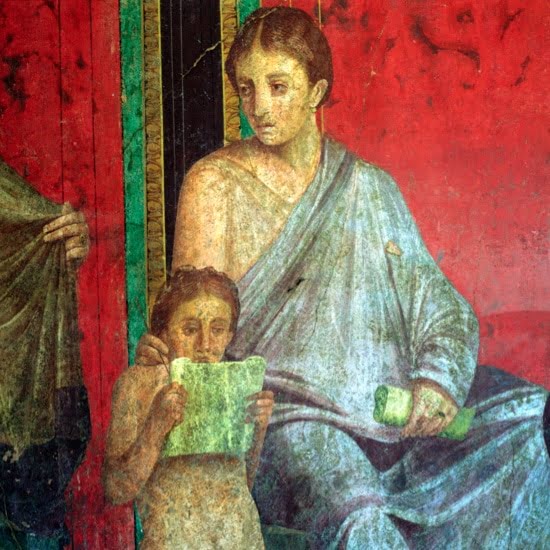
Roman teaching system was based on education of Greeks

The Roman teaching system was largely based on the education of the Greeks. Hence, the teachers of Roman children were most often Greek slaves or freedmen. An example of a Greek who achieved much in…Więcej

Letter Y was not originally in language of Romans

The letter Y was not originally in Romans. Y was added to the Latin alphabet around the 1st century BCE to render Greek words better. This letter, to distinguish it from the Latin “I”, was…Więcej

Ancient hooligans

It seems that stadium excesses are the invention of our times. However, as early as 2,000 years ago, the ancient Romans faced similar problems. In 59 CE in Pompeii, there were riots at the local…Więcej

Superstitions of Romans were really strange

Romans were very superstitious. They believed in many things that they could not logically explain. For example, the old superstition was known – kissing a female mule in the nostrils cured hiccups and a runny…Więcej

Romans used spider’s web to stop bleeding

Ancient Romans used a spider’s web to stop bleeding, incl. for cracked skulls and cuts after shaving. Although the Romans did not know much about viral and bacterial infections, by trial and error they concluded…Więcej

Ancient Romans and Greeks did not use stirrups

The ancient Romans and Greeks did not use stirrups that first appeared in China. The oldest image is from 322 CE. Stirrups are considered to be one of the greatest military discoveries in history, prior…Więcej

Hypocrite Seneca the Younger

Seneca the Younger, living in the 1st century CE, the famous Roman Stoic, called the Philosopher, eulogist of heroic ethics, in his life, contrary to appearances, was not guided by beautiful beliefs. He was the…Więcej

Where was Nero buried?

We all remember from elementary school the ending of the novel “Quo Vadis?” H. Sienkiewicz, in which he recorded the end of the life of Emperor Nero, based on the account of the ancient historian…Więcej

Rome was often hit by earthquakes

Research by seismologists and historical records show that Rome has been hit by earthquakes every hundred years over two thousand years.Więcej
Support IMPERIUM ROMANUM!

IMPERIUM ROMANUM needs your support!

If you like the content I collect on the website and share it on social media channels, I will be grateful for your support. Even the smallest amounts will allow me to pay for further corrections and improvements on the site and pay for the server.

Support IMPERIUM ROMANUM!
Subscribe to newsletter

Discover secrets of ancient Rome!

If you want to be up to date with the newest articles on the website and discoveries from ancient Rome, subscribe to the newsletter, which is sent each Saturday.

Subscribe to newsletter!