Letter Y was not originally in language of Romans
The letter Y was not originally in Romans. Y was added to the Latin alphabet around the 1st century BCE to render Greek words better.
If you have found a spelling error, please, notify us by selecting that text and pressing Ctrl+Enter.
The world of ancient Romans abounded in a number of amazing curiosities and information. The source of knowledge about the life of the Romans are mainly works left to us by ancient writers or discoveries. The Romans left behind a lot of strange information and facts that are sometimes hard to believe.
The letter Y was not originally in Romans. Y was added to the Latin alphabet around the 1st century BCE to render Greek words better.

Romans were very superstitious. They believed in many things that they could not logically explain. For example, the old superstition was known – kissing a female mule in the nostrils cured hiccups and a runny nose. It was also believed that some people were capable of hurting others just by looking at them. Such superstition was called the “evil eye”.

Ancient Romans used a spider’s web to stop bleeding, incl. for cracked skulls and cuts after shaving. Although the Romans did not know much about viral and bacterial infections, by trial and error they concluded that the spider’s web is very beneficial for wound healing.

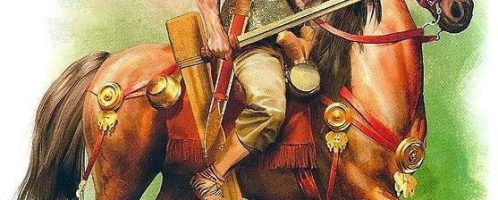
The ancient Romans and Greeks did not use stirrups that first appeared in China. The oldest image is from 322 CE.
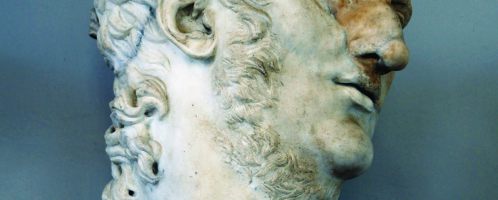
Seneca the Younger, living in the 1st century CE, the famous Roman Stoic, called the Philosopher, eulogist of heroic ethics, in his life, contrary to appearances, was not guided by beautiful beliefs. He was the tutor of Emperor Nero, at the beginning of his reign he had considerable influence at the court, which he scrupulously used.

We all remember from elementary school the ending of the novel “Quo Vadis?” H. Sienkiewicz, in which he recorded the end of the life of Emperor Nero, based on the account of the ancient historian Suetonius:
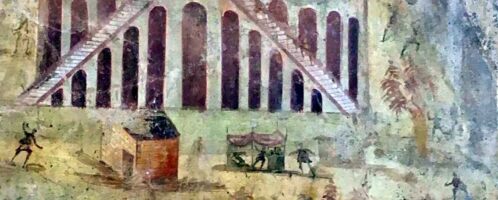
The city of Rome, despite great military successes in the republican times, could not be compared to the powerful and beautiful metropolises of the Mediterranean world, such as Alexandria. To this end, in the 2nd century BCE Intensive construction and modernization works began in the Eternal City. The conquered Greek world had a great influence on these transformations.
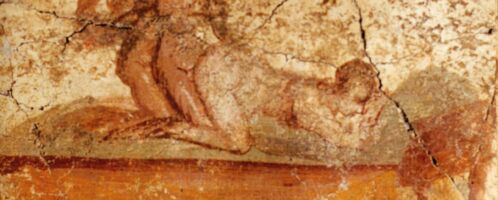
Among Roman prostitutes, just like today, there was a division: luxury, middle-class and the lowest social class.