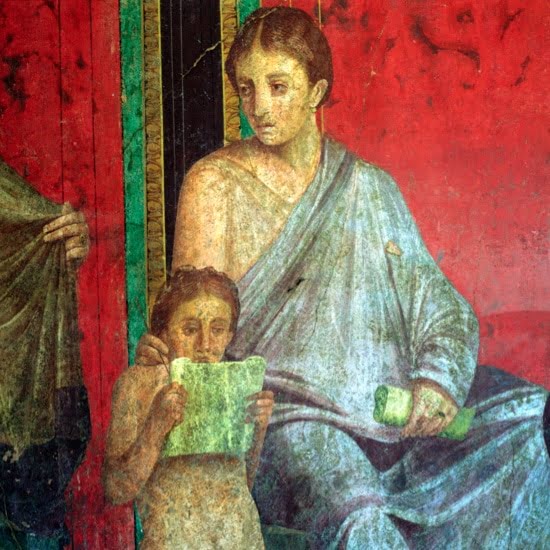
Roman relief showing a woman and a child
In ancient Rome, as a physical person was considered a person from the moment of a birth, but only when he came into the world alive and his body exhibited the characteristics of naturalness. The sign of a living child was a shout for the Romans; for Sabinian, any signs of life.
A child conceived, being in the womb (so-called nasciturus literally “to be born”) had a conditional legal capacity, i.e. it was subject to rights and obligations, but it could not make legal transactions. Famous legal blame: nasciturus pro iam nato habetur quotiens de commodis eius agitur – the unborn is deemed to have been born to the extent that his own benefits are concerned. Children who were aborted or distorted were not considered to be legal persons.
Interestingly, to protect the rights of the conceived, but unborn child, you could call the so-called “womb curator” (curator ventris). The curator – according to the law of XII tables – could only be a man who could be described as a “husband of trust” (vir bonus). Most often the probation officer was appointed from testament. For natural reasons, the curator was in defense of the unborn child, if, for example, the father of the family died (pater familias).
In practice, the powers of the probation officer were limited to protecting the property and providing the pregnant mother, who was in possession on behalf of nasciturus the means necessary to keep it pregnant and give a birth.
- Helena Pietrzak, Curator ventris dla nasciturusa", "UKSW"
- Wikipedia