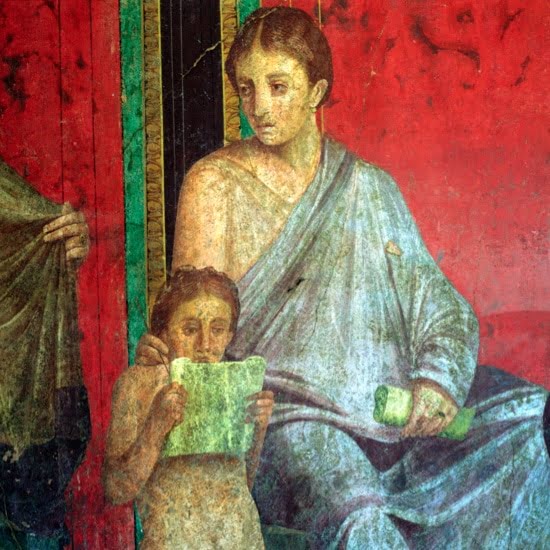
Roman fresco showing the sale of bread in the market
We learn a lot about the expenses of ordinary citizens of course from Pompeii. It was there in one of the houses that the Roman “graffiti” survived; the resident calculates his expenses on the wall for the next five days (prices in asses).
- 6th day: cheese 1, bread 8, oil 3, wine 3;
- 7th day: bread 8, oil 5, onion 5, bowl 1, bread for a slave (?) 2, wine 2;
- 8th day: bread 8, bread for a slave (?) 4, husked oats 3;
- 9th day: good wine 1 denarius, bread 8, wine 2, cheese 2;
- 10th day: (?) 1 denarius, 2 bread, 8 for woman, 1 denier wheat, 1 cucumber, 1 date, 1 incense, 2 cheese, 1 sausage, 4 soft cheese, 7 oil.
Researchers believe that this home cost estimate proved that low-class people could have survived for really little money, Seneca recalled. The cost of maintaining one family (here probably 3 people + 1 slave) was around 8 asses.
It is worth mentioning that from Martial1 we know that 2 asses were a very low price; Seneca the Younger2, in turn, claimed that this amount allowed to ensure a “feast” for a poor person or a captive. It should therefore be noted that the sources may be mutually exclusive.
- Martial, Epigrams, II.53.7
- Seneca the Younger, Letters, 18.7-8.