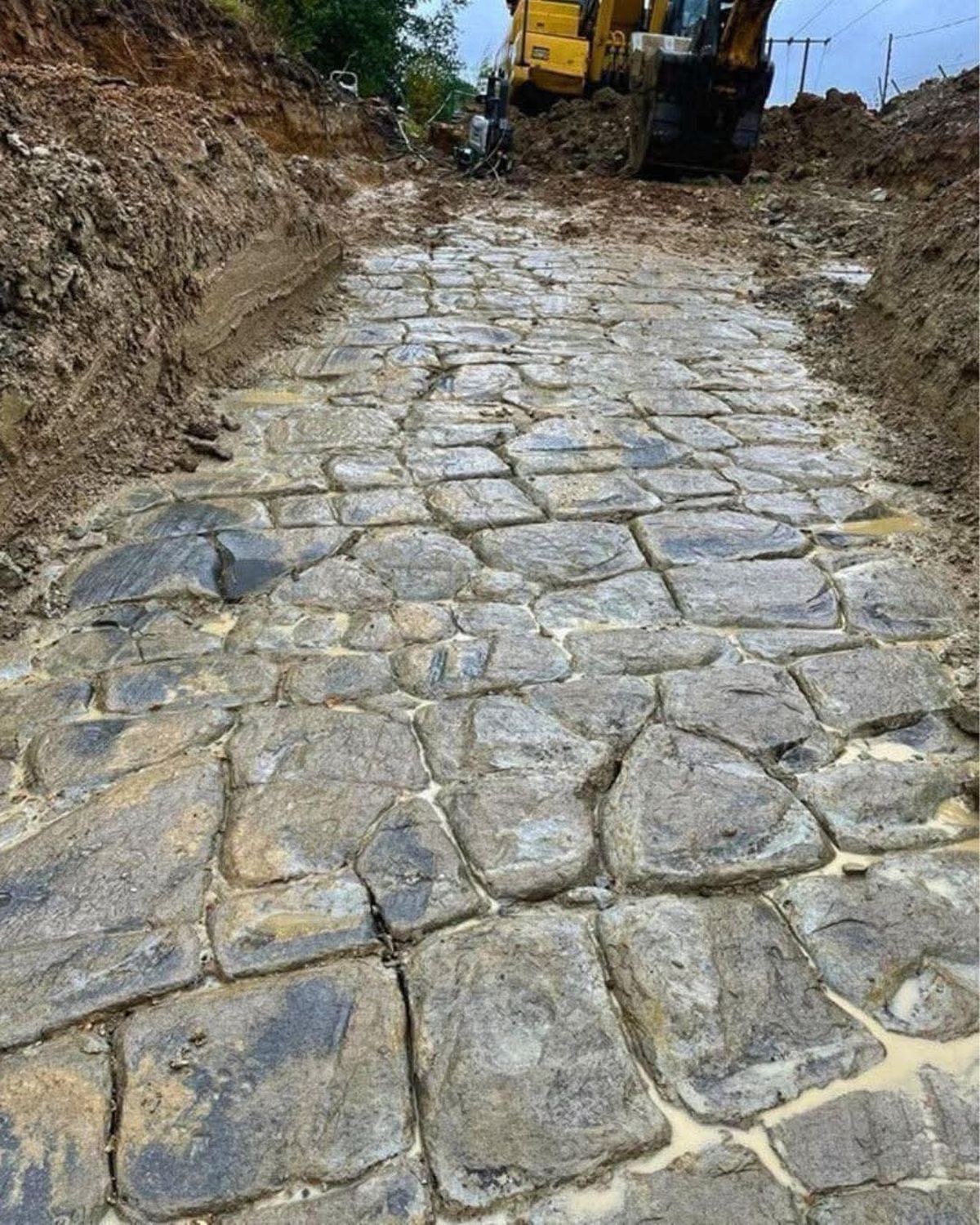
In 2025, an exceptionally rare section of a Roman road – hidden underground for nearly 2,000 years – was discovered in Worcester, in western England. The find has generated significant interest among archaeologists, as the construction technique employed has few known parallels; similar structures have primarily been preserved in Rome and Pompeii.
The discovery was made thanks to the keen observation of a local resident, who noticed a stone surface resembling a Roman road. Rather than ignoring the unusual structure, he contacted an archaeological consultant, which led to an on-site investigation.
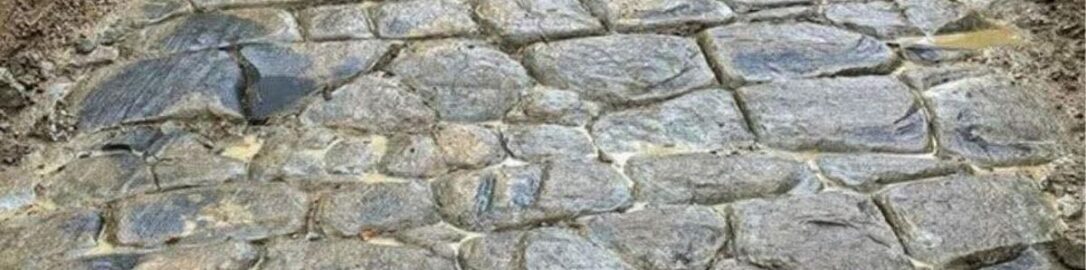
The uncovered section is approximately 10 meters long and 2.95 meters wide. Its most distinctive feature is the way the stones are arranged: large boulders were laid in layers, forming strips that resemble the construction of a wall – a technique employed by Roman builders to create durable road structures.
The dimensions of the find also align with the standards of Roman road construction; a width of nearly three meters was typical for roads designed for single-lane traffic. Furthermore, the stones bear traces indicating long-term use by carts.
Archaeologists note that similarly preserved structures are primarily known from Rome and Pompeii. Should the Roman origin of this find be confirmed, it would represent an exceptional example of such construction within the United Kingdom.