If you have found a spelling error, please, notify us by selecting that text and pressing Ctrl+Enter.

Articles (Other)

Other Topics is a category that collects articles related to ancient Rome and the ancient world that don’t fit into the website’s main thematic sections. Here, you’ll find a variety of texts on historical curiosities, source interpretation, pop culture, scientific research, and other related topics that complement knowledge about the Roman Empire. This is a space for unusual topics and content that expands the understanding of the ancient world.

Clothed for Cinema, naked for Rome

There are images that return like a persistent frame from an old film: a row of crosses stretching along a road, a body nailed to the wood, a face frozen in pain, and a garment girded around the hips, modest, almost symbolic, as if meant to shield not so much the body as the viewer’s conscience. In the collective memory, this image has already been polished, transformed by cinematic aesthetics and religious iconography, tamed. The cross appears as a symbol of faith or an individual’s drama, not as a part of the state machine. Meanwhile, Rome, which turned this punishment into a political tool, was not interested in shielding anything.

Etruscan cuniculi and persian qanats: on the predecessors of Roman aqueducts

When we think of aqueducts, we usually picture rows of arches stretching for kilometres, once supplying the greatest cities of the Republic and later the Roman Empire with drinking water. Indeed, the arcades — many of which survive to this day — were part of that system; however, the majority of aqueducts ran underground: tunnels carved through rock, hidden from enemy eyes and generally far cheaper and more practical to build.

Aqua Claudia Aqueduct

“My name is Maximus Decimus Meridius…” – when a number becomes a Roman name

When Maximus in Gladiator declares his full name, the line sounds like a statement of identity and authority. Yet at the very center of that famous speech lies a detail that is more Roman than all the armor on screen: “Decimus.” It is not a flourish invented by the scriptwriters or a random Latin word chosen for effect. It reflects a real feature of Roman naming traditions. In ancient Rome some male names were literally ordinal numbers and meant exactly what they appear to mean: Quintus the fifth, Sextus the sixth, Septimus the seventh, Octavius the eighth, Decimus the tenth. For a modern reader the conclusion seems obvious. A man called Quintus must have been the fifth son, Sextus the sixth child, Decimus perhaps the tenth descendant. It sounds tidy and logical. But Roman society rarely worked with such neat arithmetic, and the gap between what seems obvious and what can actually be proven is where the real historical curiosity begins.

An artistic vision of a Roman gladiator inspired by a motif from the film

Subtractive notation in ancient Rome – where did the myth of its medieval origin come from?

The subtractive method, in which a smaller number placed to the left of a larger one was subtracted from it, is nowadays a dominant way of writing values not covered by the seven basic Roman numeral symbols. At times, however, we can encounter values such us 9 written using the additive method. Thus, instead of the usual IX symbol, the value is marked as VIIII – Roman five symbol with four Roman one symbols added.

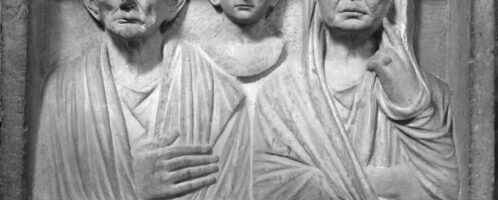
Cenotaph of Marcus Caelius

“Meditations” of Marcus Aurelius: philosophy of stoicism in everyday life of emperor

Marcus Aurelius, the Roman emperor who reigned from 161 to 180 CE, went down in history not only as a just ruler but also as one of the greatest philosophers of antiquity. His work Meditations is a collection of reflections that he wrote mainly for himself, to cultivate his inner life. It is an extremely intimate record of thoughts that refer to everyday struggles, and reflections on the nature of man and the world and the meaning of life. Meditations are deeply rooted in Stoic philosophy, and at the same time constitute a practical guide to ethics and morality.

Marcus Aurelius

Review: “Those About To Die” – to what extent is series true to history?

“Those About to Die” is the latest series that takes the viewer to the world of ancient Rome, namely 79 CE and the reign of Emperor Vespasian. The premiere of the series, which can be watched on the Amazon Prime platform, took place on July 18, 2024. What can we say about the series from a historical perspective? To what extent has it been consistent with scientific knowledge and ancient sources?

Those About to Die

Rome 2.0, or how the Renaissance rediscovered antiquity

When the Germanic leader Odoacer dethroned the minor emperor Romulus Augustus in 476, the Roman Empire effectively ceased to exist. With this event, many achievements of antiquity were lost – some irretrievably, others fell into oblivion for hundreds of years. It was only with the advent of the Renaissance that changes in European communities were so serious that they returned to the achievements of the ancient Romans on a larger scale. So what were the causes and consequences of the Renaissance?

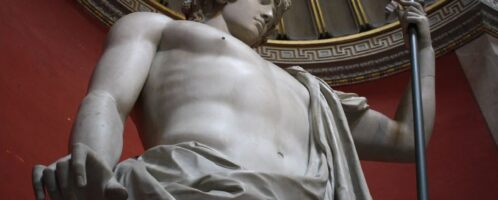
Statue of Antinous

“Indiana Jones and the Dial of Destiny” – Antikythera mechanism and Polybius square

From June 30, in cinemas, you can see the latest part about one of the most popular film archaeologists – Indiana Jones – in the movie “Indiana Jones and the Dial of Destiny”. Interestingly, for the first time in this Hollywood historical production, the subject of ancient Rome was touched upon, which is of particular interest to me. Therefore, this article will be devoted to the comparison of the interpretation created for the film by the screenwriters, the history of the Antikythera Mechanism, with what we can find in historical sources or the latest archaeological research.

Indiana Jones and the Dial of Destiny

Spelling error report

The following text will be sent to our editors: