If you have found a spelling error, please, notify us by selecting that text and pressing Ctrl+Enter.

Articles (Events)

Events of Ancient Rome offers a chronological and thematic overview of key moments that shaped the history of the Roman Empire. This category features articles on battles, wars, political upheavals, reforms, rebellions, and other landmark events of the ancient world. The texts present the course of events, their causes, and consequences, placing them in a broader historical context. This is a compendium of knowledge for those seeking to understand the dynamics of Roman history.

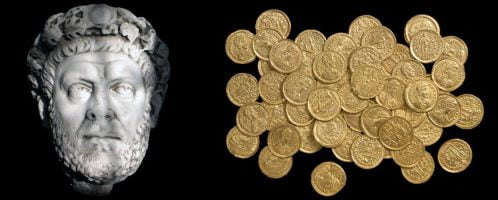
Edict of Diocletian on Maximum Prices from 301 CE

The Edict of Diocletian on Maximum Prices from 301 CE, known as Edictum Diocletiani et Collegarum de Pretiis Rerum Venalium, was intended to combat the progressive inflation in the Roman Empire by setting maximum prices on more than 1,400 products, slaves or services. The edict has survived to our times partly due to fragments of inscriptions (in Greek and Latin) on stone slabs found mainly in the eastern territories of the Empire, in 42 places.

Diocletian

Case of Publius Sestius

In the final period of the existence of the Roman Republic, violence became an integral part of politics. In the period under discussion, it was mainly the responsibility of Publius Clodius and Titus Milo. However, apart from them, another politician, Publius Sestius, also played a role in the fighting in the streets.

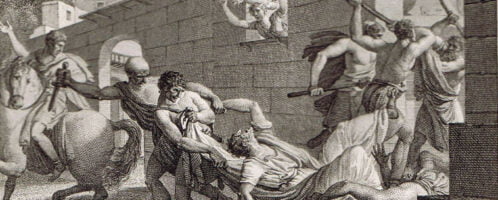
Death of Clodius

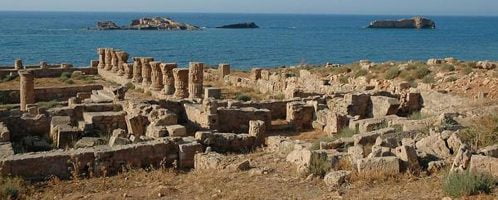
History of Rome

The origins of Rome are shrouded in mystery. There are many legends about the rise of Rome. One of them says that the city was founded by the hero of the Trojan war – Aeneas. After capturing and destroying Troy, he was to come to a land called Latium. He died shortly thereafter, which caused prolonged struggles to gain power among his descendants.

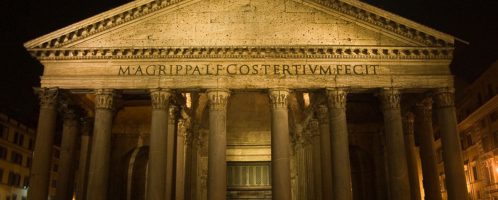
Roman Pantheon

Earthquake from 63 CE

According to Seneca the Younger, on February 5, 63 CE1, a strong earthquake occurred near Vesuvius. As it turned out later, it was a signal about the increased activity of the volcano and the announcement of a much worse cataclysm, which in 79 CE. destroyed, among others Pompeii and Herculaneum.

Damage after an earthquake in CE 62

Great fire in Rome

A great fire in Rome (Magnum Incendium Romae) broke out on July 19, 64 CE, when it consumed a large part of the city of Rome. Tacitus mentions the rapid spread of fire, which lasted five and a half days, until July 24. The spark was to appear in one of the stores with a flammable substance1. Only four of the fourteen districts of Rome at that time avoided destruction, three were completely destroyed by fire, and another seven were severely damaged.

Great fire of Rome

Spelling error report

The following text will be sent to our editors: