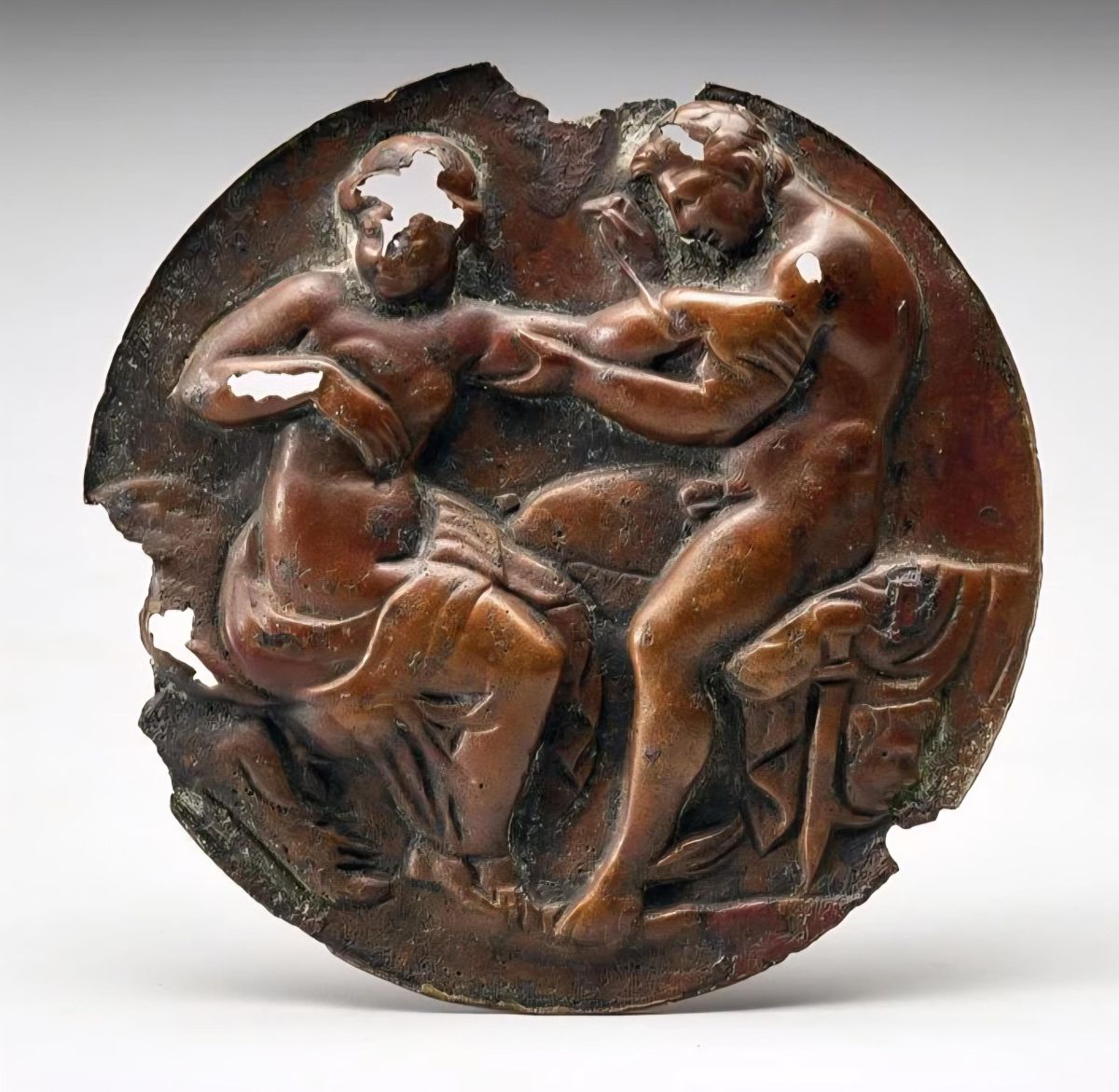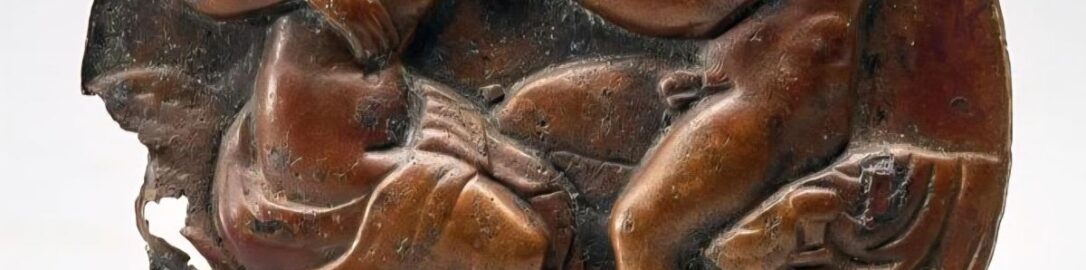
A small bronze disk depicting Perseus freeing Andromeda is an interesting example of a Roman artifact found outside the Roman Empire. The artifact dates to the 1st century CE and was discovered during archaeological excavations in Brahmapuri, India.
The disc depicts a scene from Greek mythology, which was also very popular in the Roman world. Perseus, son of Zeus and Danae, during his journey encountered Andromeda chained to a rock. The princess was to be sacrificed to the sea monster Cetus to save her father’s kingdom. Perseus slew the monster and rescued Andromeda, whom he later married.
The motif itself was frequently used in ancient art. The scene of Perseus and Andromeda appears in mosaics, frescoes, sculptures, coins, and decorative objects, among other places. In Roman culture, Greek myths remained an extremely important source of artistic themes.
What is most remarkable about this monument, however, is its location. Brahmapuri was located in India, outside the Roman domain. Its discovery is one of the testimonies to the long-distance trade between the Roman world and India during the Roman Empire.
In the 1st century CE, maritime trade flourished between Egyptian ports on the Red Sea and the coast of India. Roman merchants took advantage of the seasonal monsoon winds, which allowed relatively quick crossings across the Indian Ocean. Wine, glass, ceramics, metals, and coins were exported from the empire to India, while pepper, spices, pearls, precious stones, ivory, and exotic textiles were imported to the Roman world.
Brahmapuri was one of the locations associated with this long-distance trade. Archaeological finds from this region demonstrate that objects originating in western Eurasia could travel very far from their places of production. The Roman disc depicting Perseus and Andromeda is a particularly interesting example, as it is not only a utilitarian object but also a vehicle for Roman iconography and artistic tradition.