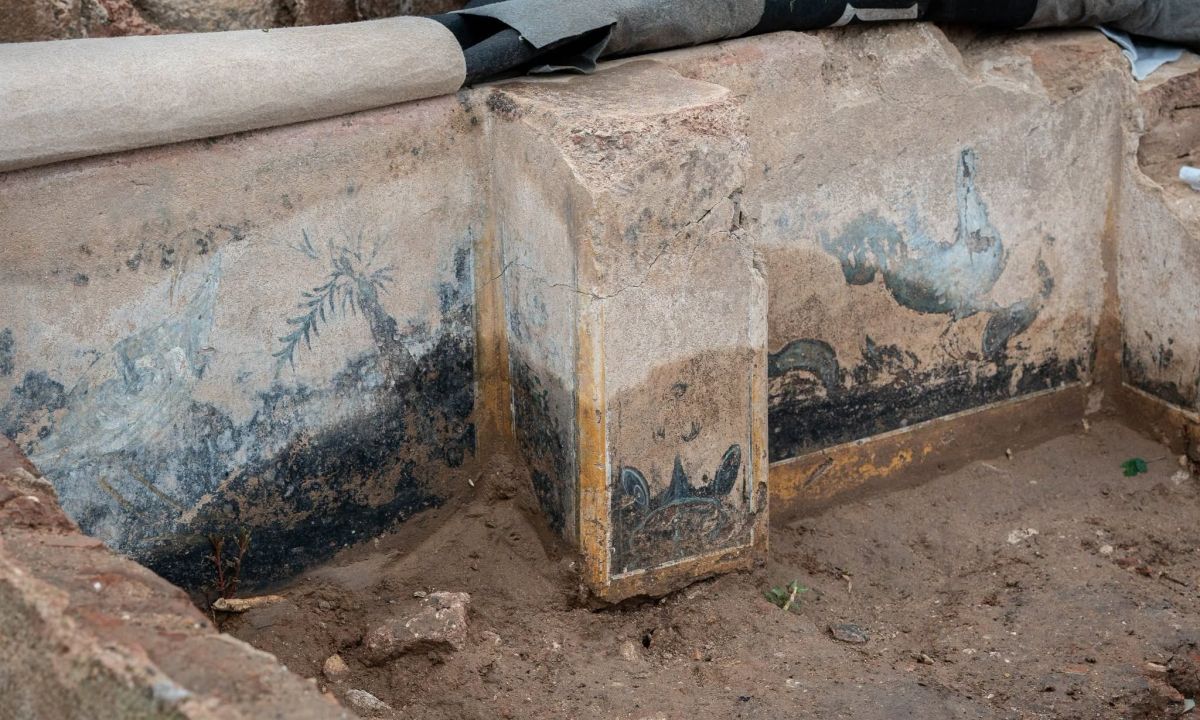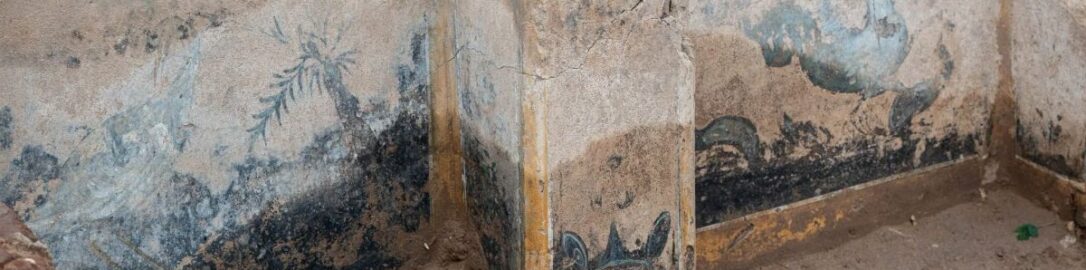
During archaeological excavations at Huerta de Otero in Mérida (Spain) – the site of the former Roman colony of Emerita Augusta – well-preserved wall paintings were uncovered. The decorations adorned a peristyle, an inner courtyard surrounded by a portico, which belonged to a large Roman residence (domus).
The paintings depict, among other things, peacocks and other birds, floral motifs, and figural scenes. One composition shows a lion chasing a deer. The discovered decorations date from the period between the mid-1st and mid-2nd century CE.
The residence at Huerta de Otero was equipped with private thermal baths. A mosaic was also found there, featuring the head of Medusa surrounded by, among other elements, images of four peacocks. The mosaic covers approximately 55 m² and served as floor decoration in one of the rooms of the house.
These latest discoveries provide a better understanding of the residence’s interior design and the methods used to decorate its formal, representative spaces. Research at Huerta de Otero is ongoing; so far, only a small portion of the archaeological site has been explored.