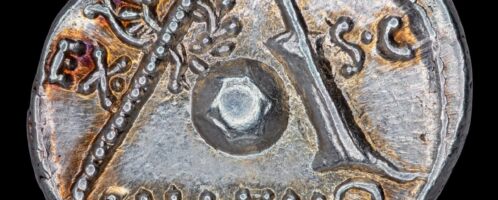
Roman coin showing globe with scepter and rudder
Roman coin (denarius) from the period of the Republic (76 BCE) showing the globe with a scepter and a rudder. The object was minted on the orders of Gnaeus Lentulus.
If you have found a spelling error, please, notify us by selecting that text and pressing Ctrl+Enter.
Artifacts is a collection of curiosities dedicated to objects left behind by the ancient Romans. This category features lesser-known facts and interesting information about archaeological finds, such as tools, weapons, coins, inscriptions, and everyday objects, which provide a deeper understanding of life in the Roman Empire.
Roman coin (denarius) from the period of the Republic (76 BCE) showing the globe with a scepter and a rudder. The object was minted on the orders of Gnaeus Lentulus.
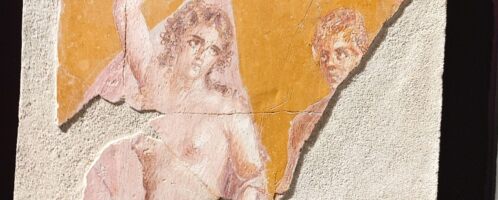
Roman fresco showing the sensual dance of the Nymph and the Satyr during a procession. The object dates back to the 1st century CE; discovered in Pompeii. The artifact is located in the National Archaeological Museum of Naples.
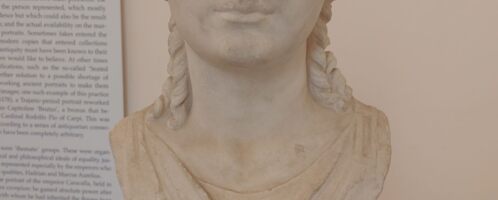
Bust of Agrippina the Younger, who was the daughter of Germanicus – an outstanding Roman leader and Agrippina the Elder – and the mother of Nero and the wife of Emperor Claudius. The artifact is located in the National Archaeological Museum of Naples. Object dated to 37-41 CE.
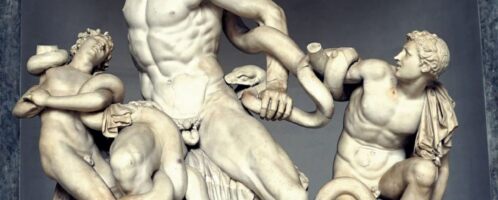
Today we will talk about one of the most recognizable works of ancient European art – the so-called Laocoon Group. The sculpture, which is certainly one of the most valuable exhibits in the Vatican Museums, attracts the attention of everyone who stands in front of it. Baroque expressiveness makes it difficult to take your eyes off it. However, what makes it interesting is not only the heart-warming story set in stone, but also the number of secrets it hides.
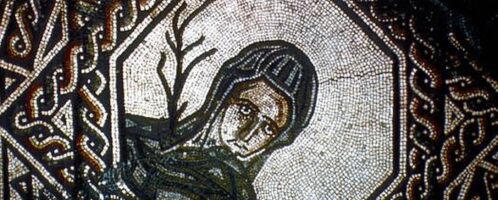
Roman mosaic showing the personification of winter. The object was discovered at Bignor’s villa in West Sussex (South England).
Reliefs from the Hadrianeum, which show the trophies and personifications of the Roman provinces. Hadrianeum (temple of Emperor Hadrian) was located on the Campus Martius and was founded on the order of the next emperor – Antoninus Pius (138-161 CE).

Roman sculpture showing Satyr with fruit. The object is dated to the late 1st century BCE. Discovered in the so-called House of the Tragic Poet in Pompeii. The artifact is in the National Archaeological Museum in Naples.

Phalera (pl. phalerae), a kind of medal or decoration that Roman soldiers wore tied with leather straps above the chest.

Doryphoros on a Roman sculpture. It is a copy of a Greek original by a Greek sculptor from the 5th century BCE – Polykleitos. Doryphoros means “spear-bearer” in Greek and depicts a young man holding a lost javelin. The artifact is in the National Archaeological Museum in Naples.

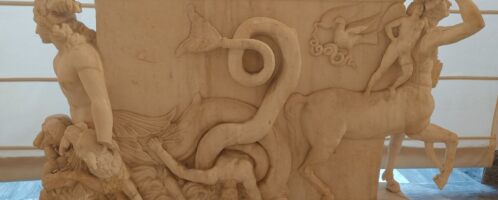
Roman table base, which shows mythological scenes – a sea monster, Scylla, who kidnaps the sailors of Odysseus (Ulysses) and a centaur. The object is dated to the mid-2nd century CE and is in the National Archaeological Museum of Naples.