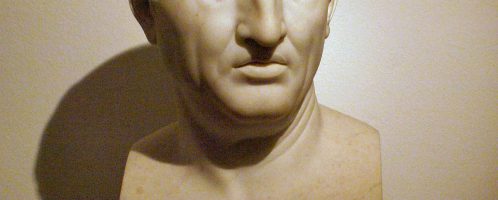
Gnaeus Julius Agricola
(13 June 40 - 23 August 93 CE)
Julius Agricola was a Roman commander who in the years 77-84 CE was governor in Britain. In 80 CE he undertook an expedition to conquer Caledonia (currently Scotland).
If you have found a spelling error, please, notify us by selecting that text and pressing Ctrl+Enter.
Ancient Roman politicians and generals were key figures in the public life of the Roman Empire, influencing the fate of the state both in the political arena and on the battlefield. This category features articles on consuls, senators, military commanders, and other leaders who shaped Rome’s policies, territorial expansion, and internal conflicts. The articles explore their careers, decisions, and significance within the context of the republic and empire.
(13 June 40 - 23 August 93 CE)
Julius Agricola was a Roman commander who in the years 77-84 CE was governor in Britain. In 80 CE he undertook an expedition to conquer Caledonia (currently Scotland).
(24 May 15 BCE - 10 October 19 CE)
Germanicus was one of the greatest Roman generals. He became famous for successful campaigns carried out in Germania, after a defeat in the Teutoburg forest.
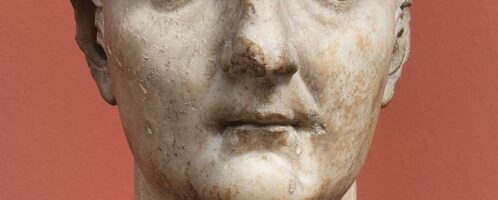
(1st century BCE)
Quintus Labienus was a Roman commander at the end of the Roman Republic. He was the son of Titus Labienus - the eminent commander of Caesar during the Gallic Wars and later Pompey's supporter in the civil war.
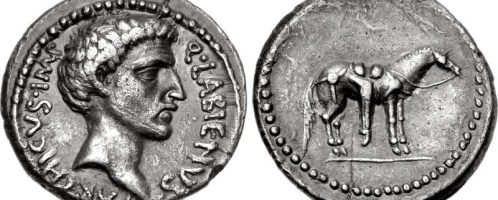
(c. 70 - 8 BCE)
Gaius Cilnius Maecenas was a Roman politician, adviser and friend of Octavian Augustus. Patron of poets and artists. His name became the name of the protector of art and science.
(c. 360 - 22 August 408 CE)
Flavius Stilicho, along with Flavius Aetius, was the last great commander of ancient Rome.
(95 - 46 BCE)
Cato the Younger was a Roman politician (optimist) and philosopher. He imitated the way of being an Elder Caton, who was ideal for him.

(5th century BCE)
Aulus Postumius Tubertus was a Roman commander in the war with Aequi and Volsci in the 5th century BCE.

(12 July 100 - 15 March 44 BCE)
Gaius Julius Caesar (100-44 BCE) was a Roman politician, one of the greatest leaders in history and a great figure in the ancient world.
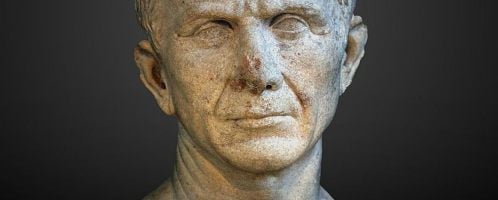
(29 September 106 - 28 September 48 BCE)
Gnaeus Pompeius Magnus ("the Great") was born on 29 September 106 BCE as Gnaeus Pompeius. He received his nickname Magnus from his contemporaries because of his great political and military successes and his services to Rome. Roman commander and politician; son of Gnaeus Pompeius Strabo.