If you have found a spelling error, please, notify us by selecting that text and pressing Ctrl+Enter.

Curiosities of ancient Rome (Artifact)

Artifacts is a collection of curiosities dedicated to objects left behind by the ancient Romans. This category features lesser-known facts and interesting information about archaeological finds, such as tools, weapons, coins, inscriptions, and everyday objects, which provide a deeper understanding of life in the Roman Empire.

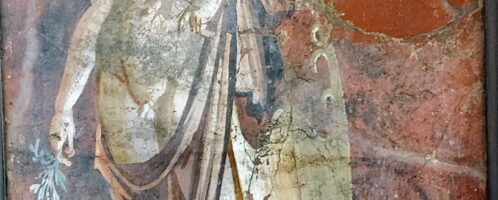
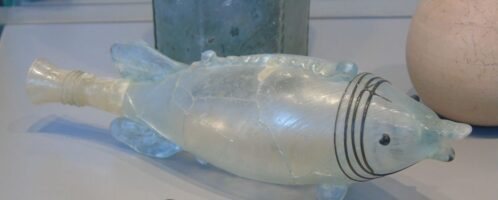
Roman fresco showing standing Apollo

Roman fresco showing standing Apollo with omphalos next to it – a stone covered with a net (symbol of the center of the universe). The object dates back to the 1st century BCE; discovered in Pompeii. The artifact is located in the National Archaeological Museum of Naples.
Roman fresco showing standing Apollo

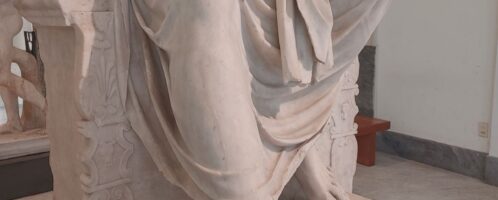
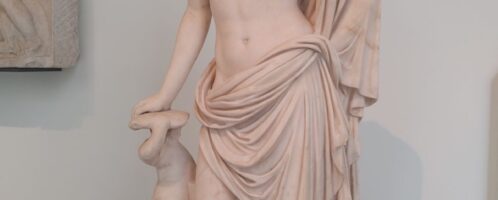
Roman sculpture of Venus with dolphin

Roman sculpture of Venus with a dolphin, which is the symbolic animal of the goddess and a reminder of her birth in the sea. The object dates back to the 2nd century CE; a copy of a Greek original from the 2nd-1st century BCE. The artifact is located in the National Archaeological Museum of Naples.
Roman sculpture of Venus with dolphin

Roman relief showing three scenes

Roman relief showing three scenes. In the middle part of the work we see the god Silenus (nature deity) surrounded by young Satyrs; in the left and right parts there are people taking part in the cult. The object dates back to the 1st century CE; the artifact is located in the National Archaeological Museum of Naples.

Roman relief showing three scenes

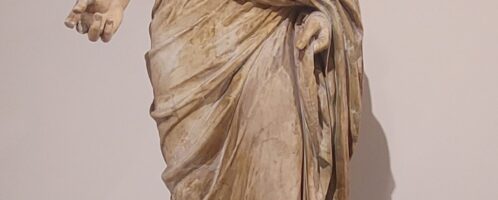
Sculpture of Venus Felix

Sculpture of Venus Felix (“Happy”), goddess of love. The object dates back to the 2nd century CE, which is a Greek copy from the 2nd-1st century BCE. The artifact is located in the National Archaeological Museum of Naples.

Sculpture of Venus Felix

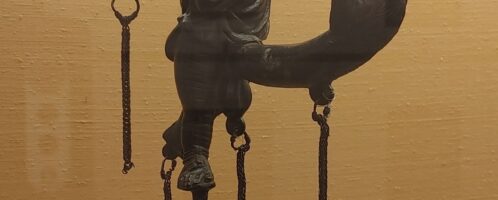
Roman wind chimes

Roman wind chimes (tintinnabulum) in the shape of a figure with a large phallus. They were usually hung in the threshold of a shop or peristyle (inner courtyard of a house), where the wind made them buzz. The phallus was a symbol protecting against misfortune. The artifact is located in the National Archaeological Museum of Naples.

Roman wind chimes

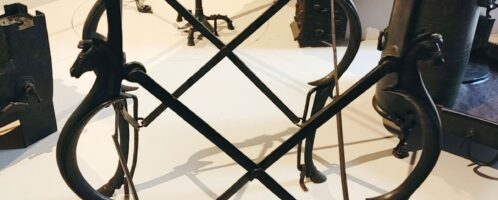
Roman table legs

Roman table legs. The object was made of bronze and decorated with horse heads. The object dates back to the 1st century CE; discovered near Vesuvius. The artifact is located in the National Archaeological Museum of Naples.
Roman table legs

Spelling error report

The following text will be sent to our editors: