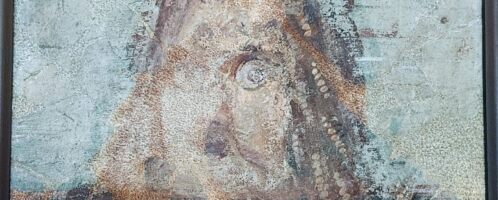
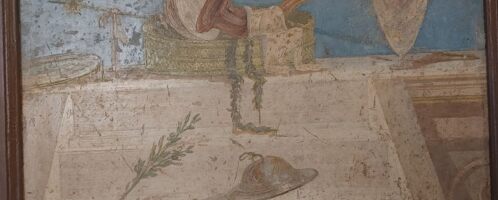
Roman fresco showing tragic mask
Roman fresco showing a tragic mask. Object discovered in Pompeii and dated to the 1st century BCE. The artifact is located in the National Archaeological Museum of Naples.
If you have found a spelling error, please, notify us by selecting that text and pressing Ctrl+Enter.
Artifacts is a collection of curiosities dedicated to objects left behind by the ancient Romans. This category features lesser-known facts and interesting information about archaeological finds, such as tools, weapons, coins, inscriptions, and everyday objects, which provide a deeper understanding of life in the Roman Empire.
Roman fresco showing a tragic mask. Object discovered in Pompeii and dated to the 1st century BCE. The artifact is located in the National Archaeological Museum of Naples.
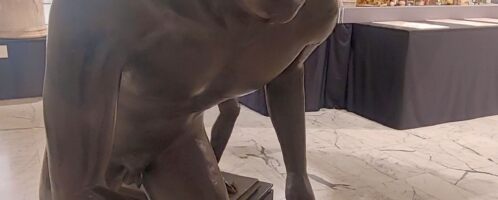
Bronze sculpture depicting an athlete (runner). The object was discovered in the Villa of the Papyruses in Herculaneum. The artifact is located in the National Archaeological Museum of Naples.
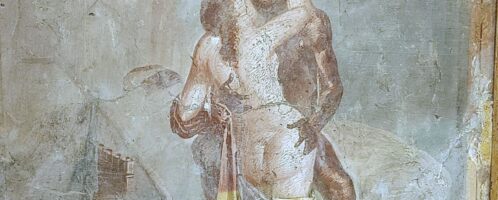
Roman fresco showing the scene of the kiss of Galatea, the nymph with whom the cyclops Polyphemus fell in love. Object discovered in Pompeii; dating back to the 1st century CE. The artifact is located in the National Archaeological Museum of Naples.
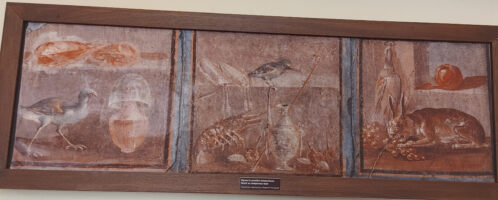
Still life showing birds, a lobster and a rabbit. The fresco was discovered in Herculaneum. The artifact is located in the National Archaeological Museum of Naples.
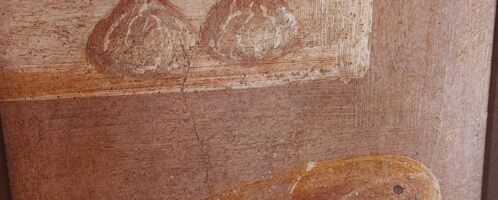
Roman fresco showing bread and garlic. Object discovered in Herculaneum. The artifact is located in the National Archaeological Museum of Naples.
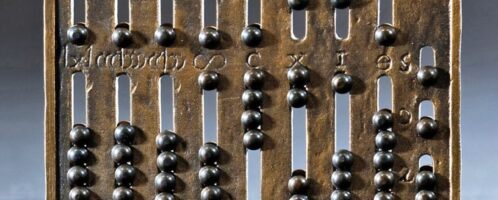
Roman hand abacus, which was used by, among others, engineers or merchants. You could always have this type of ancient calculator with you and thus speed up operations. Interestingly, the modern word “calculator” comes from the Latin calx, meaning “small stones”.
Roman sculpture showing Plautilla – the wife of Emperor Caracalla. The object dates back to 202 CE. The artifact is located in the National Archaeological Museum of Naples.

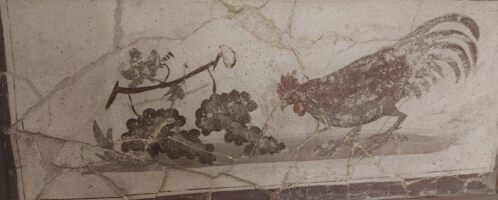
Roman fresco showing a rooster pecking grapes. The object was discovered in Herculaneum and dated to the 1st century CE. The artifact is located in the National Archaeological Museum of Naples.
Roman fresco showing the symbols of Dionysus (Bacchus): a panther, a tambourine, a rhython and a cup of wine. The object was discovered in Pompeii and dates back to the 1st century CE. The artifact is located in the National Archaeological Museum of Naples.
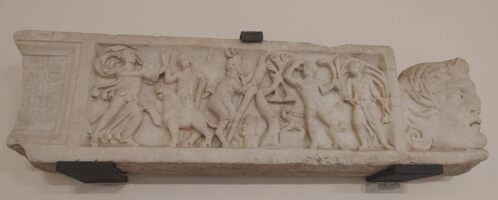
Cover of Roman sarcophagus with a depiction of a feasting scene during Bacchanalia. The object dates back to the mid-2nd century CE.