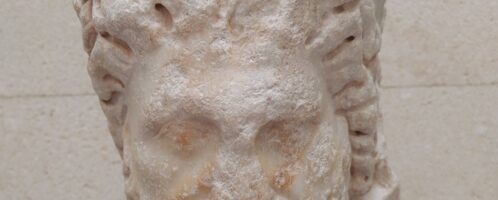
Roman sculpture of barbarian
Roman sculpture of a barbarian. Object dated to the 2nd century CE. The artifact is in the National Archaeological Museum in Naples.
If you have found a spelling error, please, notify us by selecting that text and pressing Ctrl+Enter.
Artifacts is a collection of curiosities dedicated to objects left behind by the ancient Romans. This category features lesser-known facts and interesting information about archaeological finds, such as tools, weapons, coins, inscriptions, and everyday objects, which provide a deeper understanding of life in the Roman Empire.
Roman sculpture of a barbarian. Object dated to the 2nd century CE. The artifact is in the National Archaeological Museum in Naples.

Marble statue of the goddess Isis. The object was discovered in Pompeii. The artifact is in the National Archaeological Museum in Naples.

Roman fresco showing an old man. Object dated to the 1st century CE; discovered in Stabia in Villa Arianna.

Damaged sculpture of Hercules. Object dated to the 2nd-3rd century CE; it is now in the Archaeological Museum of Murcia (southern Spain).

An ancient stadium in Aphrodisias (southwestern Turkey), which has been preserved in very good condition. The facility could accommodate about 30,000 spectators and was built at the end of the 1st century CE.
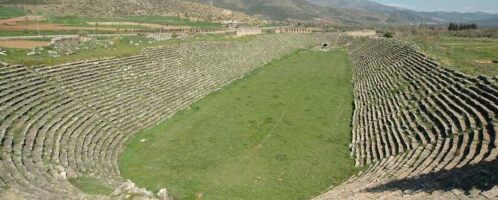
Roman victoriati dated to the 2nd-1st century BCE. Coins discovered in Murcia. They are currently on display at the Archaeological Museum of Murcia.
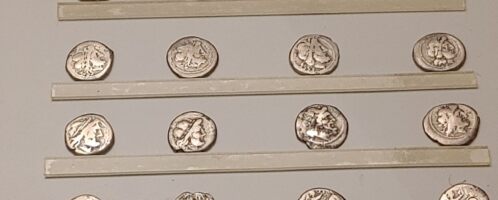
Falcata, an Iberian weapon that was used, among others, during the Second Punic War. The Carthaginian army, recruiting warriors from the Iberian Peninsula, had this type of armament in stock. The object is in the Archaeological Museum of Murcia (southern Spain).

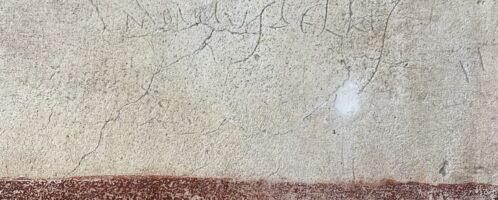
An inscription carved on the wall of the Roman House of the Vettii in Pompeii. The graffiti is on the left wall in the entrance hall. The inscription reads: EUTYHIS GRECA ASSIBUS II MORIBUS BELLIS, meaning “Eutychis Greek nice mannered for two asses”. It is not clear whether Eutychis was a domestic slave offering love services or a local prostitute.
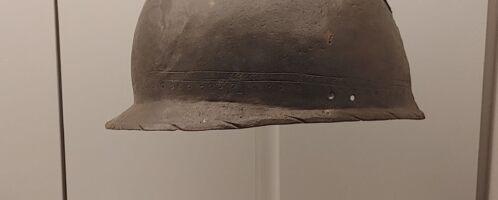
Roman Montefortino type helmet made of bronze. Object dated to the 3rd-2nd century BCE; discovered in Granada (southern Spain). Currently on display at the Archaeological Museum of Murcia.
Roman sculpture showing a bearded man, possibly one of the emperors. Object dated to the end of the 2nd or the beginning of the 3rd century CE. An artifact made of marble; it is now in the museum of the Roman theater in Cartagena.