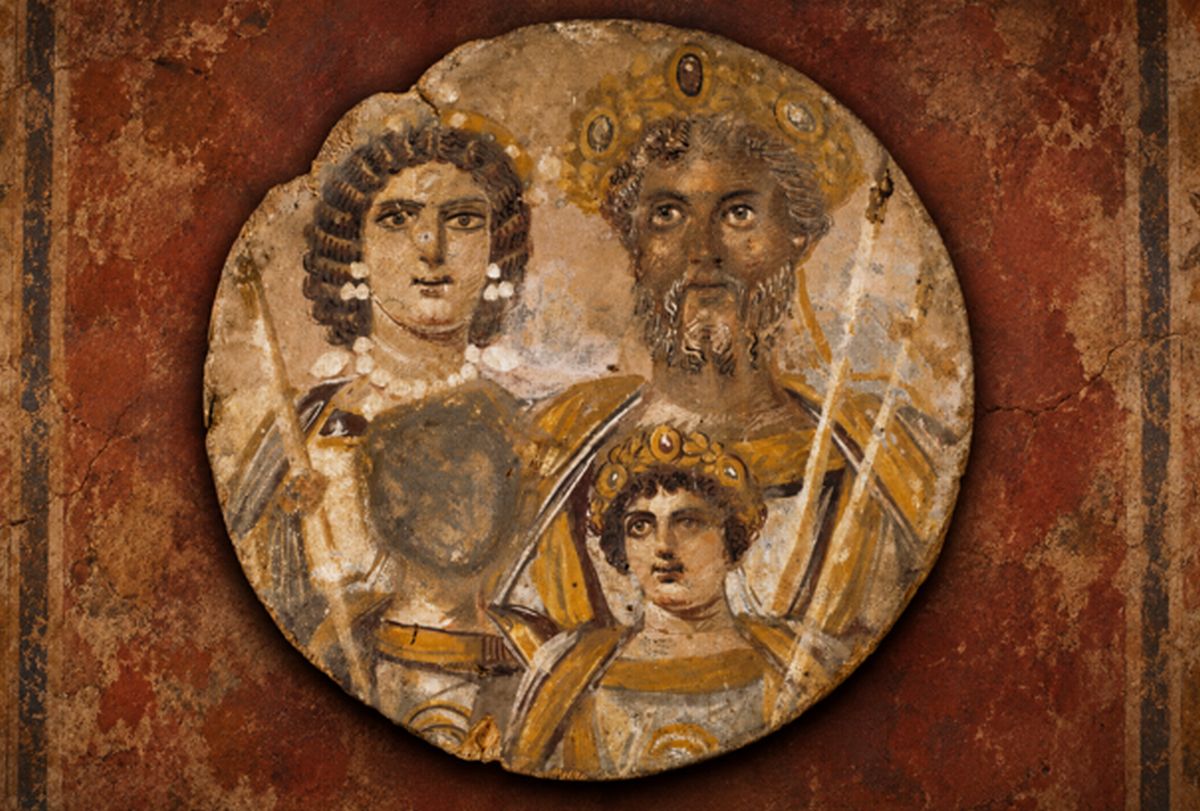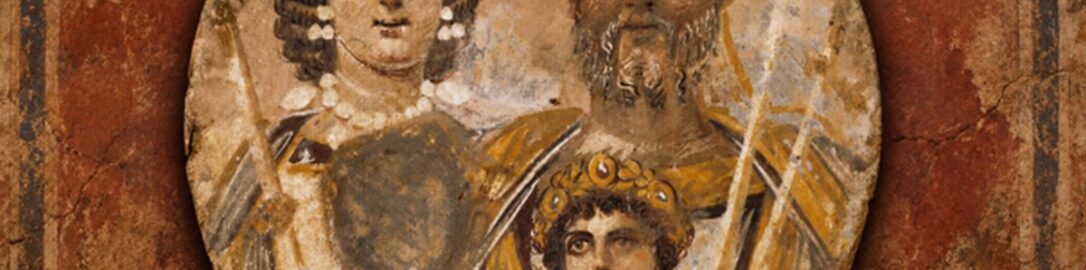
A circular wooden panel barely 30.5 centimetres across contains four members of the imperial family, yet only three faces survive. Septimius Severus, Julia Domna and Caracalla still look out from a portrait painted around 200 CE. The figure of the couple’s second son remains in place, but his face has been scraped away almost to the bare wood. This was no accidental loss. Someone deliberately removed the very feature that made Geta identifiable.
The image, now known as the Severan Tondo, was most likely produced in Roman Egypt. Painted in tempera on wood, it is described by Berlin’s Antikensammlung as the only surviving painted portrait of a Roman emperor. Originally, it presented the dynasty Septimius Severus had worked to secure. Both sons appeared as imperial heirs, dressed ceremonially and wearing golden wreaths. That carefully arranged family image ceased to match political reality after Severus died in AD 211. Caracalla and Geta inherited power jointly, but in December of the same year their rivalry ended with Geta’s murder. Cassius Dio reports that centurions attacked him during a meeting in Julia Domna’s apartments and that he died while clinging to his mother.
Caracalla’s victory over his brother did not end with the killing itself. Geta’s name was removed from official inscriptions, while his portraits were destroyed or altered. Modern historians usually describe this process as damnatio memoriae, although the Romans did not use that phrase as the formal name of one specific legal procedure. One clear trace survives on the Arch of Septimius Severus in the Roman Forum, where the original inscription naming Geta was altered after his death and his name was chiselled out of the marble. Cassius Dio also wrote that the bases of Geta’s statues were destroyed and coins bearing his likeness were melted down. His claim that even speaking Geta’s name could bring punishment may contain rhetorical exaggeration, but the damaged face on the wooden panel leaves little doubt that his public image was deliberately targeted.
The most revealing detail is what was left untouched. The portrait was not destroyed as a whole, and Geta’s entire figure was not removed. His clothing, his place beside his parents and the outline of his body all remained. Only the face was erased, the part that turned a painted figure into a recognisable individual. A portrait originally made to present a four-member imperial dynasty therefore survived as evidence of an attempt to rewrite that dynasty after the fact. Nearly eighteen centuries later, the eye is drawn first to the darkened space left by the man who was meant to disappear.