If you have found a spelling error, please, notify us by selecting that text and pressing Ctrl+Enter.

Curiosities of ancient Rome (Monuments)

Monuments are curiosities dedicated to the preserved buildings, ruins, and material remains of the ancient Roman world. This category includes lesser-known facts, interesting details, and unusual information about Roman monuments, their history, function, and significance for understanding the history of the Roman Empire.

Balkerne Gate ruins in Colchester

Balkerne Gate ruins in Colchester (south-east England) at night, dated to the first century CE. It is the largest and best preserved Roman gate that has survived to our times.

The ruins of Balkerne Gate in Colchester

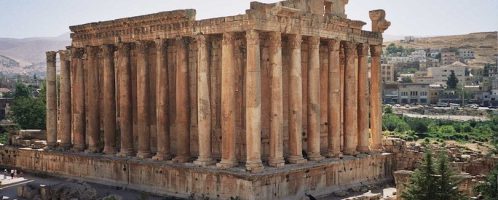
Temple of Bacchus in Baalbek

Roman temple of Bacchus in Baalbek, also called Heliopolis, in northeastern Lebanon. Object dating to 2nd or early 3rd century CE; reconstructed in the 19th century. It is one of the most complete and gratest Roman temple ruins in the world.

Roman skeleton in the tomb in Viminacium

Southern Agora in Aphrodisias

The South Agora of Aphrodisias, located in southwestern Turkey, was one of two public squares within the ancient city. Agora was founded in the 1st century CE and until now it was seen as a place of trade and market. However, the latest archaeological research has proved that this space served as a park, with a monumental fountain, swimming pool, promenade.

South Agora in Aphrodisias

Roman cemetery in Fiskardo

Roman cemetery in Fiskardo (island of Kefalonia, Greece) was discovered in 1993. The place is dated to the 2nd-4th century CE. During the excavations, 47 graves were found and there is a conjecture that further remains of the cemetery are located under the nearby road.

Roman burial ground in Fiskardo

Roman villa of Skala

Roman villa of Skala (island of Kefalonia, Greece) was discovered in 1957. Situated on the southern coast, it certainly offered a beautiful view. Six rooms have survived to our times: a hall, three rooms, a smaller room and an open courtyard. The villa certainly also had its own bathroom with a heating system – hypocaustum.

Roman villa in Skala

Spelling error report

The following text will be sent to our editors: