Ancient statues off coast of Egypt
Several large sculptures were among a treasure trove of artifacts recovered by divers from the waters near Alexandria, Egypt.
If you have found a spelling error, please, notify us by selecting that text and pressing Ctrl+Enter.
Other Facts is a category of curiosities that encompasses diverse and unusual facts from the world of ancient Rome that don’t fit into other thematic sections. Here, you’ll find interesting facts, anecdotes, and less obvious details that complement the life, culture, and history of the Roman Empire.
Several large sculptures were among a treasure trove of artifacts recovered by divers from the waters near Alexandria, Egypt.

Aulus Cornelius Celsus was a Roman scholar and encyclopedist of the 1st century CE, best known as the author of De Medicina, one of the most important sources of medical knowledge in antiquity. In his work, he described various methods of treating general illnesses, including recommending bloodletting (sanguis mittendus) as a preventive measure in the event of the body becoming overloaded with excess “fluids”.

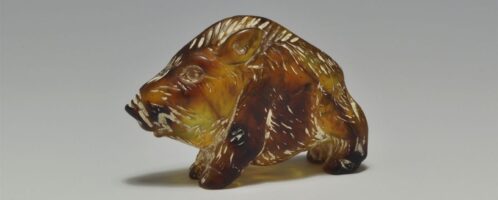
Pliny the Elder in his “Natural History” (Book XXXVII, Chapter 12) described the electrostatic properties of amber. He noticed that when rubbed with the fingers, under the influence of heat, it attracted light objects such as chaff, dry leaves and fibers. This observation of Pliny shows how ancient scholars observed and described natural phenomena that were not explained scientifically until many centuries later.
Brutality and cruelty are often associated with ancient Rome, and one of the most horrific customs was the practice of using convicts as “human lanterns”. What did this cruel way of punishment look like and what does it say about the mentality of the Roman empire? More about this in the article below.

“Annales” by Quintus Ennius (239 – 169 BCE) is a monumental epic poem that aims to tell the history of Rome from its mythical beginnings to Ennius’ contemporary times. Considered one of the fathers of Roman literature, Ennius revolutionized epic poetry by introducing Greek influences and adapting the classical Greek dactylic hexameter, making him a forerunner of the Roman epic tradition.
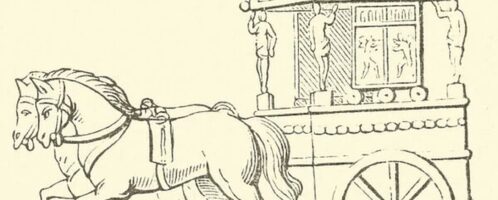
Carpentum was one of the most important means of transportation in ancient Rome, serving both practical and symbolic functions. This two-wheeled vehicle, most often pulled by horses or mules, was used primarily by Roman elites – especially women and priests.
Calceus is a typical Roman shoe that played a key role not only as foot protection but also as a marker of social position. It was a shoe that covered the entire foot, tied at the ankle and at the front, made of durable leather, often dyed in characteristic colours reflecting the status of its owner.

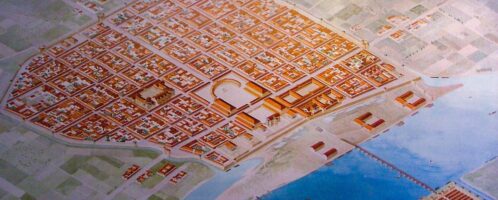
Romans were known for their excellent engineering sense, which was reflected not only in the construction of aqueducts and roads but also in the planning of cities and forts. In particular, the street marking system became one of the most characteristic elements of their urban planning, and its influence is visible in cities throughout the former Roman Empire.
In ancient Rome, amber was a valued material with many uses, from jewellery to amulets and home decorations. Its extraordinary beauty, healing properties and rarity attracted the attention not only of wealthy citizens but also of the emperors themselves. Where did this fascination with amber come from and what role did it play in Roman culture?
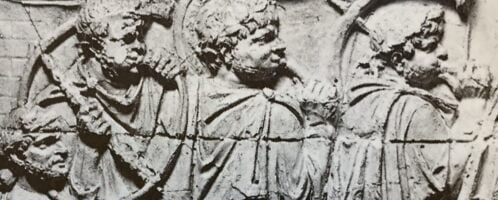
Cornu, also known as the “horn of legions”, is one of the most characteristic musical instruments of ancient Rome. Its sound resounded on battlefields, during triumphal processions and in the theatre, symbolizing the power and discipline of the Roman legions. This large, curved horn made of bronze served not only a musical but also a communicative function.