If you have found a spelling error, please, notify us by selecting that text and pressing Ctrl+Enter.

Curiosities of ancient Rome

The world of the ancient Romans was rich in extraordinary, and sometimes even surprising, facts. We draw our knowledge of Roman daily life, customs, and mentality primarily from works left by ancient writers and historians. It is thanks to them that we discover information that is astonishing today – sometimes even hard to believe. Below are some interesting facts that reveal a lesser-known and less obvious side of the Roman world.

I encourage you to submit your own suggestions and to report any corrections or inaccuracies.

Wounded Adonis on Roman fresco

A wounded Adonis in a Roman fresco being comforted by the goddess of beauty, Aphrodite. According to Greek mythology, Adonis was a beautiful young man with whom Aphrodite and Persephone (the wife of Hades, the god of hell) were in love. Ares decided to solve their dispute by sending a boar to attack him.
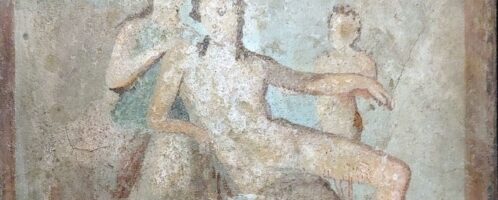

Wounded Adonis on Roman fresco

Roman sculpture of Antisthenes

Roman sculpture of Antisthenes, a Greek philosopher who is the creator of cynicism – a philosophy focusing on the analysis of virtue and considering it the most important value. The Greek lived in the 5th-4th centuries BCE.

Roman sculpture of Antisthenes

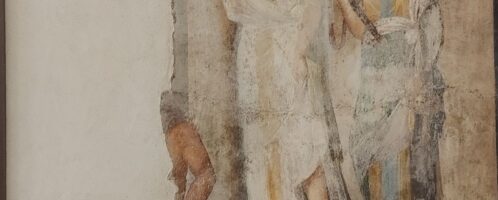
Fragment of Roman fresco showing Iphigenia

Fragment of a Roman fresco showing Iphigenia, priestess of Artemis, with her assistants. The object dates back to the 1st century CE and was discovered in Lucius Caecilius Iucundus in Pompeii. The artifact is located in the National Archaeological Museum of Naples.

Fragment of Roman fresco showing Iphigenia

Vicus Caprarius

When you walk around Rome, do you wonder what is hidden under your feet? Aren’t you curious how much of the ancient capital of the Empire has been preserved in its medieval Renaissance and Baroque walls?

Vicus Caprarius

What was it like to live in ancient Rome? Cities and roads – heritage of antiquity

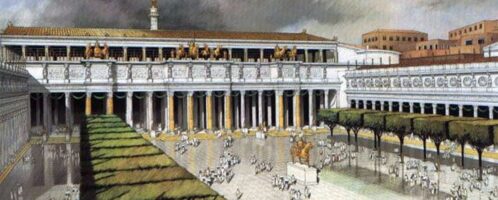
Roman cities were carefully planned, built on a grid of streets intersecting at right angles. The Romans borrowed this idea from the Greeks. Streets divided the city into quarters, just like in some modern cities, such as New York. A wall was built around the city to mark its border. Roman cities were bustling, populous and full of large, magnificent buildings. In the 1st century BCE Rome had over a million inhabitants.

Reconstruction of Trajan's Forum

Cheap Armani, or Eau de Gladiateur

Did you know that in ancient Rome, the most sought-after cosmetic was… the sweat of gladiators? Rich ladies, in jars containing the sweat of warriors, searched for charm believing it to be the secret to eternal youth and attractiveness.

Roman mosaic depicting gladiators after fight

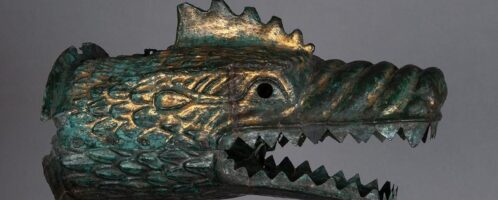
Roman dragon head

Roman dragon head, made of bronze. The object dates back to the 2nd-3rd century CE; discovered in Niederbieber (Germany). The artifact decorated the banner of the Roman cavalry and was carried by a draconarius.

Roman dragon head

Aerial photo showing Roman road in Jordan

An aerial photo showing the Roman road in Jordan – Via Nova Traiana. The road was built during the reign of Emperor Trajan (reigned 98-117 CE) in the province of Arabia Petraea and stretched from the city of Aqaba (present-day Jordan) to Bostra (present-day Syria).

Aerial photo showing Roman road in Jordan

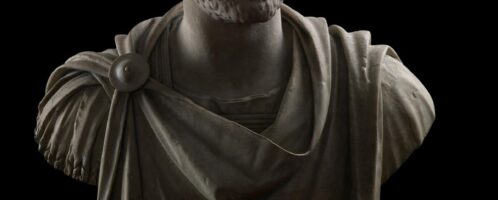
Bust of Hadrian

Roman bust of Hadrian, the emperor who ruled the Roman Empire in 117-138 CE. The object is located in The British Museum in London; discovered in Tivoli (Italy).

Bust of Hadrian

Spelling error report

The following text will be sent to our editors: