Sphinx on Roman fresco
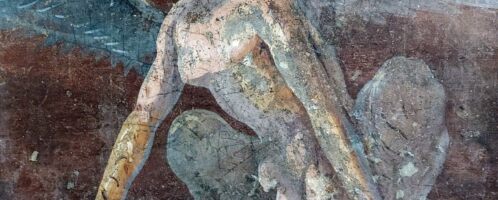
Sphinx on a Roman fresco. Object discovered in Pompeii. Dated to the 1st century BCE. The artifact is located in the National Archaeological Museum of Naples.
If you have found a spelling error, please, notify us by selecting that text and pressing Ctrl+Enter.
The world of the ancient Romans was rich in extraordinary, and sometimes even surprising, facts. We draw our knowledge of Roman daily life, customs, and mentality primarily from works left by ancient writers and historians. It is thanks to them that we discover information that is astonishing today – sometimes even hard to believe. Below are some interesting facts that reveal a lesser-known and less obvious side of the Roman world.
I encourage you to submit your own suggestions and to report any corrections or inaccuracies.
Sphinx on a Roman fresco. Object discovered in Pompeii. Dated to the 1st century BCE. The artifact is located in the National Archaeological Museum of Naples.
Pantheon seems to be a perfect building – entire volumes have been written about the perfection of its dome. Next: about the proportions of its rotunda. When we stand close to a temple, we usually do not pay attention to certain irregularities in its shape. Yet some experts note that during the construction of the Pantheon, not everything probably went according to the architects’ intentions.

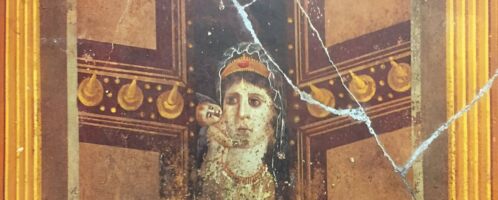
Roman fresco discovered in Pompeii that depicts queen Cleopatra and her son Caesarion as Venus and Amor. Dated to the 1st century CE.
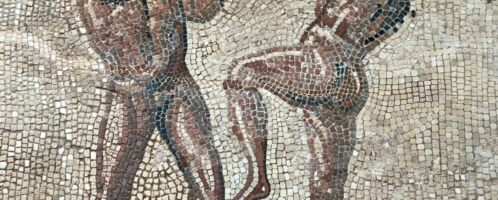
Roman mosaic showing a boxing match. The object was discovered on the site of the Roman Augusta Treverorum (present-day Trier, in western Germany). Dated to the mid-4th century CE. The artifact is located in the Rheinisches Landesmuseum in Trier.
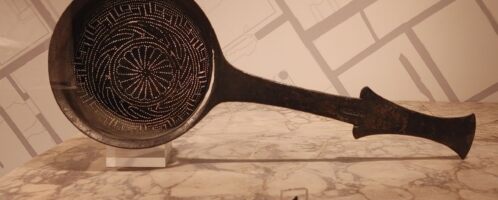
Roman colander, made of bronze, discovered in Herculaneum. The object is on display in the museum in Herculaneum. The colander was used, among other things, to strain and cool wine and other liquids with snow1.
Roman sculpture showing man in military uniform, with a modern head of Julius Caesar. The object dates back to the 2nd-3rd century CE. The artifact is located in the National Archaeological Museum of Naples.

Roman relief from the 3rd century CE showing Mithras killing a bull. When the photo was taken, the object was on display at the National Archaeological Museum of Naples.

Roman fresco depicting a fountain and a bird. The object dates back to the 1st century CE; found in Pompeii. The artifact is located in the National Archaeological Museum of Naples.

Roman wall fresco from Herculaneum or Pompeii showing a view of a seaside villa and sailing boats. The artifact is located in the National Archaeological Museum of Naples.

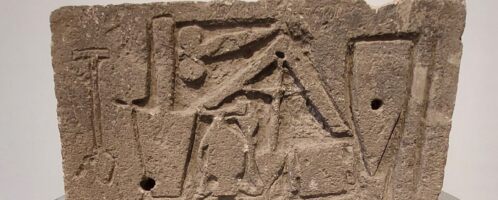
Roman relief from Pompeii showing construction tools used by the “master builder” (structor): trowel, plumb line, hammer, scalpel. There is also a phallus visible on the stone – a symbol of prosperity and happiness. The facility is located in the Antiquarium Parco Archeologico Pompei.