If you have found a spelling error, please, notify us by selecting that text and pressing Ctrl+Enter.

Curiosities of ancient Rome (Unknown facts)

Interesting facts from the world of ancient Romans. The world of ancient Romans was full of amazing accounts and information.

Fashion and jewelry in Rome developed strongly

In ancient Rome, fashion developed more than in Greece. The same was true of jewellery. Precious stones were very popular with the ladies; the most popular were emeralds. A big surprise for modern women may be the fact that diamonds appeared in these areas for the first time. In addition, stones such as agate, garnet, yarrow, and aquamarine were used to make jewellery.


Roman gold jewelry found in Serbia

Vibia Perpetua – Christian martyr

Vibia Perpetua lived at the turn of the 2nd and 3rd centuries CE. She came from a wealthy Roman home, and her parents professed various faiths: her father was a pagan, and her mother was a Christian. Vibia went down in history as a Christian martyr from Carthage.

Vibia Perpetua with her son

Silk was popular in Rome

During the reign of Octavian Augustus (27 BCE – 14 CE), silk was an extremely popular material. Gaius Petronius refers to him as ventus textilis (“woven wind”). However, this product was extremely expensive and it was difficult to get it because it was produced in distant China, a country that guarded its monopoly.

Roman fresco showing person in silk

Porphyry

Porphyry has been used since ancient times to make sarcophagi, sculptures and a host of other items as well as architectural features. The most widely used type of porphyry was red porphyry, or rather porphyry andesite, characterized by the purple colour of the rock.

Red porphyry

Assessment of Roman republican system by Polybius

Polybius went down in history as a Greek historian who, after his stay in Roman captivity, came under the protection of the consul Lucius Emilius Paulus, and then took part in more important military operations of the Romans in the middle of the 2nd century BCE, including the defeat of Carthage and the destruction of the city. Polybius in his “Histories” describes the history of Rome in the years 264-146 BCE, showing the Roman system as an example of the Greek ideal of a “mixed constitution”.

Roman columns

Silphium juice

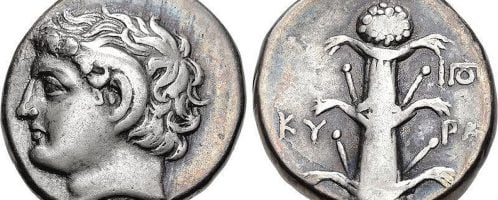
Silphium, that is, the sylphion was a plant that enjoyed extraordinary popularity in ancient times. Its juice was one of the main exports of the ancient Greek colony of Kyrene (today Libya), and it was known and used throughout the Mediterranean. To this day, it has not been possible to identify it unequivocally.

Image of Silphium on the reverse of a Cyrene coin

Helmets of Roman gladiators

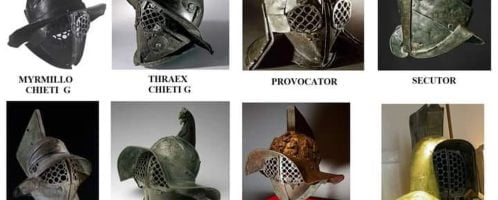
Most publications on the Polish market are full of errors in this matter. Konstantin Nosow is the most perfect in the described subject (Osprey’s publication “Gladiators. Bloody spectacle in the history of Rome”, Polish version by Bellona). The illustration shows the most typical gladiators’ helmets from the 1st-4th century CE. The text describes much more matter.

Various helmets of Roman gladiators

Spelling error report

The following text will be sent to our editors: