If you have found a spelling error, please, notify us by selecting that text and pressing Ctrl+Enter.

Curiosities of ancient Rome (Unknown facts)

Unknown Facts are curiosities revealing little-known, surprising, or rarely discussed information from the world of ancient Rome and antiquity. This category includes unusual details, curiosities, and facts that offer a less obvious perspective on the Roman Empire.

Lugii – ancestors of Poles?

Lugii/Longiones were a people of not entirely clear origin, just before BCE and in the first centuries CE they inhabited the upper basin of the Oder and Vistula rivers, i.e. the area of ​​today’s southern and central Poland.
Lugii

Epic work of Nero

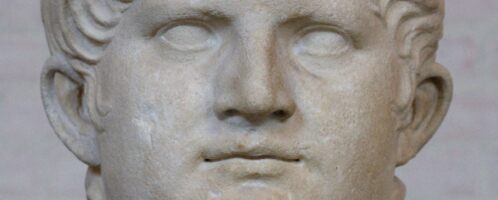
According to historian Cassius Dio, Nero decided to write a huge, epic work about Roman history. Only one question occupied his mind – how long should this work be?

Nero

Herd of elephants surrounded by people

Pliny the Elder mentions in his encyclopedic work Natural History that a herd of elephants surrounded by hunters position themselves in such a way that the individuals with the smallest fangs were at the front. In this way, they supposedly want to convince people that it is not worth trying ivory.

Herd of elephants

Lions and boars on battlefield?

Lucretius – Roman poet and philosopher from the 1st century BCE – in his work De rerum natura (“On the Nature of Things”) made various philosophical and scientific considerations. He believed that early humanity used all sorts of wild animals on the battlefields, including lions and wild boars.

Mosaic showing a lion

Consuls and their funny nicknames

Marcus Aemilius Lepidus, a consul for 137 BCE, was so obese that any movement and effort over time became a great problem for him. Due to his physical condition and clumsiness on the battlefield, he was given the nickname Porcina (“Pig”).

Pig in Roman uniform

Galen – expert in human anatomy

Galen (Aelius Galenus) was a Roman physician of Greek descent, who lived in the 2nd century CE he was regarded in his time as a great expert on human anatomy. Roman law forbade autopsies from 150 BCE. Thus, Galen relied only on dissections of animals (mostly monkeys and pigs).

Galen

Spelling error report

The following text will be sent to our editors: