Roman skeletons discovered in Pontefract
Roman skeletons have been discovered in Pontefract (northern England). They were found on the outskirts of the city, where remains of a Roman center.
If you have found a spelling error, please, notify us by selecting that text and pressing Ctrl+Enter.
Roman skeletons have been discovered in Pontefract (northern England). They were found on the outskirts of the city, where remains of a Roman center.

For thousands of years, the Roman city of Ucetia was known only by name. Many scientists questioned its existence. However, archaeologists managed to find the remains of a center near modern Uzes (southern France), indicating that the Roman city really existed.

Italian authorities have managed to recover Roman artifacts stolen from Herculaneum, valued at a total of $20 million. The objects were discovered in the USA.

In 2011, on the outskirts of the Austrian capital, Vienna (Roman city Carnuntum), the remains of a Roman school of gladiators were found. Recently, scientists undertook a thorough study of the ground around the building with the help of radar. As it turned out, there were numerous bakeries, taverns and shops in the vicinity of the school.

The decision to transport a 2,000-year-old Roman mosaic from Uzes to Nimes (France) – where it is to be renovated – sparked protests from local heritage conservation groups. There is a fear that the facility will not return to Uzes – a city in the south of France.
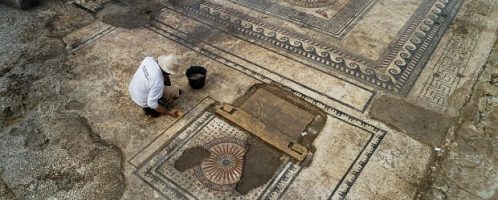
In Yorkshire (England), the first archaeological evidence of the existence of the Roman upper classes in northern Britain was discovered.

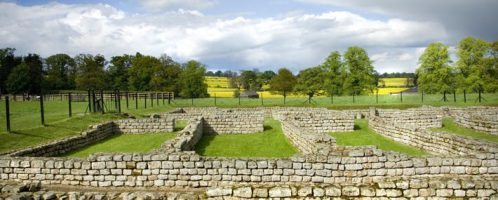
Scientists have long been studying the Roman barracks at Segedunum (on the line of Hadrian’s Wall in England) to find out where the horses were kept.
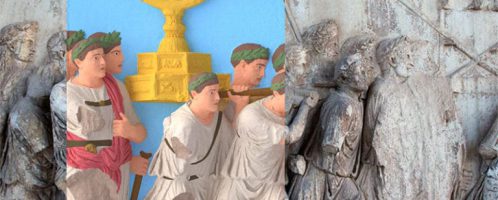
The famous Arch of Titus still stands in the Roman Forum – a marble monument to the emperor’s glory and a symbol of victory in the Jewish war (66-73 CE). The building also reminds us of the plundering of the Second Temple in Jerusalem by the Romans – to this day, in the Jewish calendar, there is a day commemorating the anniversary of the destruction of the Temple. What is worth noting, however, scientists have reconstructed the hypothetical appearance of the building in ancient times.