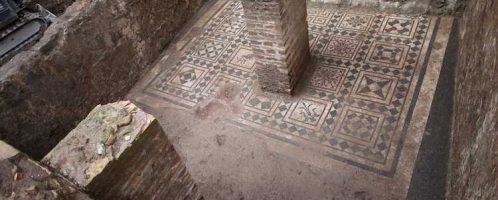
1,800-year-old Roman mosaic was discovered in Caesarea
In 2018, during excavations in Caesarea (Israel), archaeologists discovered a Roman mosaic that was preserved in good condition. The object is dated to the 2nd-3rd century CE.
If you have found a spelling error, please, notify us by selecting that text and pressing Ctrl+Enter.
In 2018, during excavations in Caesarea (Israel), archaeologists discovered a Roman mosaic that was preserved in good condition. The object is dated to the 2nd-3rd century CE.

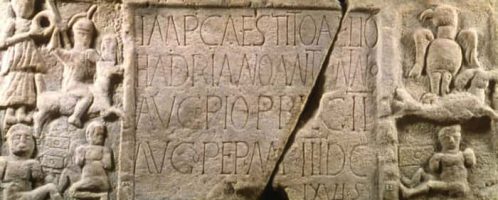
Discoveries from the south of Spain, in Munigua – the current archaeological site of Sierra Morena – prove that ancient Romans made significant improvements to the copper mine system.
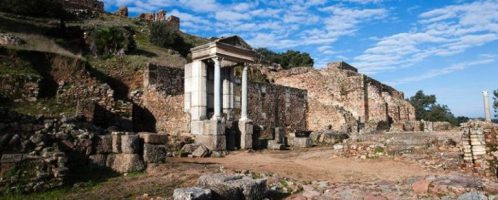
In northern Lincolnshire (England), scientists discovered nearly 30,000 different objects and finds from different historical periods. Among them are ceramics from the Bronze Age and a Roman burial.
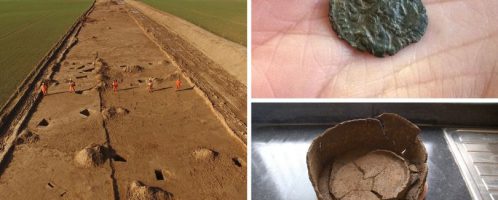
In 2018, in Rome, during the construction of the metro, an ancient military complex with additional rooms probably belonging to the commander was discovered. Nowhere in the world does metro construction last as long as in Rome. As the shovels dig into the ground, it is almost certain that they will find ancient remains.
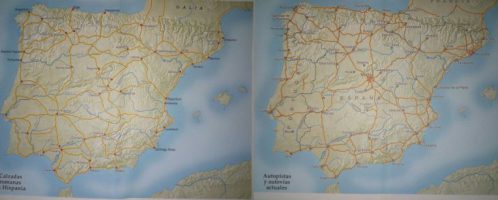
Very interesting material has been published on Twitter by David Montañez, who compiled two maps of the Iberian Peninsula: Roman and Modern. As it turns out, modern highways and roads largely coincide with those built by the Romans.
In August this year, three tourists were caught destroying the walls of the Colosseum by etching their names. Recently, the Italian prosecutor’s office has completed its investigation and it has been decided to charge all three people with the destruction and disfigurement of landscape heritage, for which they face 2-5 years in prison.

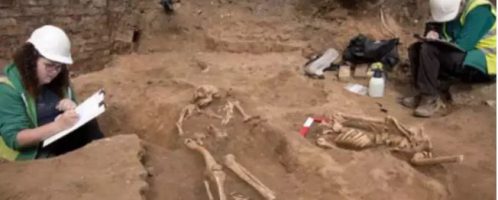
In 2018, there was an amazing discovery in York (England). During renovation works under the hotel swimming pool, human remains were found, dating back to the Roman period in Britain.
Using Raman spectroscopy and X-ray fluorescence, in 2018 scientists discovered traces of red and yellow pigments on distance-measuring stones that are part of the fortifications of the Antonin Wall in Britain.